
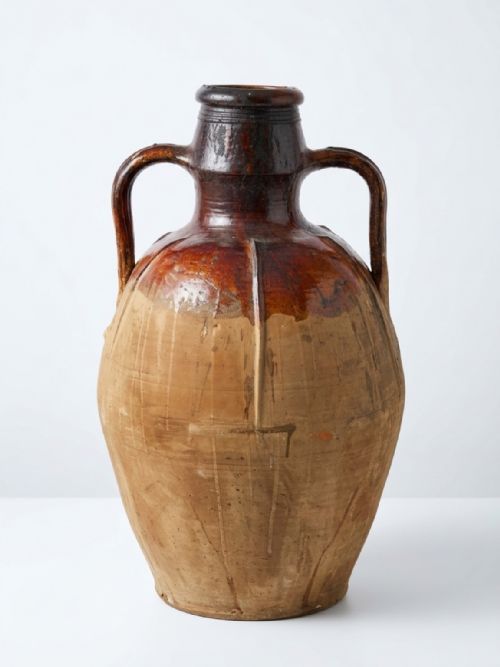


Mediterranean Terracotta Urn
These mediterranean terracotta urn pieces bring earthy texture and historic character to a garden or interior.
Mediterranean Terracotta Urn
When you search for a mediterranean terracotta urn, you encounter sturdy utilitarian vessels designed for holding oil, wine, and water across the Mediterranean region. The examples gathered here span the nineteenth century through the early twentieth century, taking forms such as olive jars, amphorae, and garden planters.
Most pieces on this page originate from Italy, Portugal, and Turkey, reflecting the traditional utilitarian crafts of those areas. They range from massive wine jars and oil jars on stands to smaller painted pottery vessels and garden pots.
Buyers typically find vessels displaying the practical marks of their agricultural origins, often paired with wrought iron stands or finished in lime wash and glaze. These objects transition easily from historic agricultural utility to focal points in modern garden and interior schemes.
Materials and construction
Makers shaped these pots from local clay and terracotta, building heavy earthenware bodies suited to storing liquids in warm climates. Some vessels received a protective glaze or a lime wash surface treatment to seal the porous clay or alter its appearance.
Certain large oil jars and amphorae incorporate auxiliary metal elements, specifically wrought iron stands that support the heavy round-bottomed vessels. The construction relies on traditional throwing and shaping techniques yielding thick walls designed for durability.
Some historic oil jars still carry the faint interior traces of ancient pressed olives and centuries of Mediterranean sunshine.
Assessing quality in terracotta vessels
Quality in a mediterranean terracotta urn rests upon the balance of its proportions and the honesty of its surface wear. Vessels that retain original lime wash or period glaze without crude modern repairs command greater appreciation among collectors.
The character of the clay body and the clarity of historic tool marks distinguish superior utilitarian forms from plain later reproductions. Structural integrity combined with authentic weathering gives certain jars and amphorae a more compelling presence.
The Mediterranean Terracotta Urn Glossary
- Terracotta
- Fired brownish-red earthenware clay used extensively for utilitarian pottery and garden vessels. The porous material often develops a pleasing weathered surface over time outdoors.
- Amphora
- A two-handled jar with a narrow neck used in the ancient and historic Mediterranean for transport and storage of oil or wine. These vessels typically feature a tapered base designed to stand upright in sand or special frames.
- Olive Jar
- A large bulbous storage vessel traditionally employed in Mediterranean agriculture for pressing and holding olive oil. Their substantial scale and sturdy terracotta walls make them prominent garden ornaments today.
- Lime Wash
- A traditional coating made from slaked lime applied to the exterior of masonry and earthenware pots. It provides a breathable white or tinted surface layer that softens the natural terracotta colour.
- Earthenware
- Pottery fired at relatively low temperatures resulting in a porous and opaque ceramic body. This material forms the foundation of most traditional Mediterranean folk pottery and storage vessels.
Mediterranean Terracotta Urn: Frequently Asked Questions
How were oil jars used?
These large vessels served as primary storage containers for olive oil and wine in Mediterranean agricultural settings. Their thick terracotta walls kept contents cool during warm weather.
Many pots were partially buried in the earth or supported on wrought iron stands to keep the heavy containers stable and secure during daily use.
Can these pots stay outside?
Most nineteenth-century terracotta vessels can remain outdoors in mild conditions, though extreme frost can damage porous earthenware. Placing them on pot feet prevents moisture absorption from frozen ground.
Bringing sensitive glazed or lime-washed pieces indoors during harsh winter months helps preserve their historic surface finishes.
How do I date an urn?
Dating relies on examining the throwing marks, clay composition, and surface treatments like early lime wash or regional glazes. Nineteenth-century pieces often show irregularities unique to hand-turned production.
Comparing the form and origin details, such as Turkish water pots or Italian wine jars, provides further context for the period of manufacture.
What is an amphora?
An amphora is a traditional vessel featuring two opposing handles and a narrow neck leading to a rounded or tapered body. They were built for maritime transport and storage.
In later centuries, makers continued this ancient form for agricultural storage, adapting the vessels for estate gardens and courtyards.