

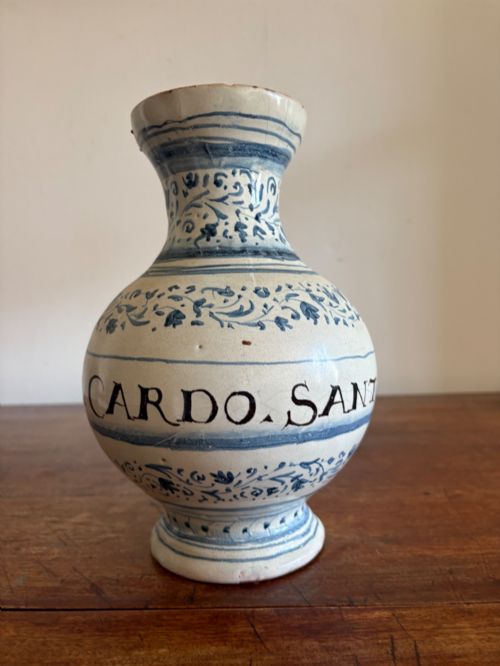


Earthenware Storage Jar
An earthenware storage jar is a utilitarian vessel built for dry goods or liquids, prized for its honest domestic history and robust form.
Earthenware Storage Jar
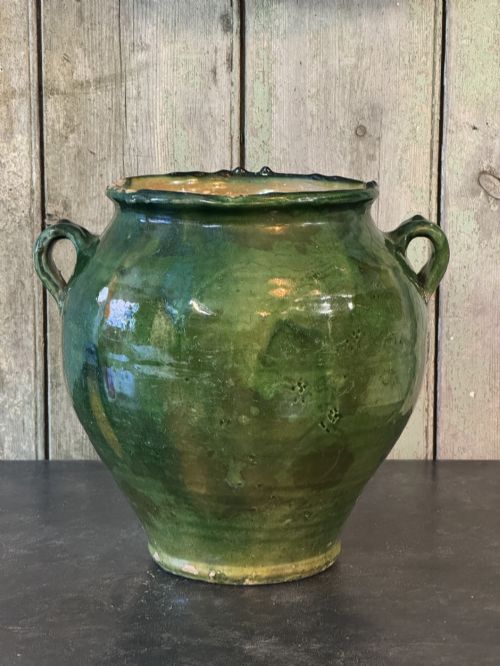
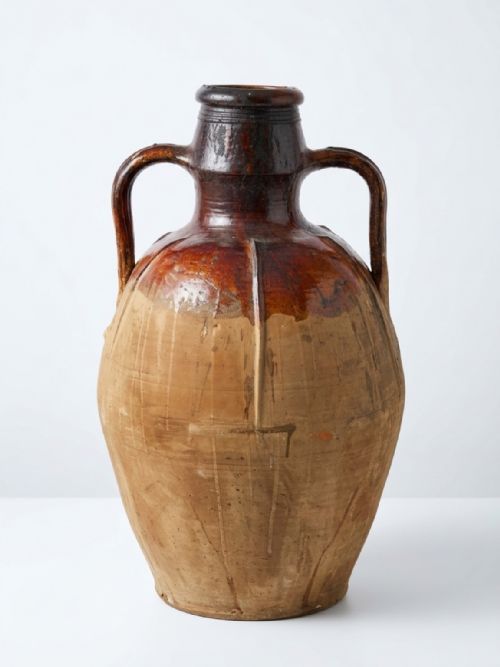
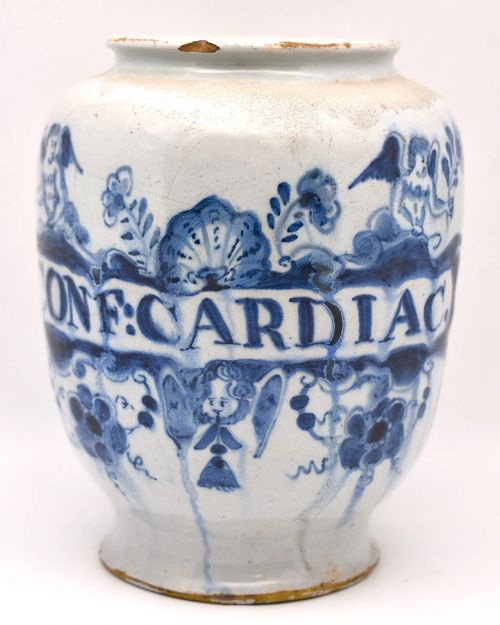
When you search for an earthenware storage jar, you enter a domain of utilitarian vessels shaped for holding provisions, oils, and dry goods across centuries of domestic life. The examples you meet on this page range from nineteenth-century French confit pots and rustic olive jars to eighteenth-century English delftware drug jars and Italian pharmacy wet drug jugs.
Makers fashioned these utilitarian containers in varied forms, including large terracotta wine jars, tobacco jars, and broad bread crocks with lids. The origins span French provincial workshops, English potteries, Italian kilns, and Scottish potteries, reflecting the local needs of rural and urban households alike.
How they were made
Potters threw or hand-modelled local clay and terracotta on the wheel before applying glazes or leaving the porous body raw. Tin glaze and polychrome decoration appear on apothecary vessels, while French confit pots typically show a partial or full green lead glaze over terracotta.
Firing took place in traditional kilns, resulting in surfaces that bear the marks of the maker's hands, wood ash speckling, and minor kiln imperfections. Brass fittings occasionally appear on specific lidded forms, adding a functional closure to the ceramic body.
Materials documented across the inventory include terracotta, tin-glazed earthenware, brass, and standard ceramic clay.
What varies in quality
The division between ordinary utility wares and superior pieces rests on the integrity of the glaze, the balance of the thrown form, and the crispness of any painted decoration. Tin-glazed apothecary jars with clear cobalt or polychrome pharmacy inscriptions command attention through the skill of the painter's brush.
Surface character also dictates standing, where an honest accumulation of wear, glaze pooling, and age-related patination elevate a simple confit pot or olive jar above a sterile reproduction. Proportions that suit the original domestic function create a satisfying presence in a modern interior.
The Earthenware Storage Jar Glossary
- Confit pot
- A French earthenware vessel traditionally used for preserving meat and storing fats. These pots typically feature a glazed upper section and an unglazed lower body.
- Tin glaze
- An opaque white glaze produced by adding tin oxide to lead glaze, providing a smooth surface for painting. It forms the characteristic finish of delftware and majolica.
- Apothecary jar
- A ceramic container utilised by chemists and pharmacists for holding dry drugs, syrups, and medicinal preparations. They frequently carry painted Latin labels or monograms.
- Majolica
- Tin-glazed earthenware decorated with colourful metal oxide pigments on an opaque white background. Italian examples often display rich polychrome or blue and white designs.
- Terracotta
- Fired but unglazed brown-red clay utilised for large garden pots, olive jars, and wine vessels. Its porous nature suits containers designed for breathability.
Earthenware Storage Jar: Frequently Asked Questions
How were earthenware storage jars used?
Households and shops utilised these vessels to preserve food, store oils, and hold dry goods like flour or salt. Apothecaries relied on specific drug jars to keep medicinal herbs and syrups protected from moisture.
Larger pots served as bread crocks or wine storage, keeping contents cool and secure in cellars and larders. Their thick walls helped regulate internal temperatures for perishable goods.
How do I clean an antique earthenware jar?
Dust the surface gently with a dry, soft cloth to remove everyday accumulation without disturbing fragile aged glazes. Avoid soaking porous terracotta or unglazed earthenware in water.
Consult a professional restorer if the vessel has deep internal staining or structural instability before attempting any wet cleaning method.
Are these jars safe for food use?
Many antique storage jars contain lead in their historical glazes or have absorbed impurities through centuries of domestic use. It is safest to display them as decorative objects rather than for modern food storage.
Porosity in older earthenware means the body can hold residues that are difficult to sanitise for consumption.
How can I tell the age of a jar?
Examine the throwing rings, glaze characteristics, and wear patterns on the base to determine the manufacturing period. Eighteenth-century pieces often show thinner potting and tin-glazing, while nineteenth-century confit pots display heavier lead glazes.
Compare the form and style against known regional traditions, such as French provincial or English delftware, to narrow down the decade or century.