
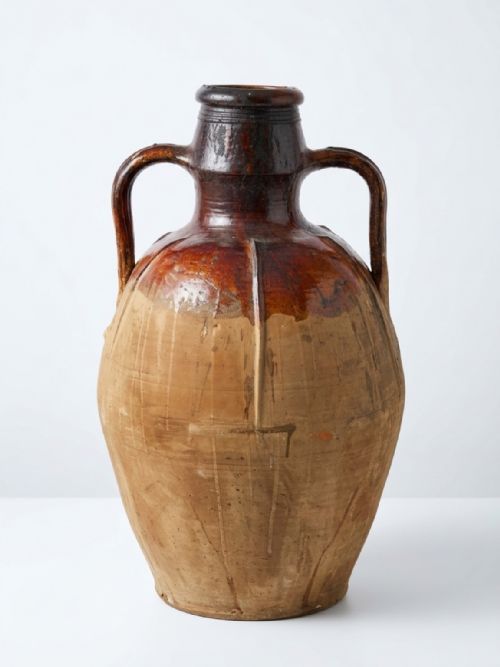
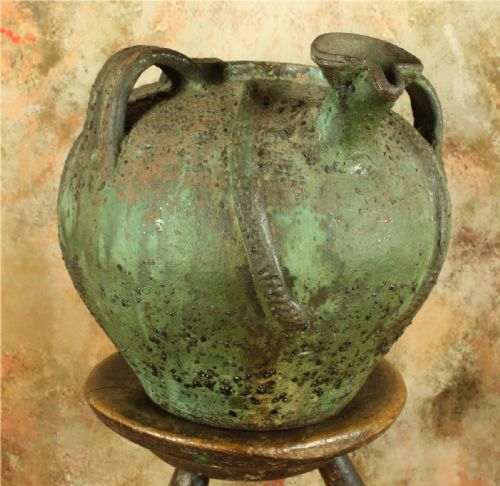


Antique Terracotta Amphora
An antique terracotta amphora brings earthy, weathered texture to an interior, shaped by generations of practical Mediterranean storage.
Antique Terracotta Amphora
An antique terracotta amphora is a traditional ceramic vessel originally utilised for holding wine, oil, water, or olives across the Mediterranean and beyond. These pieces range from large storage jars with multiple handles to slender flasks and ewers designed for domestic or agrarian labour.
Most examples found on this page hail from the nineteenth century, reflecting French, Italian, Turkish, Portuguese, and Austrian origins. Forms vary from simple utilitarian jars to decorative vessels and garden planters, often showing the wear of generations of agricultural use.
Materials and construction
Makers formed these vessels from clay, earthenware, and terracotta, shaping them on wheels or moulding them by hand for heavy agricultural demands. The resulting bodies are porous, thick-walled, and built to withstand the weight of liquid contents.
Surface treatments recorded in the evidence include lime wash and various glazes applied over the terracotta or ceramic body. Some items incorporate wrought iron stands or handles to support the heavy earthenware structures.
Listings feature terracotta, earthenware, and ceramic vessels spanning the eighteenth, nineteenth, and early twentieth centuries alongside pre-sixteenth century antiquities.
Evaluating quality and character
Quality in these vessels rests on the balance of form, proportion, and the authentic patination of the earthenware body. Superior examples display harmonious potting lines and well-integrated handles rather than clumsy construction.
The degree of surface preservation - such as intact lime wash, subtle glazes, and natural weathering - determines the visual appeal of an amphora. Age-related weathering and historical repairs contribute to individual character rather than diminishing the integrity of the piece.
The Antique Terracotta Amphora Glossary
- Terracotta
- A porous, fired clay body varying in tone from pale buff to deep reddish-brown. It forms the primary structural material for traditional Mediterranean storage vessels.
- Amphora
- A two-handled ancient vessel with a narrow neck, traditionally used for transporting and storing oil or wine. Later nineteenth-century versions adapt this classic silhouette for decorative garden and interior use.
- Earthenware
- Pottery fired at relatively low temperatures, remaining porous unless glazed. It accounts for the heavy, utilitarian vessels found in rural European contexts.
- Lime wash
- A traditional mineral coating applied to exterior surfaces of vessels for protection and a chalky white finish. It often survives in weathered patches on nineteenth-century country jars.
- Ewer
- A large jug with a wide spout and a looped handle, designed for pouring liquids. Austrian and European potteries produced these as both decorative and functional objects.
Antique Terracotta Amphora: Frequently Asked Questions
What were antique terracotta amphoras used for?
These vessels served essential domestic and agricultural functions across the Mediterranean, primarily storing olive oil, wine, grain, and water. Their thick terracotta walls helped regulate internal temperatures to keep contents cool during transport and storage.
Over time, many of these utilitarian jars moved from working farmyards to courtyards and interiors as decorative containers. Today, buyers utilise them primarily as sculptural focal points in living spaces or as substantial garden planters.
How do I style an amphora at home?
An antique amphora works well placed directly on the floor in an empty hallway, beside a fireplace, or nestled in a corner to introduce organic texture. Large oil jars and wine vessels command enough presence to stand entirely on their own without additional styling.
Smaller flasks and painted pottery vessels suit sideboards, console tables, or mantels where their specific profiles can be appreciated up close. Pairing unglazed terracotta with wrought iron stands or dried botanicals highlights their historical Mediterranean aesthetic.
Are these vessels waterproof?
Most antique terracotta and earthenware vessels are porous by nature because they were fired at lower temperatures for agricultural storage rather than modern liquid containment. Glazed amphoras or specific glazed terracotta pieces may hold water better, but unglazed earthenware will slowly seep moisture.
To use an unglazed vessel for fresh flowers or plants, place a waterproof liner or saucer inside the body to protect interior surfaces. This preserves the dry, weathered exterior of the antique while allowing for practical modern display.
How do I tell different regional styles apart?
Regional variations often show in the clay colour, handle configuration, and surface finish characteristic of local potteries and traditions. French walnut oil pots and Italian wine jars tend to feature distinct rim shapes and multi-handle arrangements suited to their specific agrarian tasks.
Turkish water pots and Portuguese olive jars display unique potting silhouettes and application methods, such as lime wash or painted motifs. Comparing the handle placements and earthenware tones helps distinguish French and Italian country pieces from Eastern Mediterranean examples.