


Antique Olive Oil Jar
These antique olive oil jar pieces are rugged utilitarian vessels of terracotta and clay that bring authentic Mediterranean character to modern gardens and interiors.
Antique Olive Oil Jar
An antique olive oil jar serves as a durable storage vessel originating from Mediterranean countries, designed for holding agricultural oils and liquids. Buyers searching this phrase will find robust forms spanning the eighteenth, nineteenth, and early twentieth centuries.
The pieces on this page lean heavily towards French country and Mediterranean traditional styles, including large terracotta pots, handled jugs, and amphora vessels. Many examples arrive with stands or feature historic repairs and aged patinas that reflect their working past.
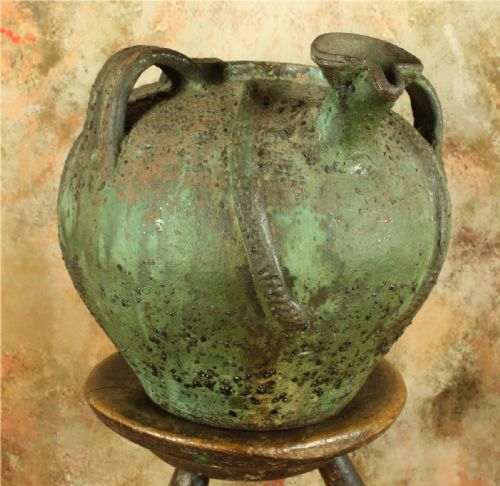
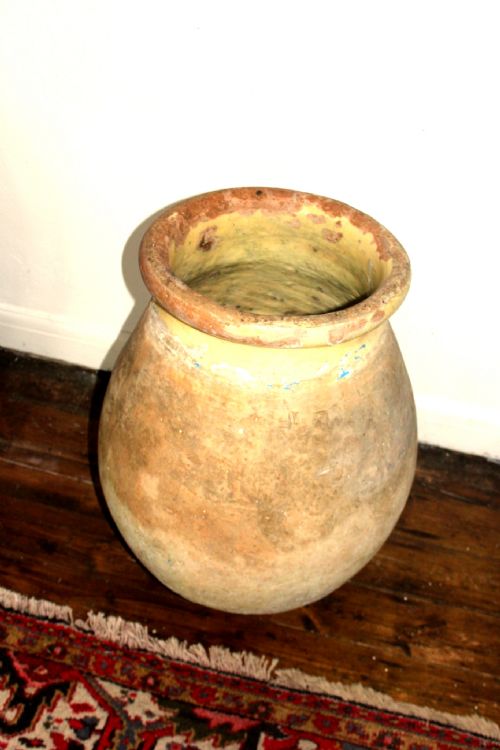
Forms vary from grand three-handled jugs to simpler garden urns and planters. Collectors frequently encounter painted surfaces, lime wash treatments, and regional variations typical of French provincial and Mediterranean folk art workshops.
How they were made
Potters shaped these vessels using traditional clay and terracotta techniques, forming thick walls designed to withstand daily agricultural use. Many pieces incorporate natural glazes or protective lime wash layers applied to the porous earthenware bodies.
Structural strength was often enhanced through the addition of wrought iron details or multiple handles, as seen on eighteenth-century walnut oil pots and large storage jugs. Surface treatments include historic paint and natural weathering accumulated over centuries of exposure.
The listings span from the eighteenth century through the early twentieth century, featuring terracotta, earthenware, and glazed finishes.
What varies in quality
Quality rests in the integrity of the terracotta body, the balance of the proportions, and the character of the surface patina. Earlier eighteenth-century examples display hand-formed irregularities that contrast with more uniform nineteenth-century production.
The survival of original surface finishes, such as early paint or lime wash, elevates a piece above standard utilitarian stock. Substantial scale and the presence of makers' marks or structural hardware like wrought iron further distinguish superior examples.
The Antique Olive Oil Jar Glossary
- Terracotta
- A porous, fired clay material commonly used for utilitarian storage vessels and garden containers. It acquires a distinctive weathered appearance over time.
- Amphora
- A two-handled vessel with a narrow neck, historically utilised for transporting and storing liquids such as oil and wine. These classic forms date back to ancient Mediterranean traditions.
- Lime Wash
- A traditional coating mixture applied to exterior surfaces for protection and decoration. On these jars, remnants of this finish contribute to the aged rustic patina.
- Patina
- The surface appearance developed through age, use, and exposure to the elements. Collectors prize authentic wear that signals a genuine working history.
- Earthenware
- Pottery fired at lower temperatures, remaining porous unless glazed. This fundamental ceramic material forms the core structure of Mediterranean storage jars.
Antique Olive Oil Jar: Frequently Asked Questions
How were antique olive oil jars used originally?
These large vessels functioned primarily for the bulk storage, fermentation, and transport of olive oil and walnut oil across Mediterranean agricultural estates. Their thick terracotta walls helped maintain stable internal temperatures for the liquids stored within.
Over decades of heavy farm use, many jars acquired structural iron supports or replacement handles to extend their working lives. Today, their utilitarian heritage makes them robust choices for architectural garden ornaments.
How do I date an antique oil jar?
Dating relies heavily on observing the forming techniques, rim profiles, and material characteristics visible across the piece. Eighteenth-century examples often display thicker, more irregular hand-thrown profiles and multiple functional handles.
Nineteenth and early twentieth-century pieces generally show more consistent potting methods, occasionally paired with painted surfaces or lime wash treatments. Comparing the specific clay body and surface wear against known period styles helps narrow the origin.
Can I use these jars in the garden?
Most of these terracotta and earthenware vessels suit outdoor garden placement when given appropriate care. Their sturdy construction handles planted arrangements as garden urns and planters.
However, freezing temperatures can damage porous historic terracotta if water is trapped inside and expands. Placing gravel at the base for drainage and lifting containers off the ground helps prevent frost cracking during winter.
What styles of olive oil jars exist?
The available pieces encompass rustic Mediterranean, French country, and provincial folk art traditions. These stylistic variations reflect the specific regional potteries of France and the wider Mediterranean basin.
Forms range from tall amphora vessels to wide-bodied storage pots featuring one, two, or three handles. Painted finishes and weathered lime wash coatings further differentiate regional aesthetic approaches.