


Antique Confit Pot
These antique confit pot examples are heavy storage jars and kitchen vessels from France, prized for their earthy glazes and rustic presence in modern interiors.
Antique Confit Pot
An antique confit pot is a traditional earthenware vessel originally used in rural France for preserving meats and storing provisions like walnut oil or olives. When you search for this phrase, you encounter heavy storage jars and jugs shaped by provincial hands for daily domestic labour.
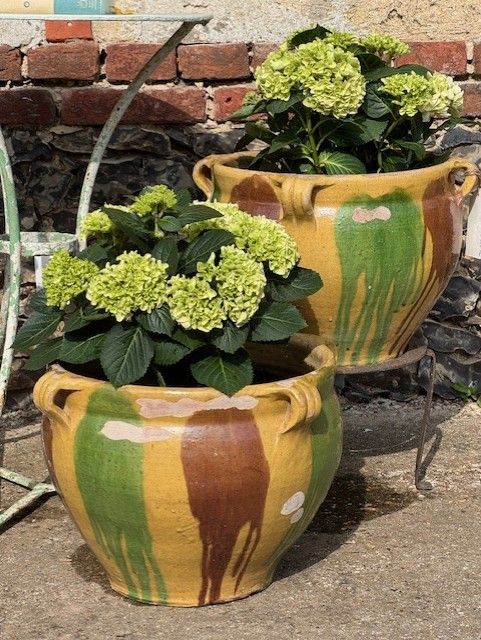
The pieces appearing on this page span the eighteenth and nineteenth centuries, alongside later twentieth-century items such as Castelnaudary planters. Most examples take the form of vessels and jars, often featuring specific regional traits from French provincial workshops.
You meet variations in scale from tiny jars to huge storage vessels, alongside related forms like olive jugs and glazed bowls. Their survival reflects the enduring utility of humble utilitarian pottery.
Materials and Construction
Potters shaped these vessels from local clay and terracotta using traditional handmade techniques. The resulting bodies provide a porous, robust foundation designed for practical agrarian storage rather than delicate display.
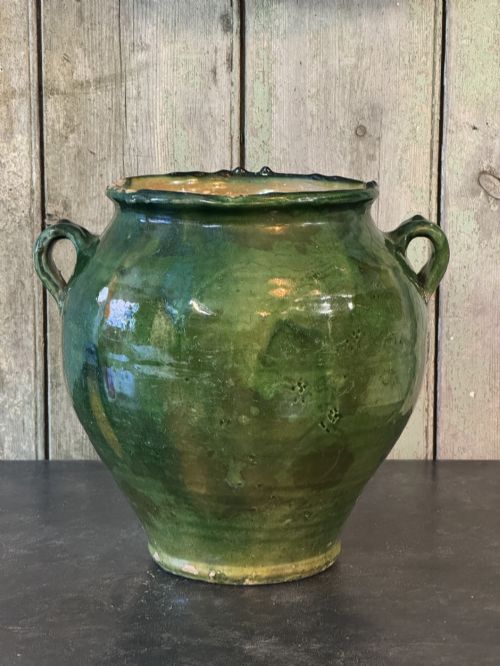
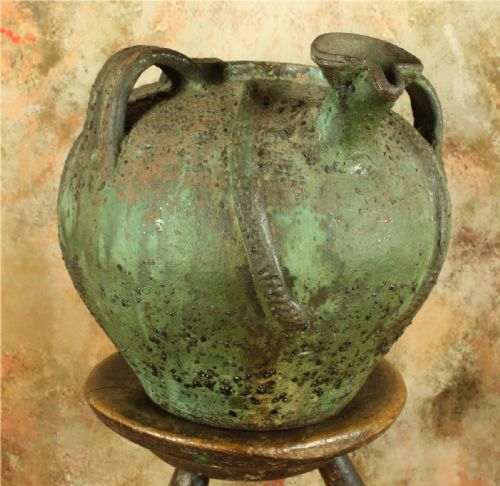
Glaze application defines the surface character, utilising green glazes, yellow glazes, and distinctive dribble glazed finishes. Many pieces feature partial glazing that leaves portions of the raw terracotta exposed beneath accumulated patinas.
Listings feature terracotta, earthenware, and clay materials finished with green and yellow glazes across the eighteenth and nineteenth centuries.
Assessing Quality and Character
Quality in these utilitarian pots lies in the richness of the glaze and the honesty of the surface wear. Superior examples display striking runs of green or yellow glaze and harmonious proportions shaped by provincial makers.
The distribution of glaze and the depth of the aged patina separate ordinary utility items from more visually compelling vessels. Evidence of handling and long service adds distinct character to individual pieces.
The Antique Confit Pot Glossary
- Confit pot
- A traditional French earthenware jar with handles, designed for preserving food and storing fats.
- Terracotta
- Fired clay used to form the structural body of provincial pottery before glazing.
- Dribble glaze
- A surface finish where liquid glaze runs unevenly down the sides of the vessel during firing.
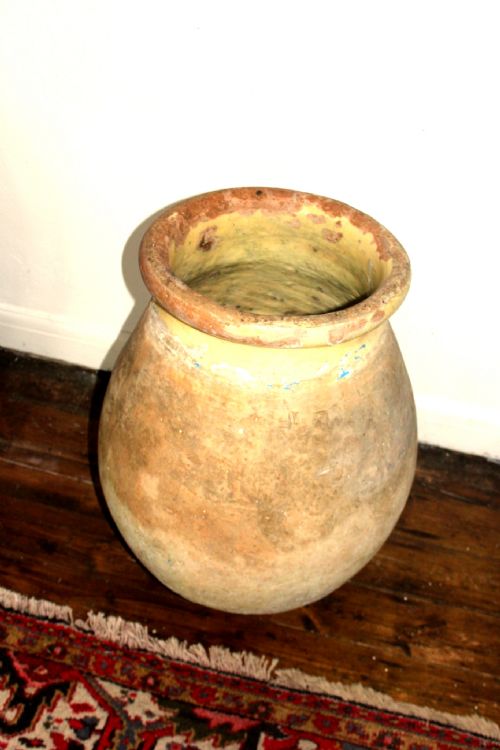
- Biot jar
- A large terracotta storage vessel originating from the French town of Biot.
- Patina
- The surface texture and weathered appearance developed through age and handling.
Antique Confit Pot: Frequently Asked Questions
What were antique confit pots used for?
These vessels served rural households as storage containers for preserved meats, oils, and other provisions.
Their heavy earthenware walls and narrow bases helped keep contents cool and protected in French provincial larders.
How do I date an antique confit pot?
Dating relies on observing potting techniques, clay characteristics, and the style of the glaze.
Earlier eighteenth-century examples often show distinct handle formations and surface wear compared to nineteenth-century pieces.
Where do antique confit pots come from?
The listings show origins rooted firmly in the rural regions and villages of France.
Specific areas like Castelnaudary produced notable glazed planters and jars intended for agricultural and domestic use.
How should I clean my confit pot?
Maintenance requires gentle cleaning with a soft cloth to preserve the aged surface patinas.
Harsh detergents and aggressive scrubbing can damage the historical glaze and exposed terracotta surfaces.