


Vintage Stoneware Jar
These vintage stoneware jar items are utilitarian vessels shaped by functional history, offering buyers rugged storage with genuine character.
Vintage Stoneware Jar
A vintage stoneware jar serves as a durable container originating predominantly from the nineteenth century up to the mid twentieth century. Buyers seeking a vintage stoneware jar encounter utilitarian forms designed originally for spirits, tobacco, biscuits, or provisions.
The selections span English salt-glazed jugs and French confit pots alongside specialised vessels by makers like Doulton and Wedgwood. These pieces bridge industrial utility and decorative presence in modern interiors.
Forms vary from heavy storage cylinders and tapering apothecary vessels to converted lamp bases and exhibition jugs. Each piece carries the marks of utilitarian manufacture and utilitarian survival.
Materials and construction
Potters shaped dense clay bodies on the wheel or in moulds before firing them at high temperatures to achieve vitrification. This intense heat fused the clay and natural salt glazes into an impervious, hard-wearing surface.
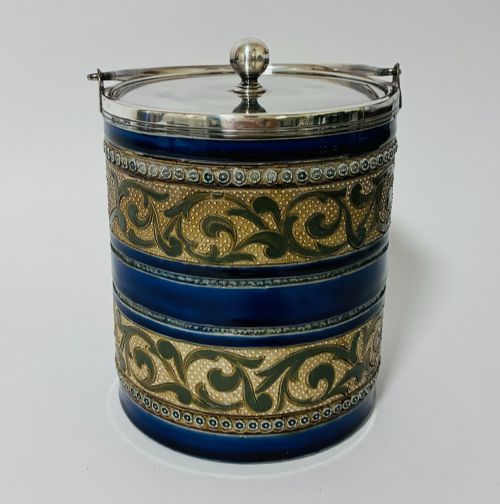
Makers applied surface decoration through salt glazing, which produced characteristic orange-peel textures, or added applied cream sprigged reliefs and coloured glazes. Metal mounts in brass or silver plate frequently reinforced rims and provided hinged lids for biscuit barrels and tobacco jars.
Some vessels began life holding turtle soup in nineteenth-century taverns before finding a second act on modern tabletops.
Assessing quality
Quality rests in the crispness of moulded details, the evenness of salt or coloured glazes, and the integrity of the heavy clay body. Superior pieces display sharp sprigging, well-balanced proportions, and clear maker stamps rather than blurred ornament.
The presence of original hardware, such as intact silver-plated mounts and matching lids, distinguishes finer utilitarian vessels from incomplete survivors. Maker attribution to notable potteries also separates standard utility wares from exhibition-grade examples.
Doulton Lambeth·Wedgwood·Royal Doulton
The Vintage Stoneware Jar Glossary
- Salt glaze
- A finish achieved by throwing common salt into the kiln during high-temperature firing, creating a pitted texture resembling an orange peel. This glossy coating protected the porous clay beneath from moisture.
- Sprigged
- A decorative technique where separately moulded clay reliefs are applied to the surface of an unfired vessel using slip. These raised motifs provide sharp contrast in colour and texture.
- Confit pot
- A traditional French earthenware or terracotta jar featuring a glazed upper section and unglazed lower body, originally used for preserving meats. These vessels now serve widely as decorative planters and storage items.
- Biscuit barrel
- A covered container designed for storing dry biscuits on the dining table, frequently fitted with metal mounts and a swing handle. They often utilised ceramic bodies by major potteries.
- Flambé glaze
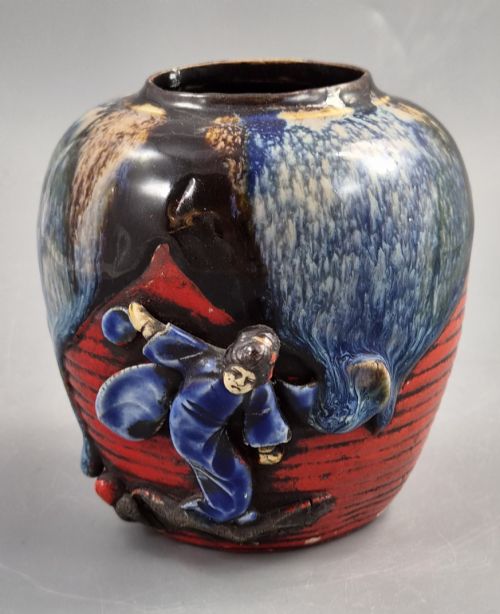
- A rich, variegated glaze achieved through controlled reduction firing, producing unpredictable streaks of colour. Japanese and European potteries utilised this technique to create depth.
Vintage Stoneware Jar: Frequently Asked Questions
What were stoneware jars used for?
These heavy vessels served primarily for the bulk storage and preservation of foodstuffs, liquids, and dry goods in domestic and commercial settings. Common historical contents included spirits, vinegar, tobacco, biscuits, and preserved meats.
Over time, many of these utilitarian containers transitioned from pantries to display spaces, adapting to roles as vases, planters, and table lamps.
How do I clean an antique jar?
Cleaning requires only warm water and a mild soap applied with a soft cloth to protect historical surfaces and glazes. Avoid harsh scrubbing or soaking vessels that possess exposed unglazed clay or fragile metal mounts.
Dry the piece thoroughly after washing to prevent moisture entrapment within the dense ceramic body.
Can I use them as planters?
Many sturdy storage jars and confit pots suit contemporary use as plant containers for indoor greenery or patio displays. Drainage can be managed by placing a smaller potted plant inside rather than filling the antique vessel directly with wet soil.
Protecting the base from prolonged dampness preserves the integrity of the historical clay.
How do I date an old jar?
Dating relies on identifying maker marks, stylistic indicators, and manufacturing techniques recorded across nineteenth and twentieth-century production. Salt-glazed surfaces, applied sprigged motifs, and specific factory stamps offer clues to the active period of the pottery.
Comparing the weight, glaze consistency, and form against documented examples helps narrow the production window.