


Provincial French Jar
These provincial french jar pieces are heavy earthenware and terracotta vessels used for rural storage and utility, bringing rustic warmth to any interior.
Provincial French Jar
When you search for a provincial french jar, you encounter heavy utilitarian earthenware and terracotta containers originating from rural France. The selections span several periods, including the eighteenth century, the nineteenth century, and mid-twentieth century examples.
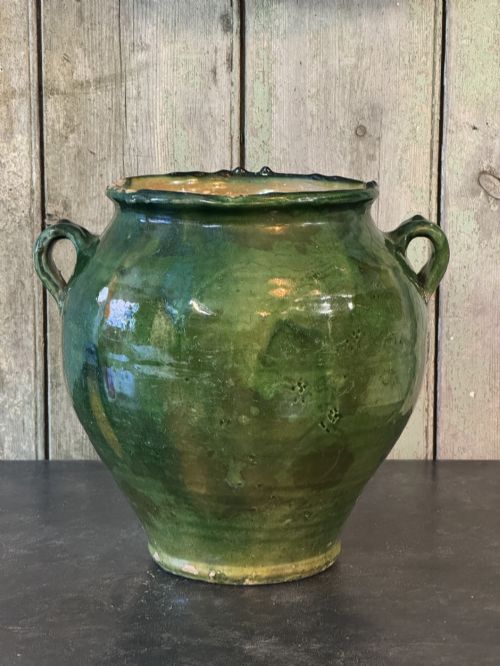
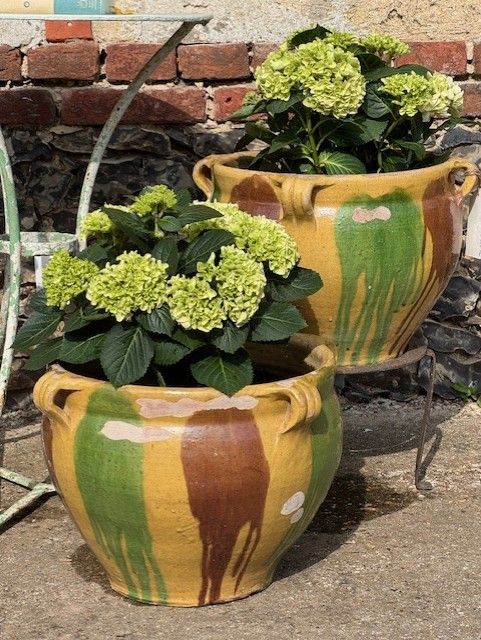
The forms on this page include confit pots, olive jars, oil jugs, kitchen canisters, planters, and storage urns. Many pieces display regional characteristics such as green glazes, dribble glazes, and handmade clay bodies.
Buyers frequently find traditional confit pots alongside rustic olive jars and kitchen canisters. These functional vessels reflect the domestic and agricultural requirements of French country life.
How they were made
Potters shaped these items from local clay, utilising terracotta and earthenware techniques to produce thick, durable walls suitable for heavy use. Makers applied glazes, including green enamel and dribble finishes, primarily for waterproofing and surface decoration.
The manufacturing process relies on traditional handmade methods rather than industrial production. This hand-thrown or hand-modelled construction results in individual variations across every vessel.
Some nineteenth-century French confit pots spent their lives underground keeping duck fat cool, which explains why many still smell faintly of ancient poultry.
What varies in quality
Quality in a provincial french jar rests upon the preservation of the original glaze and the integrity of the earthenware body. Pieces featuring even green glaze distribution or distinctive dribble patterns command greater interest.
The character of the handmade surface and the purity of the early form distinguish standard utilitarian containers from finer examples. Age-related surface wear on eighteenth and nineteenth-century clay often enhances the visual depth of the object.
The Provincial French Jar Glossary
- Confit pot
- A traditional French earthenware pot with handles, originally used for preserving meat. These vessels typically feature a partially glazed body.
- Terracotta
- Fired unglazed or glazed clay of a brownish-red colour. This material forms the structural base of many rural French vessels.
- Earthenware
- Porous pottery fired at lower temperatures than stoneware. It requires a glaze to hold liquids effectively.
- Dribble glaze
- A surface finish where liquid glaze runs unevenly down the sides during firing. This technique creates accidental drips and pooling patterns on planters and pots.
Provincial French Jar: Frequently Asked Questions
What were provincial french jars used for?
These vessels served practical purposes in rural French households and farms, functioning as containers for storing foods like confit, oil, and dry goods.
Larger versions accommodated agricultural storage needs, while smaller pots held kitchen provisions or served as utilitarian jugs.
How do I date an old jar?
Dating relies on examining the clay body, the characteristics of the glaze, and the manufacturing technique used by the potter. Eighteenth-century examples often display heavier, hand-shaped earthenware forms compared to later nineteenth-century pieces.
Evidence of wear and regional stylistic markers also help place pieces within specific periods like the eighteen-nineties or nineteen-sixties.
Are these jars waterproof?
Most pieces feature partial or full glazes on the interior or exterior surfaces to help contain liquids and oils. However, porous terracotta and earthenware can still absorb moisture over time.
Buyers using them as planters should take precautions to protect delicate surfaces underneath.
How do I style these in a modern home?
Their rustic textures and earthy tones make them natural focal points on tables, shelves, or as standalone floor pieces. You can display them empty to appreciate the handmade form or use them to hold dried botanicals.
Pairing different sizes creates a layered look inspired by French country interiors.