



French Pottery Pot
These French pottery pot selections bring rustic provincial utility and antique European earthenware character straight into modern spaces.
French Pottery Pot
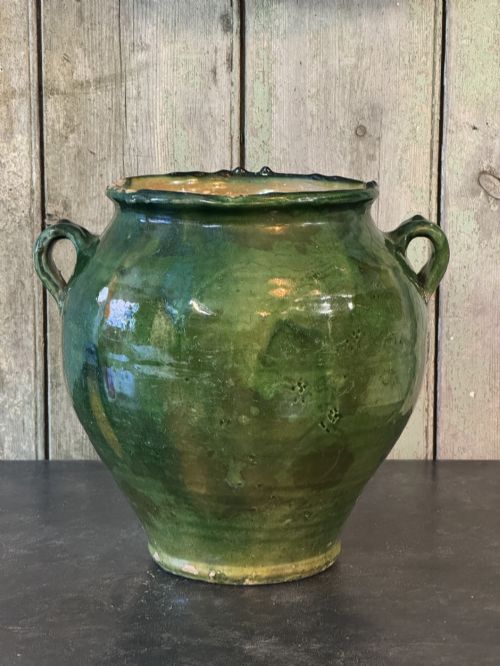
A french pottery pot encompasses a broad range of utilitarian and decorative vessels originating from French workshops, ranging from large storage jars to small desktop items. Buyers searching this phrase encounter substantial earthenware confit pots, olive jars, and tin-glazed apothecary vessels designed for domestic or agricultural storage.
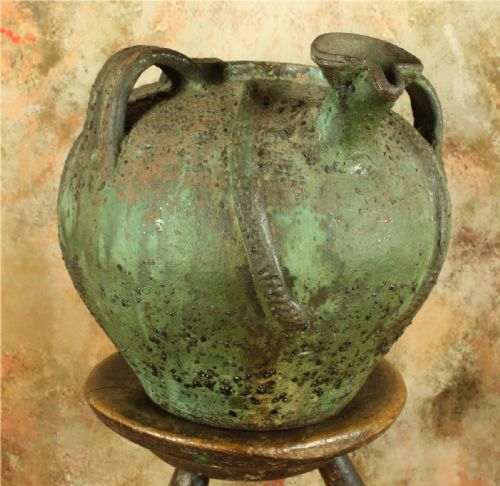
The majority of pieces met on this page belong to the nineteenth and eighteenth centuries, reflecting traditional rural craftsmanship and regional kitchen use. Common forms include multi-handled oil jugs, planter boxes from the south of France, and decorative faience items adorned with hand-painted details.
The aesthetic leans heavily towards rustic provincial and French country styles, characterised by weathered surfaces and practical forms. Collectors often seek out these objects to display structural earthen shapes and historical patination within contemporary interiors.
Materials and construction
Makers shaped these vessels primarily from local terracotta and earthenware, utilising natural clay bodies suited to throwing or hand-building large storage forms. The heavy walls provided the necessary durability for holding agricultural oils, preserves, and confit meats in provincial households.
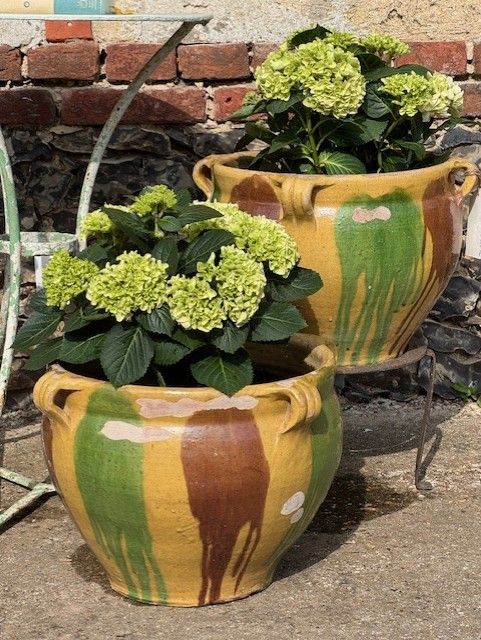
Surfaces received treatments of lead, tin, or alkaline glaze to render the porous earthenware waterproof, often resulting in rich drip glaze effects down the sides. Pigments applied beneath or over the glaze introduced painted motifs, ranging from simple green washes to intricate blue faience designs.
Materials range from unrefined earthenware and terracotta to tin-glazed surfaces decorated with pigments.
Assessing quality in antique pots
Quality separates primitive utility wares from finer decorative pieces through the balance of form, glaze coverage, and hand-painted skill. Superior examples demonstrate even glaze pooling, intact handles, and minimal structural distortion from the original firing process.
The presence of hand-painted artistry, particularly on eighteenth-century Nevers faience or detailed apothecary jars, elevates a piece above standard utilitarian storage. Furthermore, the survival of original mounts, lids, or matching pairs dictates the desirability and historical integrity of the vessel.
Limoges·Longwy·Pierrefonds·Pinon Heuze
The French Pottery Pot Glossary
- Confit pot
- A traditional French earthenware jar featuring handles, designed for preserving meats in fat. These vessels typically display partial green or yellow glaze.
- Tin glaze
- An opaque white ceramic glaze containing tin oxide, providing a smooth surface for hand-painted pigment decoration. It defines classic European faience and delftware.
- Terracotta
- Fired unglazed or glazed red earthenware clay used extensively for utilitarian garden and kitchen vessels. The material offers a distinct porous reddish body.
- Drip glaze
- A ceramic finishing technique where glaze is applied heavily to run down the sides of a vessel during firing. This creates natural, uneven streaks and pooling patterns.
French Pottery Pot: Frequently Asked Questions
What were french pottery pots used for?
These vessels served essential domestic and agricultural functions in French provincial life, primarily storing staples like olive oil, walnut oil, and confit meats. Larger jars kept food supplies secure in cellars, while smaller items functioned as tableware or apothecary storage.
Over time, many utilitarian storage containers transitioned into decorative display pieces due to their pleasing rustic proportions and weathered earthen patination.
How do I style a french pottery pot at home?
Place large confit jars and olive pots directly on the floor in empty corners, or utilise smaller vessels as rustic planters for indoor greenery. Their neutral terracotta tones and drip glazes complement both minimalist modern and traditional interior schemes.
Grouping pairs or varied heights together on stable surfaces highlights their historical forms without needing additional ornamentation.
How can I tell the age of these pots?
Dating relies on examining the clay body, glaze composition, and manufacturing marks, with eighteenth-century pieces often showing finer tin-glazing and hand-painted details. Nineteenth-century examples frequently exhibit heavier terracotta bodies and characteristic green lead glazes.
Wear patterns, historical repairs, and regional potting styles further indicate the likely period of origin.
Are these pots waterproof?
Most antique earthenware pots feature interior glazing designed to hold liquids or oils securely during their original working life. However, age-related micro-cratering in the glaze can sometimes allow slow moisture seepage.
Place a protective saucer underneath if utilising these historic vessels to hold fresh flowers and water on wooden furniture.