
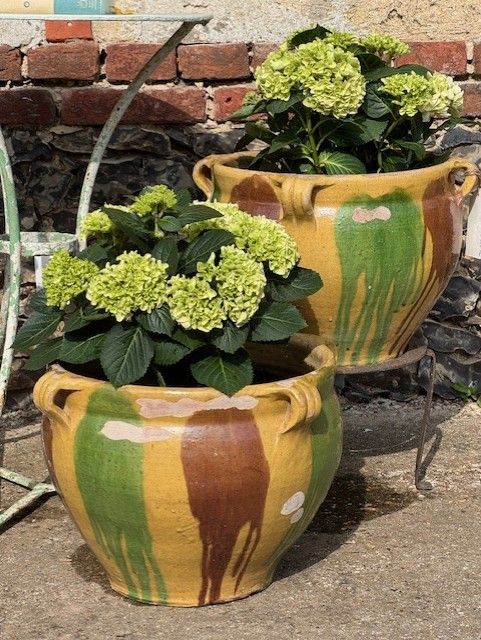


Terracotta Urn Planter
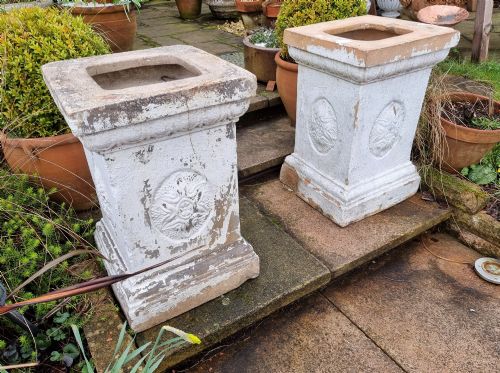
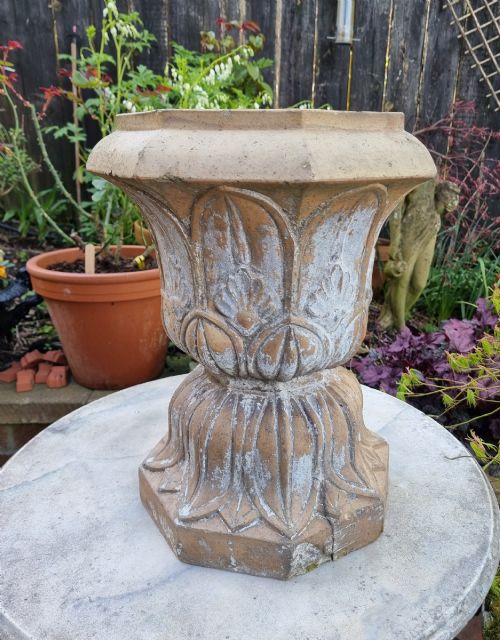
These terracotta urn planters bring enduring classical form and weathered warmth to outdoor spaces, sourced from British, French, and Italian workshops across the nineteenth and twentieth centuries.
Terracotta Urn Planter
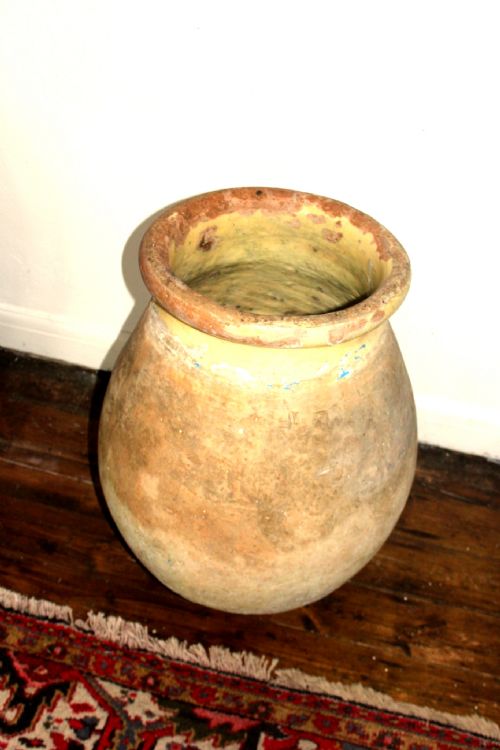
A terracotta urn planter stands as a traditional garden ornament, typically designed to house shrubs, flowers, or small trees while adding architectural structure to patios, terraces, and formal pathways. When you search for a terracotta urn planter, you encounter diverse forms ranging from classical Campana shapes to large Mediterranean olive jars and French confit pots.
The pieces listed on this page span the nineteenth and twentieth centuries, encompassing Victorian, Georgian, and Neoclassical styles alongside rustic Mediterranean and French provincial examples. You are most likely to meet substantial nineteenth-century garden urns and earthenware oil jars featuring weathered patinas and handcrafted details.
Originating from British potteries, French provincial kilns, and Italian studios, these vessels serve both utilitarian planting functions and decorative display roles. Makers utilised durable local clays to produce garden wares capable of withstanding outdoor elements while developing characteristic surface weathering over decades of exposure.
Materials and methods of construction
Potters shaped these vessels primarily from terracotta, earthenware, and buff clay, utilising local mineral-rich soils that baked into porous, breathable containers suitable for plant roots. Many examples display the distinct orange-red tones of fired earth, while others reveal the denser, heavier properties of salt-glazed stoneware.
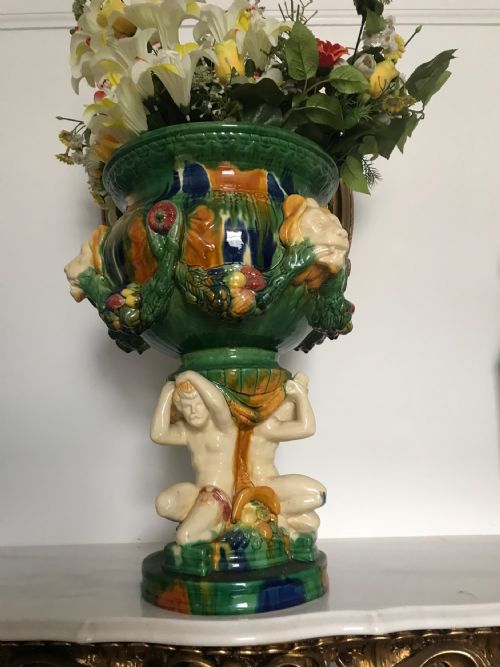
Surface treatments vary from unglazed porous clay that absorbs moisture to specialist applications like green lead glazes, dribble glazes, and painted finishes. Some regional pieces, such as French Biot jars and Castelnaudary planters, show the characteristic marks of throwing or hand-building by traditional artisans.
Decorative elements were often applied by hand before firing, including carved handles, figural bases with lion heads, and naturalistic faux bois details mimicking textured wood bark. These construction methods ensured each garden vessel possessed individual weight and tactile character.
Listings feature nineteenth-century and twentieth-century garden vessels in terracotta, salt-glazed stoneware, and glazed earthenware from British, French, and Italian sources.
Assessing craftsmanship and character
Quality in a terracotta urn planter rests upon the crispness of moulded detail, such as sharply rendered handles, carved heads, and balanced proportions derived from classical precedents. Superior pieces display harmonious symmetry and confident throwing lines that distinguish studio or factory output from utilitarian gardenware.
The natural ageing process heavily influences desirability, with deep patination, moss growth, and mineral encrustation adding visual depth to the fired clay. Vessels retaining original painted surfaces or specialised glazes offer an alternative aesthetic to standard weathered earthenware.
Structural integrity and the weight of the clay body determine the longevity of garden ornaments intended for outdoor display. Thicker walls and robust pedestals indicate vessels engineered to endure prolonged weathering and frost cycles.
Dunfermline Clay Company·Compton Pottery·Lipscombe And Co
The Terracotta Urn Planter Glossary
- Campana urn
- A bell-shaped garden vessel with an everted rim and a tapering body, frequently mounted on a pedestal base. This classical silhouette originated in ancient Roman sculpture and remained popular throughout the Georgian and Victorian periods.
- Terracotta
- Fired, unglazed clay possessing a porous structure and warm reddish-brown coloration. This material allows air and moisture to reach plant roots while developing a desirable aged patina outdoors.
- Salt glaze
- A vitreous coating formed by throwing common salt into the kiln during high-temperature firing, producing a durable, slightly pitted texture resembling orange peel. Stoneware treated this way resists frost damage exceptionally well.
- Faux bois
- An artistic technique mimicking wood grain or bark in ceramic, stone, or concrete. Nineteenth-century potters utilised this style to create planters that blended naturalistic forms with garden settings.
- Jardiniere
- An ornamental pot or stand designed to hold growing plants or flowers, often displayed on interior floors or outdoor patios. These decorative receptacles frequently feature elaborate moulded decoration.
Terracotta Urn Planter: Frequently Asked Questions
Can terracotta urn planters stay outside in winter?
Most high-quality nineteenth-century and vintage terracotta can withstand winter weather, provided the pots are raised slightly off the ground on feet to ensure proper drainage.
Very porous earthenware or heavily saturated clay vessels face a higher risk of frost damage if left waterlogged during freezing temperatures, so some collectors move sensitive pieces under shelter.
How do I clean an antique garden urn?
Gentle brushing with a soft bristle brush and plain water preserves the accumulated patination and moss growth that collectors value.
Harsh chemical cleaners, wire brushes, and pressure washers strip away the aged surface crust and erode the fired clay beneath, diminishing the historic character.
What is the difference between an oil jar and a campana urn?
Oil jars feature deep, bulbous bodies with narrow necks and sturdy handles, originally designed for storing and transporting olive oil across the Mediterranean.
Campana urns present an open, flared bell shape mounted on a footed base, created strictly for ornamental planting and classical garden display.
Why do some terracotta pots have green glaze?
Regional French and Mediterranean potteries applied lead-based or salt glazes to help seal the porous earthenware, reducing water evaporation and root rot.
These functional glazes also added vibrant colour to utilitarian vessels, creating striking visual contrast against garden foliage.