


Majolica Planter Pot
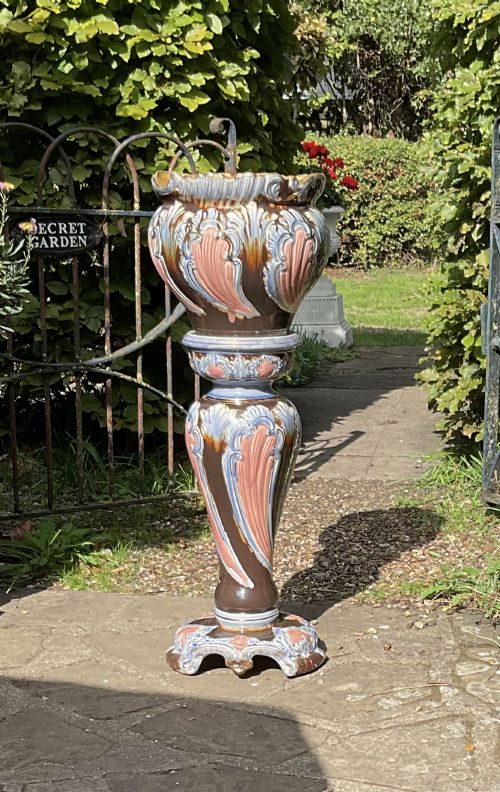
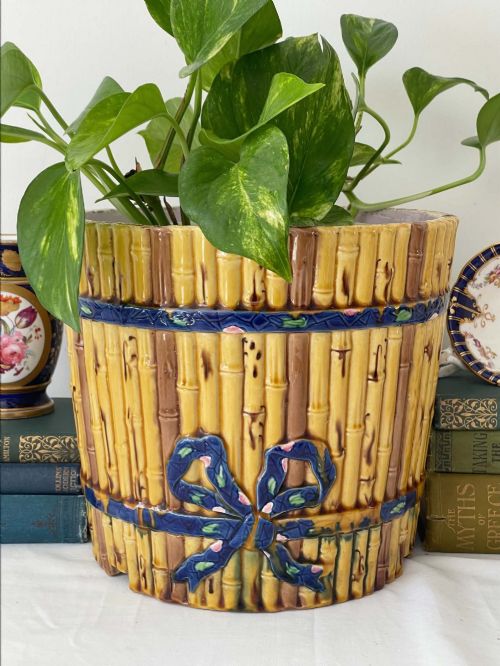
These majolica planter pot pieces are vibrant Victorian and Edwardian glazed earthenware vessels that bring rich colour and botanical relief to any room.
Majolica Planter Pot
When you search for a majolica planter pot, you enter a world of nineteenth-century ceramics dominated by jardinières and pedestals. These pieces span the Victorian and Edwardian eras, with notable examples bearing dates from the 1870s and 1880s.
The most common forms you will meet on this page are substantial jardinieres and urns shaped from earthenware and terracotta. English potteries feature prominently alongside Italian Grand Tour pieces and Scottish ceramic works.
Stylistically, these items draw heavily on Victorian naturalism and the later flowing lines of Art Nouveau. You will frequently encounter bamboo motifs, swan figures, and naturalistic plant forms designed to hold growing greenery.
Materials and construction
Potters shaped these vessels primarily from terracotta and earthenware, building up robust bodies capable of holding damp soil and heavy plants. Skilled hands then applied intricate moulded relief details, ranging from botanical foliage to animal forms like swans.
The defining characteristic is the majolica glaze, a vibrant lead-glazed ceramic finish that creates deep pools of coloured brilliance. This specialised glazing technique allowed makers to achieve rich greens, browns, and blues that catch the light across the moulded surfaces.
The listings here span the Victorian and Edwardian eras, featuring earthenware and terracotta bodies finished with rich majolica glaze.
Judging the work
Quality in a majolica planter pot rests upon the crispness of the moulding and the depth of the coloured glazes. Superior examples display sharp botanical relief and smooth, even glaze coverage that pooling does not obscure.
The reputation of the maker also elevates a piece, with documented works by established potteries showing finer control over the complex firing process. The ambition of the form, whether a simple bamboo design or an elaborate pedestal set, dictates the artistic success of the vessel.
Minton·Burmantofts·Royal Worcester·George Jones
The Majolica Planter Pot Glossary
- Jardiniere
- An ornamental pot or stand for holding plants or flowers. These large vessels typically sit on tabletops or matching ceramic pedestals.
- Majolica
- A type of earthenware coated with an opaque tin or lead glaze and painted with metallic oxide colours. It is celebrated for its bright palette and glossy finish.
- Earthenware
- Porous pottery fired at relatively low temperatures. It forms the standard ceramic body for the majority of these glazed planters.
- Terracotta
- Unglazed or glazed fired clay of a brownish-red colour. It provides a sturdy structural foundation for many nineteenth-century garden urns.
Majolica Planter Pot: Frequently Asked Questions
What is a majolica planter pot?
A majolica planter pot is a nineteenth-century ceramic vessel featuring colourful lead glazes and moulded relief decoration. These pieces were designed to display indoor plants during the Victorian and Edwardian periods.
They appear primarily as jardinieres and urns, often incorporating naturalistic designs such as bamboo, leaves, or animals like swans.
How do I date a majolica jardiniere?
Dating relies on stylistic clues, registered design marks, and impressed factory stamps found on the unglazed base. Victorian pieces often display naturalistic motifs, while later Edwardian examples lean towards Art Nouveau curves.
Many significant pieces carry specific date ciphers or year marks pressed directly into the ceramic body during manufacture.
Can I plant directly inside the jardiniere?
Placing soil and water directly against historic earthenware can cause moisture to seep through the porous body and damage the glaze over time. Using a separate plastic or terracotta inner pot protects the antique ceramic.
This method also allows for easy plant rotation without disturbing the fragile historic structure of the outer vessel.
Where should I display my planter?
These substantial ceramic pieces suit prominent positions in reception rooms, hallways, or conservatories where their bright glazes can catch natural light. Large jardinieres look particularly striking placed on low tables or matching ceramic pedestals.
Ensure they sit safely away from heavy foot traffic to protect their protruding moulded details from accidental knocks.