


Antique Majolica Jardiniere
An antique majolica jardiniere brings vivid colour and sculptural botanical display into a room, uniting functional plant housing with rich ceramic artistry.
Antique Majolica Jardiniere
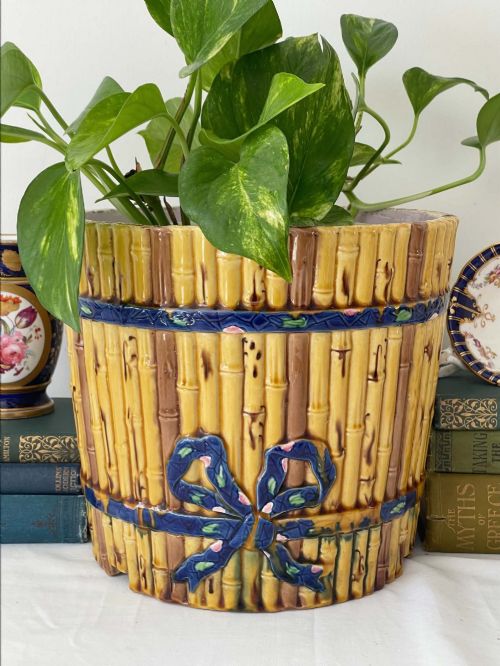
An antique majolica jardiniere is a decorative plant vessel designed to hold potted greenery, frequently encountered as a substantial standalone bowl or paired with a matching pedestal stand. These pieces emerge predominantly from the nineteenth century, spanning Victorian, Edwardian, and early twentieth-century eras.
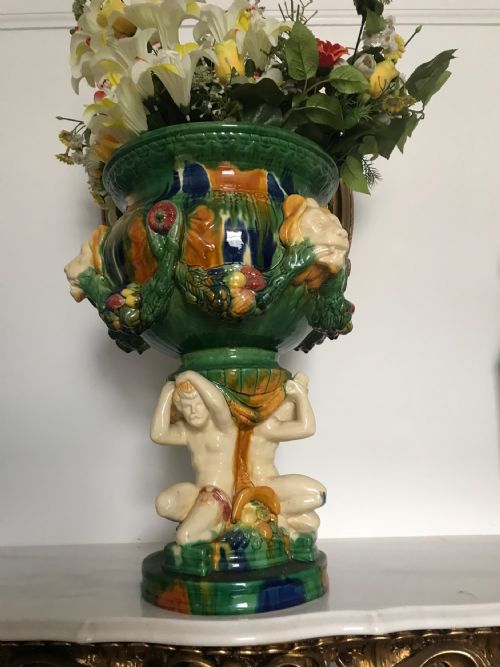
The forms range from naturalistic plant-inspired bodies featuring bamboo, ferns, and rockwork to classical Italian Renaissance revival urns and flowing Art Nouveau contours. Buyers frequently find these vessels accompanied by figural bases, griffins, or lions head decorations that elevate the entire composition.
Origins stretch across English potteries, Scottish works, and continental European kilns, notably from Italy. Many examples function as centrepiece bowls or tall combinations of jardiniere and stand.
How they were made
Potters shaped these vessels using earthenware, terracotta, or ceramic bodies, often moulding them with high relief naturalistic or architectural detail. The physical weight and presence of the piece depend directly on this dense clay foundation.
Surface decoration relies upon coloured lead glazes applied over the earthenware base, producing the characteristic glossy, saturated palette associated with majolica. Lustre glaze variations and detailed hand-painting further define the surface finish on specific continental and English works.
Swans, griffins, and lions frequently guard the bases of these pots, ensuring your ferns are watched over by steadfast ceramic beasts.
What varies in quality
The definition and depth of the moulded relief dictate visual success, with superior pieces retaining crisp botanical details, animal figures, and architectural motifs rather than soft outlines. The complexity of the form, such as incorporating an integrated figural base or a matching pedestal, distinguishes ambitious studio productions from standard vessels.
Glaze application and colour saturation govern the optical richness of the surface. A successful piece displays vibrant, controlled enamel tones that catch the light evenly across complex contours.
Minton·Royal Worcester·George Jones·Clement Massier·Julius Dressler·Burmantofts·Woodlesford
The Antique Majolica Jardiniere Glossary
- Majolica
- A type of pottery decorated with opaque coloured lead glazes fired over an earthenware body. It is celebrated for its brilliant hues and sculptural potential.
- Jardiniere
- A large ornamental pot or bowl used for holding plants or flowers. They frequently stand upon matching pedestals or floor bases.
- Earthenware
- Porous pottery fired at relatively low temperatures which requires glazing to become watertight. It forms the structural base for most majolica pieces.
- Lustre glaze
- A metallic surface treatment that produces an iridescent sheen upon the ceramic body. It appears on select turn-of-the-century earthenware pieces.
- Terracotta
- Unglazed or glazed fired red clay used for sculptural urns and planters. It provides a robust structural foundation for grand tour and Italian pieces.
Antique Majolica Jardiniere: Frequently Asked Questions
What is an antique majolica jardiniere?
An antique majolica jardiniere is a glazed ceramic plant vessel produced primarily during the Victorian and Edwardian periods. These pieces are characterised by colourful lead glazes and ornate, often naturalistic moulding.
They serve as decorative containers for indoor plants, frequently resting on matching ceramic pedestals or figural stands.
How do you use a jardiniere stand?
A jardiniere stand elevates a heavy ceramic planter to display height within a room. The combination of vessel and pedestal acts as a focal architectural element.
Potted plants sit directly inside the top bowl, allowing trailing foliage to cascade over the glazed rim.
How do you distinguish Victorian styles?
Victorian pieces encompass diverse aesthetic movements, from naturalistic bamboo and fern motifs to Italian Renaissance revival urns. Makers embraced both rustic textures and formal classical symmetry during this era.
Later Victorian and Edwardian examples often incorporate flowing Art Nouveau contours or lustre glazes.
Where were these planters made?
Production centres included prominent English potteries, Scottish ceramic works, and continental European kilns. Italian workshops frequently produced large terracotta and majolica urns.
English factories like Minton and Royal Worcester developed distinctive earthenware bodies and complex moulded glazes.