


Rustic French Confit Pot
These rustic french confit pot examples are heavy earthenware storage vessels shaped by French provincial makers for everyday household use.
Rustic French Confit Pot
A rustic french confit pot is a traditional storage vessel created in the French countryside during the eighteenth and nineteenth centuries. These pots served a practical purpose in rural kitchens for preserving meats and storing oils.
Most pieces seen here belong to the nineteenth century, though earlier eighteenth century examples also appear. Forms range from standard jars to multi handled olive jugs and large terracotta bowls.
French country and provincial styles define the aesthetic of these items. Buyers frequently encounter glazed earthenware constructions shaped from heavy clay.
How they were made
Potters shaped these vessels from local terracotta and clay using traditional throwing techniques. The resulting earthenware forms possess heavy, durable walls designed to withstand daily agricultural and kitchen tasks.
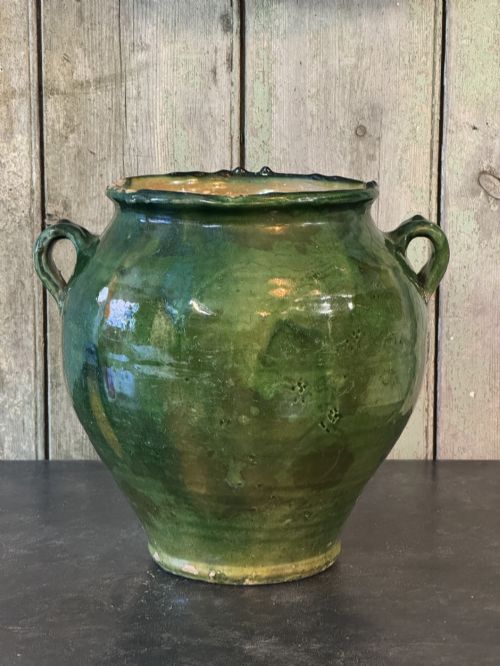
Makers applied glazes, notably green finishes, to the upper sections or entire surfaces of the vessels. This glaze provided a functional seal while creating the characteristic pools and drips seen on nineteenth century pieces.
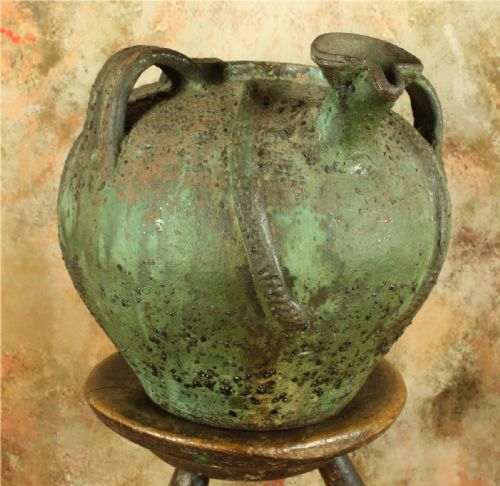
Certain walnut oil pots feature three handles, designed for cooperative lifting when heavy with oil.
What varies in quality
Quality rests in the distribution of the glaze and the integrity of the earthenware body. Pots with rich, even green glazing show a higher degree of deliberate artistry than plain terracotta surfaces.
The presence of handles and the overall balance of the vessel dictate visual weight. Well proportioned handles and distinct potting marks elevate an ordinary storage jar into a striking decorative object.
The Rustic French Confit Pot Glossary
- Terracotta
- A porous, unglazed or glazed red earthenware clay fired at low temperatures. It forms the structural base for most provincial French vessels.
- Confit pot
- A utilitarian jar designed for storing preserved meats submerged in fat. These pots typically feature sturdy handles and glazed upper sections.
- Biot jar
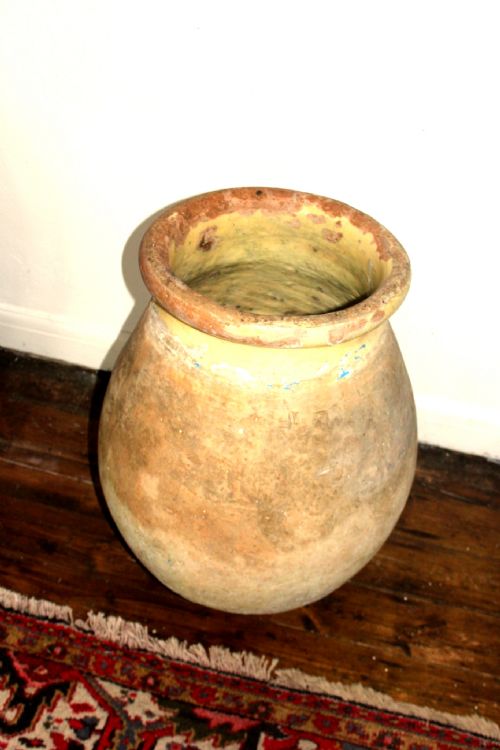
- A large terracotta storage vessel originating from the Provençal town of Biot. These jars often display an aged patina resulting from long exposure to the elements.
- Glaze
- A vitrified coating applied to ceramic pottery to render it impermeable to liquids. On these pots, green glazes predominate.
Rustic French Confit Pot: Frequently Asked Questions
What were confit pots used for?
These vessels stored meats like duck or pork preserved in their own fat. The heavy earthenware kept the contents cool in provincial larders.
Rural households relied on them for daily food storage before refrigeration. Their deep bodies and wide mouths suited bulk preservation.
How do I date a confit pot?
Dating relies on stylistic clues and material wear from the eighteenth and nineteenth centuries. Earlier pieces often show distinct handle configurations and drier clay bodies.
Glaze thickness and potting irregularities also help separate eighteenth century vessels from later nineteenth century examples.
Where should I place these pots?
Their earthy tones and large forms suit rustic kitchens and living spaces. They function well as standalone decorative objects or as umbrella stands.
Placing them on stone floors or sturdy wooden tables highlights their provincial origins. Avoid damp areas that might affect the porous terracotta.
Are all confit pots glazed?
Many examples feature glazes applied to the upper portion or the entire interior and exterior. This green or clear coating prevented oil seepage through the porous clay.
Unglazed terracotta pots also exist within provincial groups, relying entirely on the dense clay body for storage utility.