
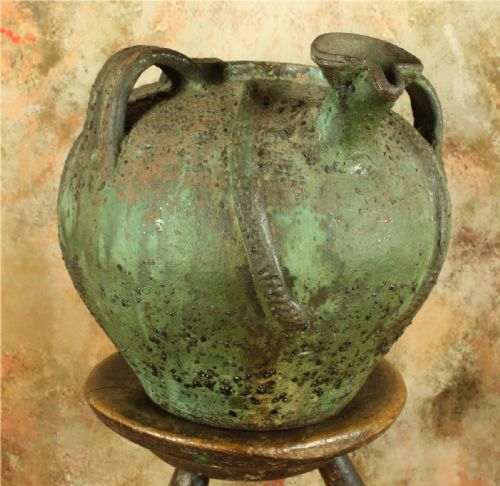
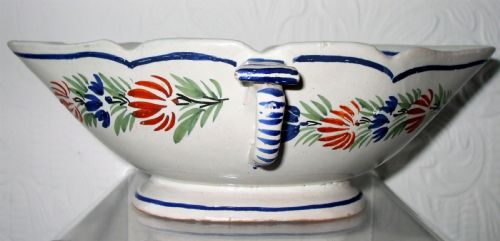


French Country Pottery Vessel
These french country pottery vessel examples bring rustic utility into modern interiors through time-worn glazes and honest earthenware forms.
French Country Pottery Vessel
A french country pottery vessel encompasses utilitarian earthenware and stoneware pieces originating from provincial France across the eighteenth, nineteenth and early twentieth centuries. These items serve practical domestic and agricultural purposes, ranging from oil storage to wine pouring and table service.
The selections available here lean heavily toward functional forms such as confit pots, olive jugs, vinegar barrels and sauceboats. Buyers encounter robust storage jars alongside smaller vessels like double sauceboats and inkwells, each carrying the distinct marks of rural French manufacture.
Originating predominantly within the French provincial and rustic European folk traditions, these objects demonstrate regional utility rather than courtly refinement. The primary periods represented span the eighteenth century through to the 1930s, capturing eras of traditional hand production.
Materials and construction
Makers shaped these pieces from local terracotta, earthenware and stoneware, utilising basic clay bodies dug straight from regional earth. Potters threw or built these objects by hand before applying functional lead or salt glazes to seal the porous material for liquids.
Surface treatments focus on utility, featuring rich green glazes or simple salt glaze finishes that protect the vessel from oils, vinegars and foodstuffs. The firing processes leave natural variations in the clay and glaze, recording the heat of traditional kilns.
Several heavy olive jugs still retain faint drips of centuries-old cooking oil on their rims.
Assessing quality in provincial pottery
Quality rests upon the preservation of the original glaze and the structural integrity of heavy bodies like three-handled olive jugs and confit jars. Pieces that retain deep, even surface colouration without extensive modern repair stand at the upper end of the range.
Form and proportion also dictate standing, as well-balanced throwing on larger items like vinegar barrels and amphora vessels demonstrates superior potter skill. Simpler domestic items derive their appeal from honest, heavy wear that speaks to decades of active service.
HB Quimper·Aladin French Faience
The French Country Pottery Vessel Glossary
- Confit Pot
- A heavy earthenware jar traditionally used in rural France for preserving meats under fat. These pots usually feature two horizontal handles and a partially glazed body.
- Faience
- Tin-glazed earthenware produced in France, known for smooth white or coloured surfaces often decorated with hand-painted motifs. Pieces by makers like HB Quimper show this technique.
- Salt Glaze
- A finish achieved by throwing common salt into the kiln during high-temperature firing, creating a durable textured surface resembling orange peel. This treatment suits heavy storage vessels.
- Terracotta
- Fired unglazed or glazed clay of a brownish-red colour, widely used for utilitarian jugs, bowls and jars. The material is porous unless sealed with a proper glaze.
- Olive Jug
- A large storage vessel designed for holding olive oil, frequently constructed with multiple handles for easier lifting and pouring in agricultural settings.
French Country Pottery Vessel: Frequently Asked Questions
What were french country pottery vessels used for?
These vessels served everyday domestic and agricultural functions in French households, storing commodities like oil, vinegar, confit meats and water.
Larger jars held provisions in cellars, while smaller items like sauceboats and inkwells functioned directly on dining tables and desks.
How do I date an 18th century confit pot?
Dating relies on observing the thickness of the earthenware body, the pooling of the glaze and the specific form of the handles.
Earlier pieces from the 18th century often display heavier, more irregular throwing lines compared to standardised later nineteenth-century examples.
Are these pottery vessels safe for food?
Most antique pieces feature historic lead or salt glazes that may not meet modern food safety standards for daily culinary use.
Buyers generally utilise these items for decorative display, dried botanicals or holding dry kitchen utensils rather than serving wet foods.
How should I clean antique earthenware?
Care requires gentle cleaning with warm water and a soft cloth, avoiding harsh chemical detergents that can penetrate porous old clay.
Because many pieces have lived long working lives with hairline fractures, keeping them dry prevents moisture from lingering inside the body.