


French Terracotta Confit Pot
These French terracotta confit pot examples are heavy storage vessels defined by rich earth tones and historic utility.
French Terracotta Confit Pot
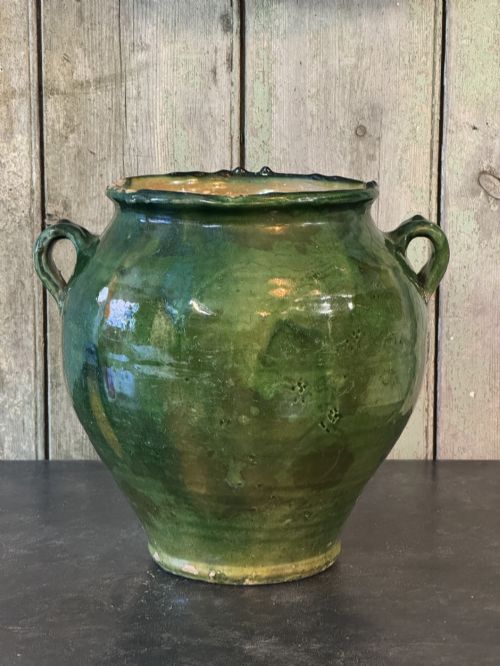
A French terracotta confit pot is a traditional agricultural vessel once utilised in the French countryside for preserving meats, oils, and grains. The selection here spans the eighteenth century through to the twentieth century, bringing rustic provincial character into modern interiors.
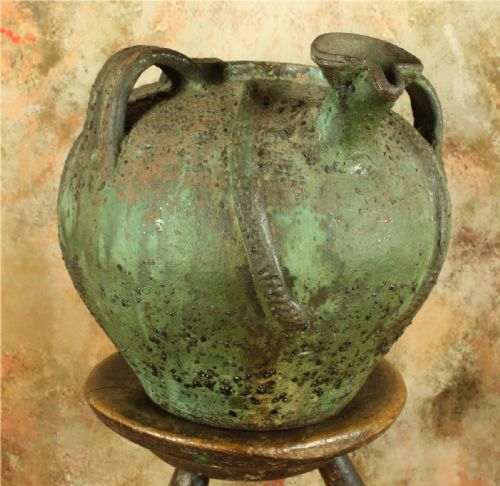
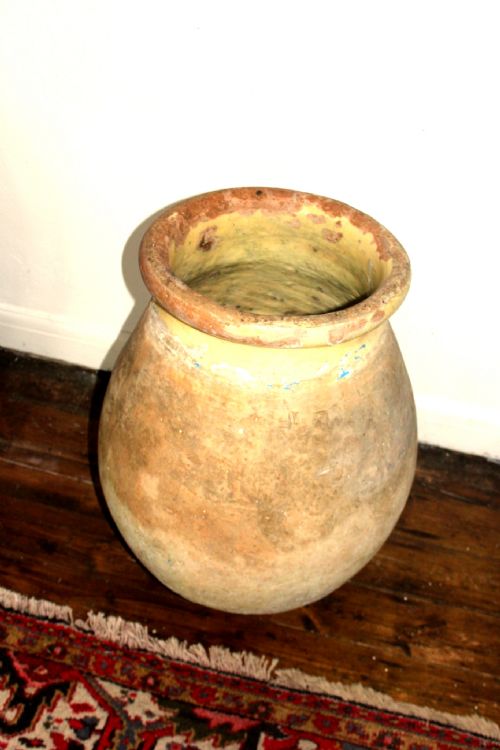
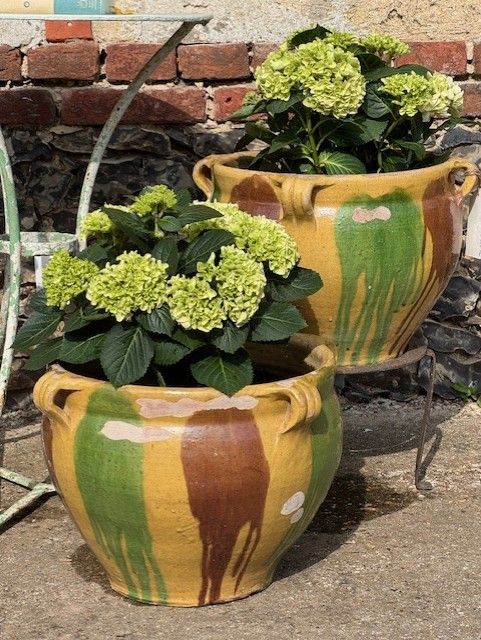
Most pieces encountered on this page belong to the nineteenth century, alongside earlier eighteenth century walnut and olive oil jugs and mid-century planters. Forms range from classical storage jars and urns to large glazed bowls and multi-handled vessels.
These items originate primarily from regional traditions in the south of France, reflecting the practical needs of rural domestic life. Buyers seek them for their weathered patinas and authentic utilitarian forms.
How they were made
Makers shaped local clay by hand, producing robust earthenware walls designed to withstand daily agricultural demands. Firing took place in regional kilns using traditional methods handed down through generations.
Surfaces often feature lead-based or green glazes applied partially or fully to seal the porous terracotta body against oils and liquids. Dribble glaze effects and aged patinas naturally developed from kiln variations and long-term use.
Object types span storage jars, olive jugs, planters, vases, urns, and decorative bowls originating from French provincial traditions.
What varies in quality
The distinction between standard utility vessels and finer survivals lies in the depth of the glaze and the harmony of the thrown form. Rich green coloration and intact dribble glazes elevate the visual weight of a piece.
Surface character also dictates standing, where authentic signs of age enhance the vessel rather than detract from its integrity. Balanced proportions and sturdy handles demonstrate superior regional craftsmanship.
The French Terracotta Confit Pot Glossary
- Terracotta
- A porous, unglazed or glazed baked earthenware clay fired at moderate temperatures. It forms the structural base of most southern European storage vessels.
- Confit pot
- A traditional French pot featuring handles, built specifically for preserving food such as duck confit. These vessels were traditionally partially buried in larders.
- Glaze
- A vitreous coating fused to the earthenware body through firing to render the vessel impermeable. Green and amber tones dominate regional French examples.
- Provincial
- Pertaining to the regions of France outside Paris, characterising simpler, sturdier furniture and utilitarian ceramics made for local use.
- Patina
- The surface sheen and textural softening acquired by clay and glaze through decades of handling, washing, and environmental exposure.
French Terracotta Confit Pot: Frequently Asked Questions
What were French confit pots originally used for?
These vessels served primarily in rural French kitchens for preserving and storing meats, particularly duck and pork cooked in its own fat. The heavy earthenware kept contents cool in larders.
They also held valuable kitchen commodities like olive oil, walnut oil, and grain, functioning as the workhorses of the traditional French country pantry before refrigeration existed.
How do I style a confit pot at home?
Confit pots suit placement on large floor areas, kitchen worktops, or open shelving where their earthy textures stand out. Their substantial presence anchors a room without needing additional adornment.
Many collectors use them empty as sculptural objects, while others fill larger jars with dried branches, kitchen utensils, or large botanical stems.
How do I tell an 18th century pot from a 19th century one?
Eighteenth century examples often show heavier potting techniques, deeper tool marks, and specific forms like multi-handled olive oil jugs. The clay body tends to feel denser and more idiosyncratic due to less standardised regional kiln practices.
Nineteenth century pots generally exhibit more refined throwing lines, standardised green or partial glazes, and cleaner rim profiles while retaining hand-thrown irregularities.
Are these pots waterproof?
Fully glazed examples generally hold water safely, though microscopic hairline cracks can develop over centuries of use. It remains wise to place a protective saucer beneath any vessel holding fresh flowers.
Uncertain pots or those with partial glazes should be fitted with a plastic liner if utilised for plant displays to protect interior surfaces from moisture seepage.