


French Terracotta Storage Jar
A French terracotta storage jar brings rustic utility into a room, offering warm earthy tones and tactile surfaces shaped by daily domestic work.
French Terracotta Storage Jar
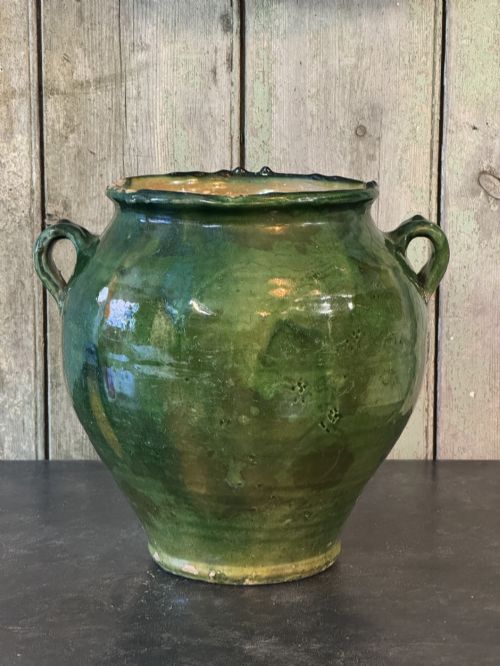
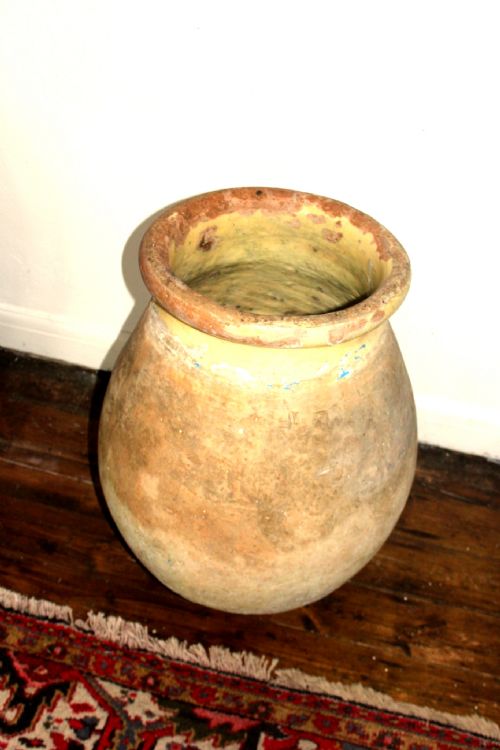
A French terracotta storage jar is a vessel designed for holding provisions like oil, olives, nuts, or preserves, originating from rural regions across France. When you search for a french terracotta storage jar, you encounter utilitarian containers spanning the eighteenth, nineteenth, and early twentieth centuries. The examples here include green confit pots, Biot jars, walnut oil jars, and painted olive jars.
The most common forms on this page are confit pots and olive jars, typically rendered in terracotta, earthenware, or glazed ceramic. These pieces reflect styles such as French country, French provincial, and rustic farmhouse. They range from simple garden pots to large vessels mounted on wrought iron stands.
Materials and construction
Makers shaped these vessels from clay and terracotta, utilising local earth to form thick, durable walls capable of withstanding heavy farm use. Many pieces feature an applied glaze, particularly in green tones, which sealed the porous earthenware for storing oils and food.
Potters built these jars by hand or on simple wheels, sometimes incorporating wrought iron stands for support. Surfaces often display paint or natural aged patina resulting from decades of exposure and use.
Styles represented on this page focus heavily on French country, rustic farmhouse, and Mediterranean provincial forms.
Assessing quality and character
Quality in a French terracotta storage jar lies in the integrity of the form, the richness of the clay body, and the depth of the glaze. An even application of green glaze or a well-preserved painted surface elevates a piece above standard utilityware.
The degree of aged patina also defines the character of the vessel. Surfaces showing genuine wear, historic marks, and unaltered terracotta tell a clearer story of their agricultural past than restored or overly cleaned examples.
The French Terracotta Storage Jar Glossary
- Terracotta
- A porous, unglazed or glazed fired earthenware clay possessing a brownish-red colour. It forms the primary body of traditional Mediterranean storage vessels.
- Confit pot
- A traditional French earthenware jar designed for preserving and storing meats or fats. They typically feature single or double handles and partial glazing.
- Biot jar
- A large, heavy terracotta storage vessel traditionally produced in the Provençal town of Biot. These jars were widely used for holding olive oil and grain.
- Earthenware
- Pottery fired at lower temperatures, remaining porous unless glazed. It constitutes the standard fabric for domestic storage vessels before modern industrial ceramics.
- Patina
- The surface texture, wear, and colour acquired by an object over long periods of use and exposure. It indicates the age and history of terracotta and glaze.
French Terracotta Storage Jar: Frequently Asked Questions
What were French terracotta storage jars used for?
These vessels served practical purposes on farms and in rural households across France. They held essential provisions including olive oil, walnuts, confit meats, and grain.
Over time, their robust construction made them reliable containers for daily agricultural and domestic storage needs.
How do I style a storage jar at home?
A French terracotta storage jar works well as a standalone decorative object on floors, tables, or garden terraces. Their earthy textures complement natural wood, stone, and woven materials.
Larger olive jars and confit pots can remain empty to display their form or hold dried branches and foliage.
How can I tell the age of a jar?
Dating relies on observing manufacturing marks, the composition of the clay, and the characteristics of the glaze or paint. Eighteenth and nineteenth-century pieces often display hand-thrown irregularities and deep patination.
Comparing the form and material against established period examples helps narrow down the decade of production.
Are these jars waterproof?
Fully glazed jars, such as green confit pots, typically hold liquids due to the impermeable glass-like coating inside. Unglazed or partially glazed terracotta vessels remain porous and absorb moisture.
Using a liner inside unglazed garden pots protects surfaces if you intend to use them for fresh cut flowers or water.