




Regency Worcester Urn
These regency worcester urn examples combine classical form with porcelain mastery, bringing English Regency elegance to any interior.
Regency Worcester Urn
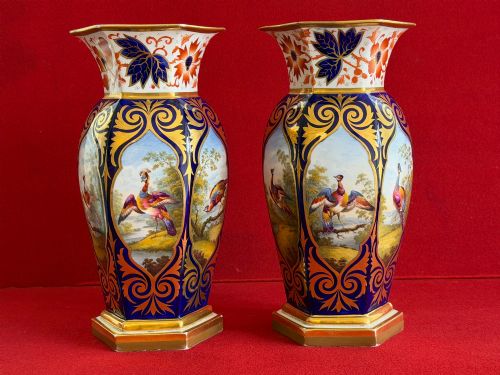
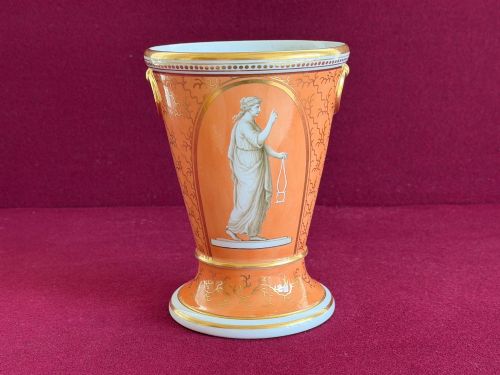
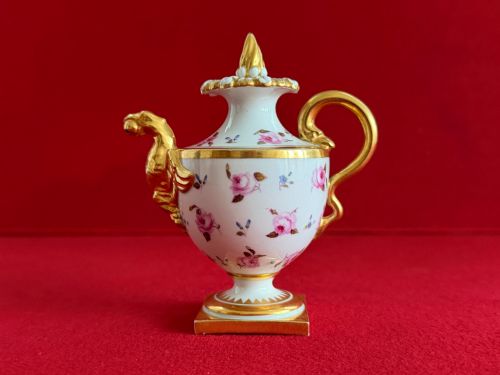
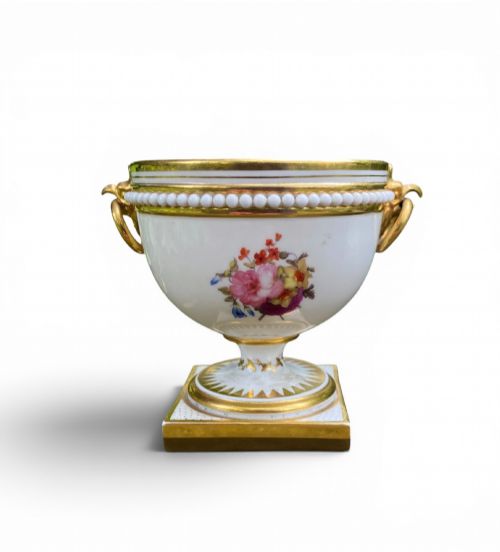
A regency worcester urn represents the pinnacle of early nineteenth-century English porcelain production, spanning the Regency and Georgian periods. These decorative vessels appear primarily as vases, jardinieres, ice pails, and rose water sprinklers from renowned factories in Worcester.
The objects on this page showcase forms shaped by classical antiquity, often heavily influenced by Greek and Roman shapes. Buyers meet matching pairs and individual garnitures that served as grand ornamental centrepieces for period rooms.
Originating from workshops operating around eighteen hundred to eighteen twenty-five, these pieces display the distinct aesthetic vocabulary of the Regency and Grand Regency styles. They bridge the gap between functional tableware and monumental decorative art.
How they were made
Makers utilised soft-paste porcelain and standard porcelain bodies as the foundation for each vessel, shaping them on the wheel or casting them in moulds. Artisans then applied intricate hand-painting, enamel colours, and detailed topographical scenes directly onto the ceramic surface.
The finishing process relied heavily on gold leaf, gilding, and fire-gilt accents to highlight handles, rims, and classical motifs. Skilled hands secured these metallic elements through high-temperature firing, ensuring a durable and luminous lustre.
Rose water sprinklers let Regency hosts mist guests with scented water, proving that historical parties involved serious atmosphere control.
What varies in quality
The distinction between standard output and the finest examples rests upon the precision of the hand-painted decoration and the crispness of the porcelain mouldings. Top-tier vessels feature meticulous topographical scenes or complex Imari patterns executed by named or highly skilled hands.
Proportion and the richness of the gilding also dictate the hierarchy of these objects, with heavy, burnished gold leaf indicating superior workshop production. The survival of matching covers, pair symmetry, and complex vessel forms further elevates the standing of a given piece.
Flight Barr and Barr·Chamberlain Worcester·Thomas Lowe
The Regency Worcester Urn Glossary
- Gilding
- The application of gold leaf or powdered gold to the surface of porcelain. This technique adds metallic highlights and rich borders to the ceramic body.
- Jardinière
- A decorative ceramic pot or vessel designed to hold plants or flowers. These items often feature flared rims and sturdy bases suited for interior display.
- Imari
- A decorative style characterised by a palette of underglaze blue, iron red, and abundant gold. Worcester factories adopted this Japanese-inspired aesthetic during the Regency period.
- Soft-paste porcelain
- A ceramic composition containing glass frit and white clay, fired at lower temperatures than hard-paste. It produces a warm, slightly translucent body popular in early English factories.
- Bough pot
- A specialised vessel designed to hold cut branches or flowers for interior decoration. These pieces typically include a pierced cover to secure botanical arrangements.
Regency Worcester Urn: Frequently Asked Questions
How do I date a regency worcester urn?
Dating relies on identifying specific factory partnerships, handwritten marks on the base, and stylistic markers from the Regency period. Changes in factory names from Flight and Barr to Flight, Barr and Barr help narrow the production window.
Additionally, the evolution of painting styles from restrained neoclassical designs to busier topographical scenes provides reliable chronological clues. Comparing handle shapes and gilding patterns against documented pieces confirms the era.
Where were these porcelain pieces made?
These pieces were produced in factories located in Worcester, England, which operated as major centres for ceramic innovation. Prominent firms like Flight, Barr and Barr and Chamberlain created these luxury goods.
The city provided access to skilled modellers, painters, and gilders who supplied the British aristocracy with high-end tableware and ornamental vessels. Local proximity to skilled artisans allowed for tight quality control across production runs.
How were these urns used originally?
Original use centered on the decoration of grand drawing rooms, dining tables, and entrance halls. Many vessels served as centrepieces for floral arrangements, rose water distribution, or chilling wine at the table.
As status symbols, they demonstrated the owner's taste and wealth to visiting guests during formal gatherings. Their presence elevated the interior aesthetics of Regency homes through classical forms and bright gilding.
How should I display a regency worcester urn?
Display these porcelain vessels on stable, level surfaces away from direct sunlight and heavy foot traffic. Placing them on mantelpieces, sideboards, or dedicated display cabinets allows their hand-painted details to be seen clearly.
Ensure the environment maintains a stable temperature to protect the antique porcelain body and delicate gilding. Pairing matching vases or garniture sets symmetrically enhances their visual impact in a room.