


English Porcelain Spill Vase
An English porcelain spill vase is a slender holder made to catch burnt taper ends, and collectors prize them for their miniature painted scenes and period glaze.
English Porcelain Spill Vase
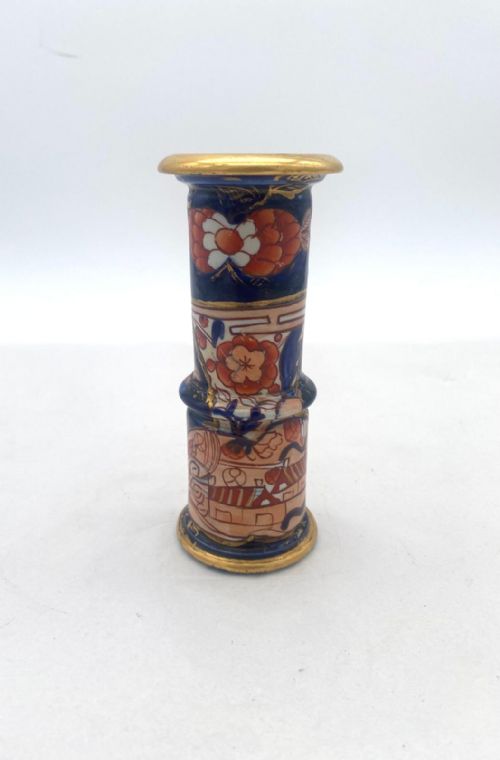
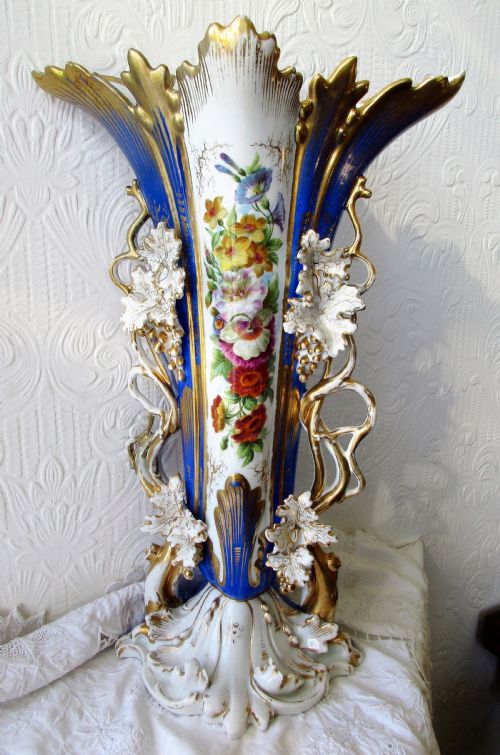
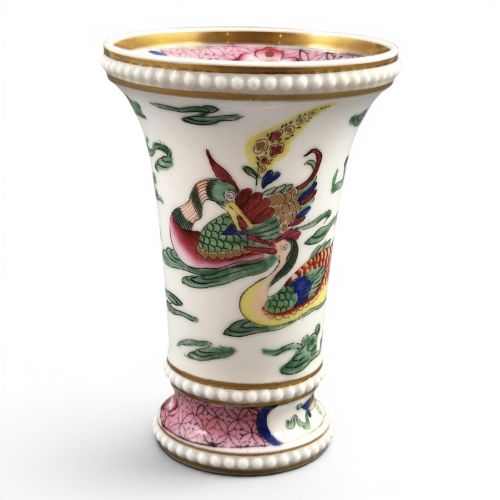
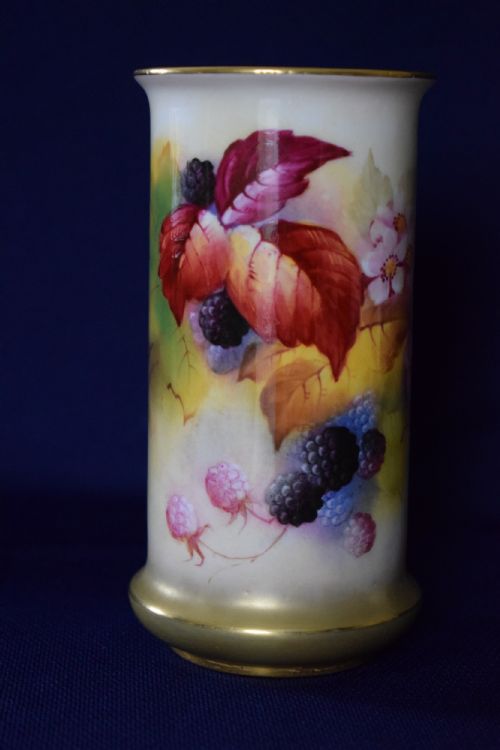
An english porcelain spill vase serves primarily as a mantelpiece holder for lighting tapers, evolving from simple cylindrical tubes into elaborate figural groups and cornucopia forms. The selection here spans Georgian and Regency eras through to later Victorian and twentieth century Worcester productions.
Buyers meet early nineteenth century cabinet pieces alongside Staffordshire pottery figures and later hand painted works. The forms range from plain patterned cylinders to sculptural animals like deer and sheep.
The material origins trace through porcelain, earthenware, and glazed ceramic, often decorated with gilding and enamel. These small vessels capture both formal factory artistry and domestic folk traditions.
Materials and manufacture
Potters shaped these vessels using fine porcelain or earthenware bodies, applying a smooth glaze to seal the ceramic surface before kiln firing. Gilding and gold leaf accents were then added by hand to highlight rims and figural details.
Enamel colours and surface painting required skilled brushwork, particularly on pieces featuring naturalistic scenes or animal studies. Firing techniques determined the brilliance of the final glaze and the stability of the painted decoration.
Staffordshire potters modelled sturdy sheep and deer to hold your household fire sticks.
Judging quality and execution
Quality rests heavily on the precision of the hand painting and the crispness of the porcelain moulding. Pieces bearing the signatures of known artists or established factory marks demonstrate superior workshop execution.
The delicacy of the gilding and the balance of the figural composition distinguish finer cabinet specimens from standard utilitarian wares.
Spode·Flight Barr and Barr·Royal Worcester
The English Porcelain Spill Vase Glossary
- Spill vase
- A small upright container designed to hold wooden tapers used for lighting fires and candles. They sit comfortably on mantels and tables.
- Gilding
- The application of gold leaf or gold paint to ceramic surfaces. It creates decorative borders and highlights moulded details.
- Staffordshire pottery
- Earthenware produced in the Staffordshire potteries, often moulded into figural groups and animal spill holders. These items reflect popular nineteenth century themes.
- Enamel
- A glass-based decorative coating fused to porcelain through firing. It provides vibrant, permanent colour to hand painted scenes.
- Cornucopia
- A horn-shaped vessel symbolising abundance, often utilised in Regency and Victorian decorative ceramic designs. Pairs of these appear frequently in early nineteenth century selections.
English Porcelain Spill Vase: Frequently Asked Questions
What was a spill vase used for?
These vessels held thin rolled paper or wooden spills used to transfer fire from the hearth to candles and lamps.
They kept the fireplace tidy while remaining decorative on the mantelpiece.
How do I date an antique spill vase?
Dating relies on ceramic paste types, factory marks, and stylistic clues such as Regency shapes or Victorian figural subjects.
Comparative pieces in archives help narrow the decade of production.
Are all spill vases made of porcelain?
While many fine examples utilise porcelain, others consist of Staffordshire earthenware and glazed ceramic.
Materials vary according to the manufacturing period and the pottery's intended market.
How should I display a spill vase?
Display them on mantels, desks, or cabinets where their painted details and cabinet forms remain visible.
Keep them away from direct sunlight to protect the enamel colours.