


Painted Porcelain Spill Vase
These painted porcelain spill vase examples bring cabinet-level artistry to your mantelpiece, offering hand-painted scenes and gilded details from centuries past.
Painted Porcelain Spill Vase
A painted porcelain spill vase stands as a slender tubular vessel originally created to hold paper spills for lighting candles and fires. You will frequently encounter nineteenth-century English manufactories and twentieth-century cabinet pieces on this page, reflecting established domestic traditions.
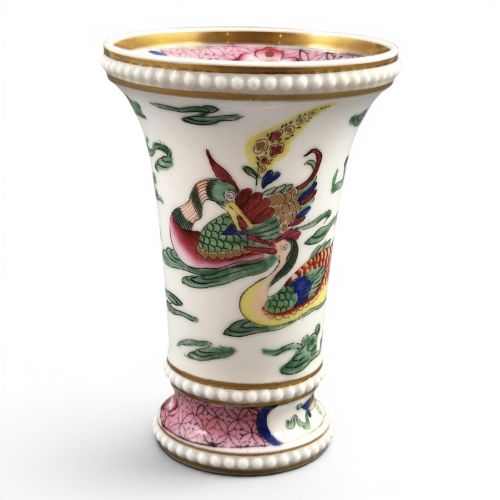
The selections span Georgian and Regency productions alongside Victorian and later twentieth-century pieces. Makers such as Royal Worcester and Flight Barr and Barr dominate the ceramic offerings, accompanied by Staffordshire earthenware figures and Japanese Imari imports.
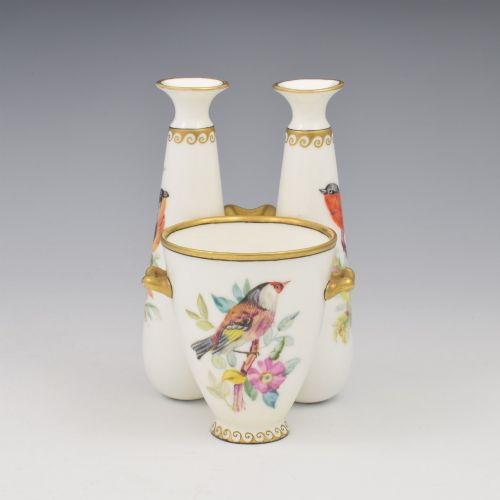
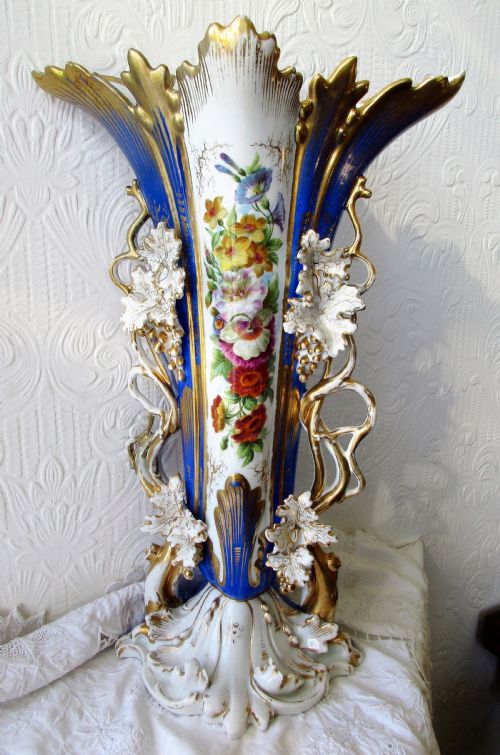
Forms range from simple cylindrical spill vases to cornucopia shapes and triple vase configurations. Decorative subjects vary from ornithological studies and highland cattle to fruit and floral arrangements.
How They Were Made
Potters shaped fine porcelain, bisque porcelain, and earthenware bodies by hand or mould before applying delicate enamel pigments. Artisans then executed intricate hand-painted motifs directly onto the ceramic surface.
Gilding, gold leaf, and enamel work enrich the painted designs, requiring multiple firings in kiln heat to fix the colours and metallic accents permanently.
Even a humble spill vase could be painted with highland cattle, proving the Victorians wanted fine art everywhere, including near the kindling.
What Varies in Quality
The refinement of the hand-painted decoration determines the standing of a piece, with named artists elevating standard productions into cabinet treasures. Precise brushwork in subjects like fruit or cattle distinguishes superior studio execution from routine factory output.
The crispness of the porcelain moulding and the preservation of delicate gilding define the integrity of the object. Weight, balance, and the subtlety of enamel colouring separate ordinary domestic wares from exceptional collector items.
Royal Worcester·Flight Barr and Barr·Vion et Baury·John Hopewell·Spode
The Painted Porcelain Spill Vase Glossary
- Spill vase
- A slender vessel designed to hold paper spills used for transferring flames to candles and hearths.
- Bisque porcelain
- Unglazed white porcelain fired once to produce a matte, biscuit-like texture resembling marble.
- Gilding
- The application of gold leaf or powdered gold suspended in a medium to the surface of ceramics.
- Imari
- A traditional Japanese style of porcelain decoration characterised by underglaze blue and iron red with supplementary gold.
- Staffordshire flatback
- A type of earthenware figure manufactured in Staffordshire with a decorated front and a flat, unpainted rear intended for placement against a wall.
Painted Porcelain Spill Vase: Frequently Asked Questions
How do I care for my painted porcelain?
Maintain your porcelain by dusting it gently with a soft, dry brush to prevent the accumulation of grime on delicate painted surfaces. Avoid using harsh chemical cleaners or abrasive cloths that might damage fragile enamel and gold leaf.
Keep the vessels away from direct, strong sunlight to preserve the vibrancy of the hand-painted pigments over the years.
Who made these porcelain spill vases?
Prominent English factories such as Royal Worcester and Flight Barr and Barr created many of the finest painted porcelain pieces. Individual artists often signed their miniature landscapes, fruit studies, and ornithological scenes directly onto the ceramic body.
Japanese workshops also exported Imari porcelain vessels that served similar decorative functions in period interiors.
How can I tell the period?
Dating relies on identifying factory backstamps, stylistic traits, and the specific palette of enamel colours used by the manufacturer. Georgian and Regency pieces often feature classic neoclassical forms, while Victorian and later works showcase naturalistic animal or fruit studies.
Signatures by known porcelain painters also help anchor pieces within specific early twentieth-century decades.