
Gilded Ceramic Vase Pair
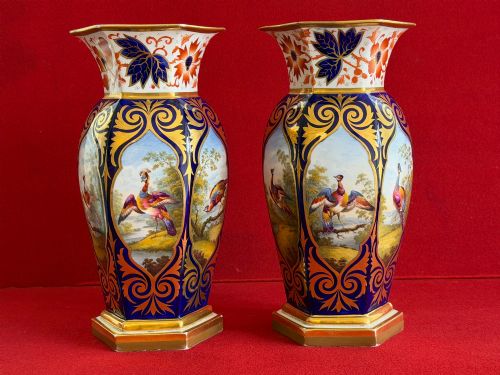
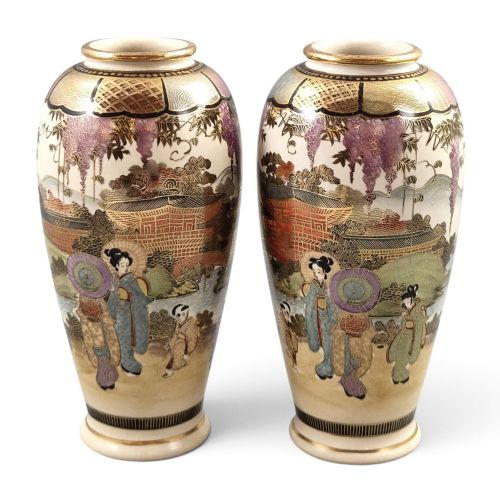
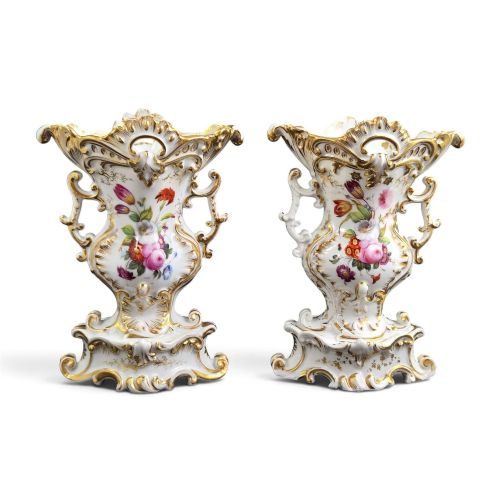
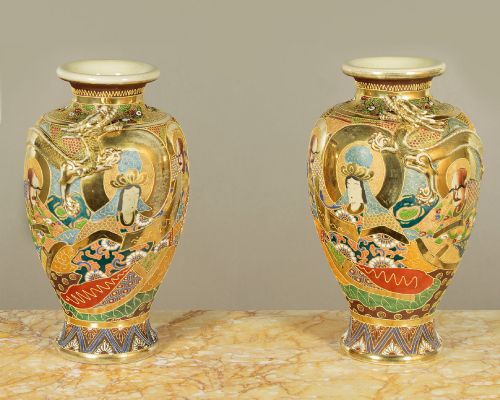
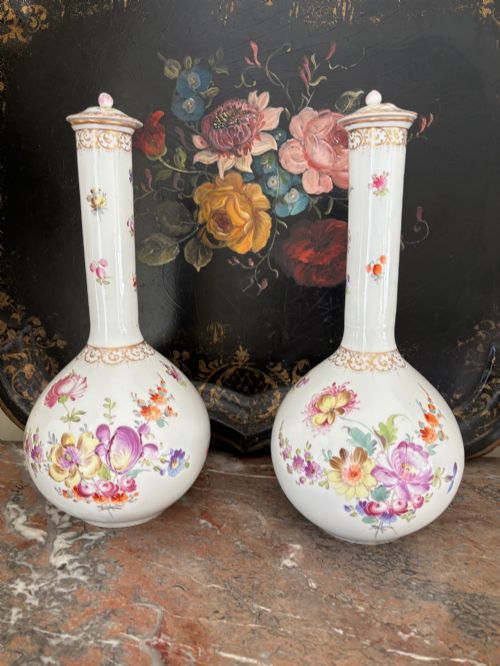
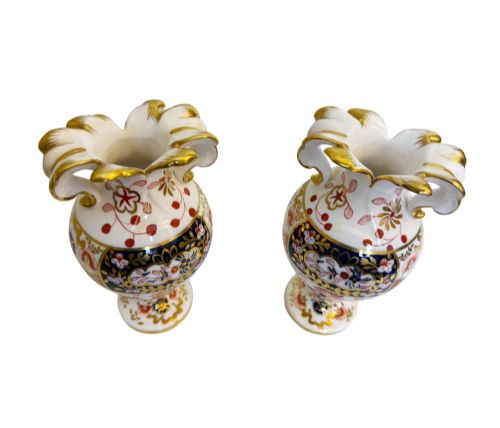
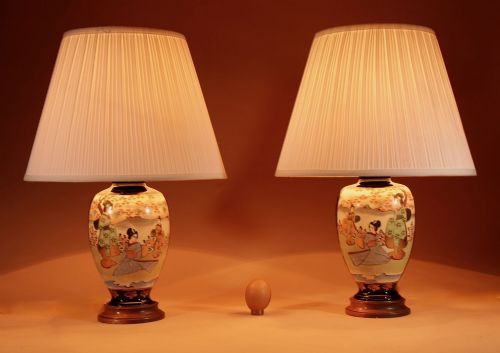
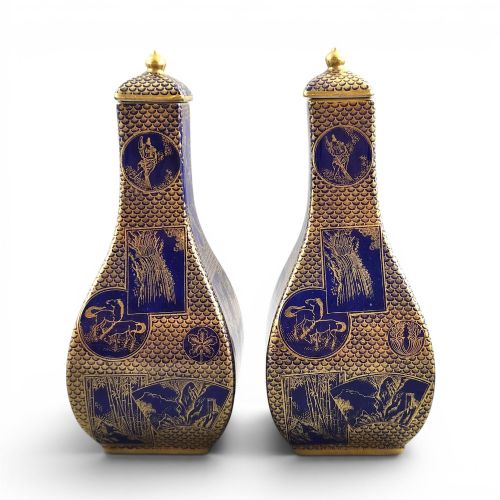
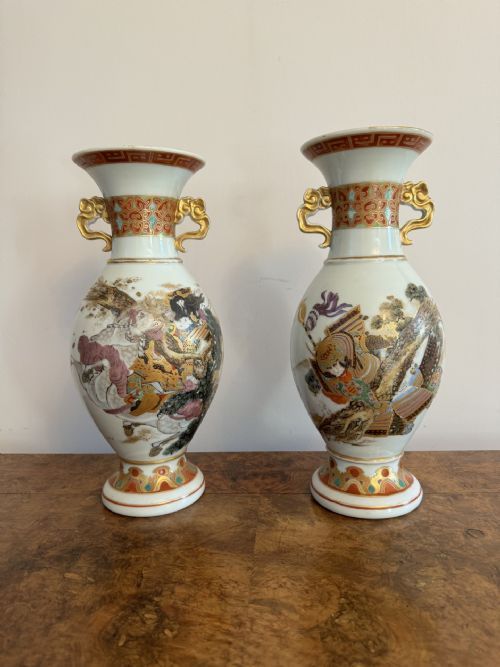
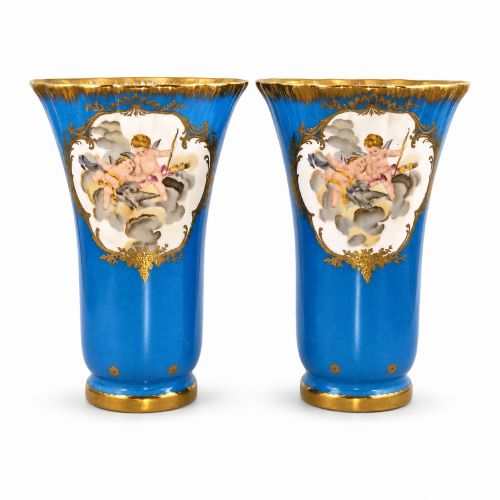
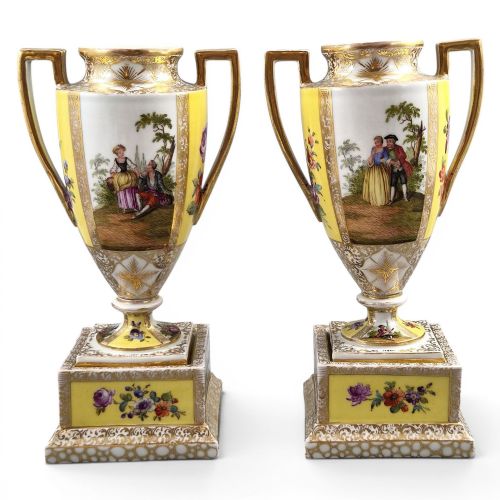
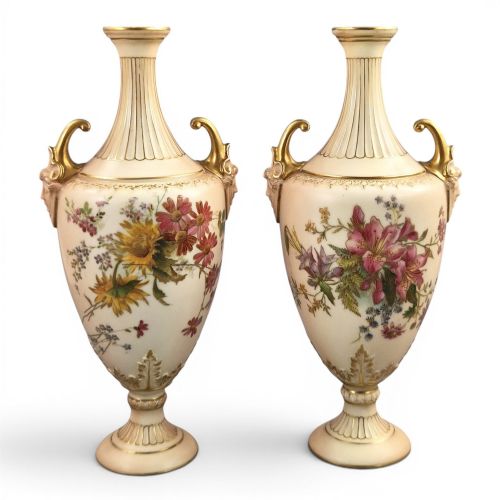
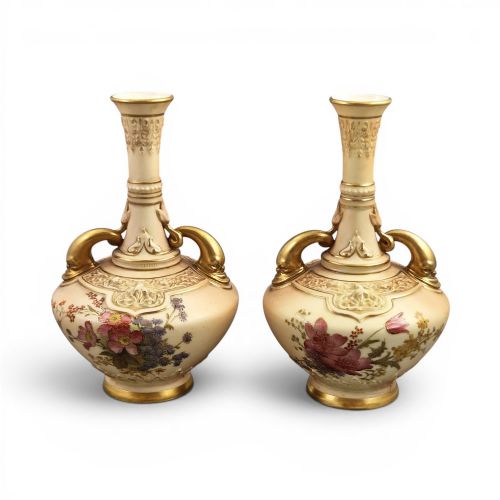
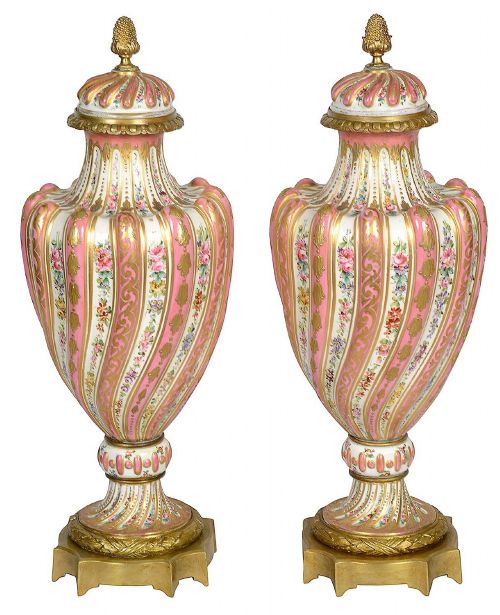
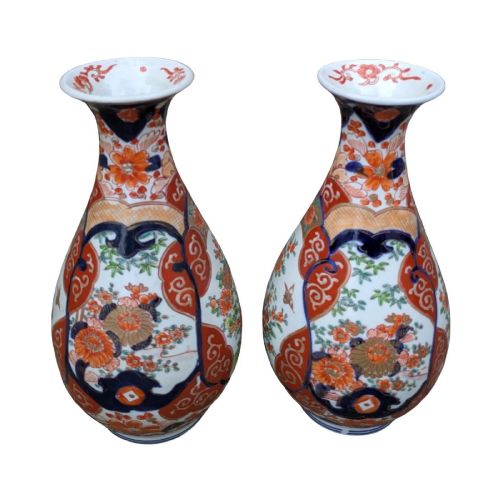
These gilded ceramic vase pair selections bring together nineteenth-century European porcelain and Japanese earthenware crafted for display.
Gilded Ceramic Vase Pair
A gilded ceramic vase pair encompasses matched vessels shaped from porcelain and earthenware, often finished with surface gilding or gold leaf. These ornamental dual pieces range from compact spill holders to large covered urns and campana forms designed for decorative symmetry on mantels and tables.
The selections available here lean heavily toward nineteenth-century English and continental factories alongside Japanese Satsuma, Imari, and Kutani wares from the Meiji period. Buyers encounter both traditional European floral hand-painting and intricate Japanese figural or landscape motifs executed across various decades.
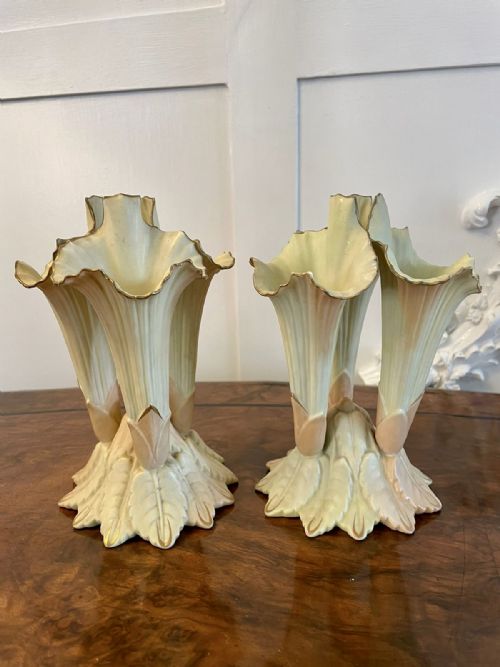
Manufacturers such as Royal Worcester, Sitzendorf, and Mason's represent the European output, while makers like Kinkōzan and Shozan anchor the Japanese pieces. Forms extend beyond standard vessels into table lamps, ewers, and cornucopia shapes produced during the Regency, Victorian, and Edwardian eras.
What varies in quality
The refinement of the hand-painted detail separates standard decorative items from superior exhibition pieces. Finely executed brushwork depicting figures, thousand butterflies, or delicate flora indicates skilled studio production.
The precision and application of the gilding itself mark distinctions in grade. Thick, hand-applied gold leaf or intricate gilt tooling demonstrates higher craftsmanship than simple flat metallic paint washes.
The inventory records diverse forms including campana vessels, baluster bodies, ewers, and table lamps.
Flight Barr And Barr·Jacob Petit·Sitzendorf·Locke And Co·Samson Paris·Helena Wolfsohn·Royal Worcester·Manpei·Kinzan·Hododa·Kato Sanhei·Carlton Ware·Tagawa
The Gilded Ceramic Vase Pair Glossary
- Satsuma
- A type of Japanese earthenware featuring a characteristic ivory-coloured crackle glaze and elaborate polychrome and gilt decoration. These pieces were widely exported during the Meiji period and frequently depict figural scenes or natural motifs.
- Imari
- A traditional style of Japanese porcelain decorated in underglaze blue, iron red, and gold. This aesthetic heavily influenced European ceramic factories during the nineteenth century.
- Campana
- A classical vase shape resembling an inverted bell with flared rims and looped handles. Originating in antiquity, this form was revived extensively during the Regency and Victorian periods.
- Blush Ivory
- A specialised porcelain finish developed by Royal Worcester showing a soft, creamy matte background often highlighted with gilt. It frequently serves as a canvas for delicate hand-painted floral designs.
- Spill Vase
- A narrow, upright vessel historically placed on mantelpieces to hold wooden spills used for lighting candles or fires. These practical items evolved into decorative ornamental pairs.
Gilded Ceramic Vase Pair: Frequently Asked Questions
What are gilded ceramic vase pairs?
These matching decorative vessels combine ceramic or porcelain bodies with hand-applied gold leaf or gilt surface decoration.
Produced across European and Japanese potteries, they serve as symmetrical mantel ornaments and display pieces.
How do I identify Satsuma ware?
Satsuma wares feature a distinctive cream-coloured crackle glaze earthenware body decorated with detailed enamel painting and gold highlights.
Originating in Japan, these pieces often depict traditional figures, landscapes, or butterflies.
Where were blush ivory vases made?
The blush ivory finish is closely associated with Royal Worcester production during the late Victorian and Edwardian periods.
This specific technique uses a soft matte ivory ground accented with delicate floral painting and gilding.
How were these decorative vases used?
Historically, matching pairs functioned as ornamental garnitures placed on mantels, console tables, and pedestals for visual symmetry.
Some smaller variants, such as spill vases, had practical origins holding wooden tapers for lighting household fires.