


Antique Painted Vase Pair
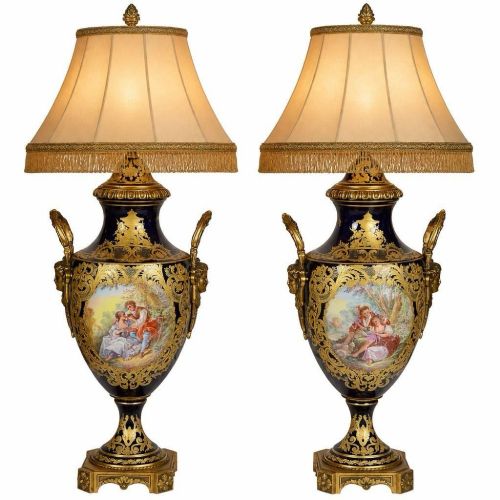
When choosing an antique painted vase pair, you select matched vessels designed to balance a mantelpiece, sideboard or console table with symmetrical colour and hand-applied ornament.
Antique Painted Vase Pair
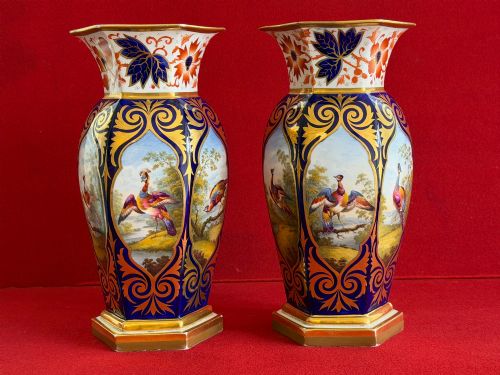
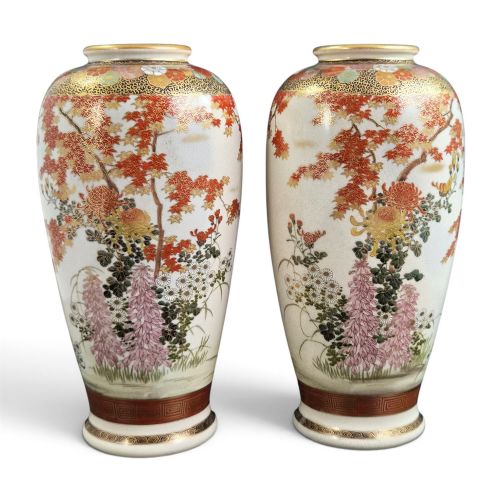
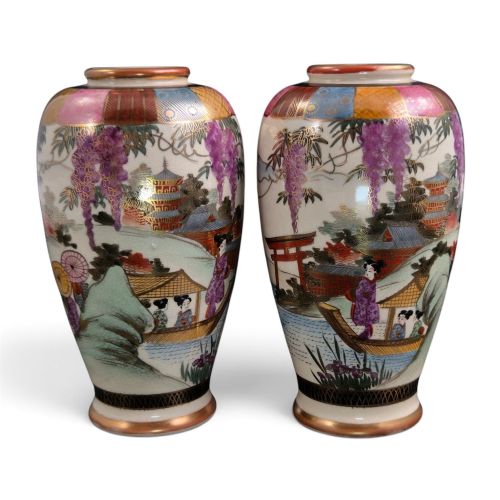
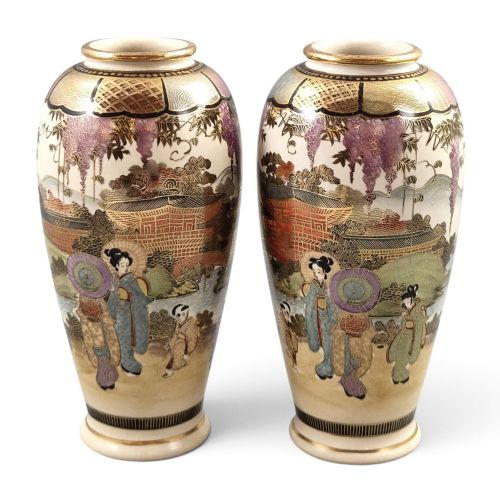
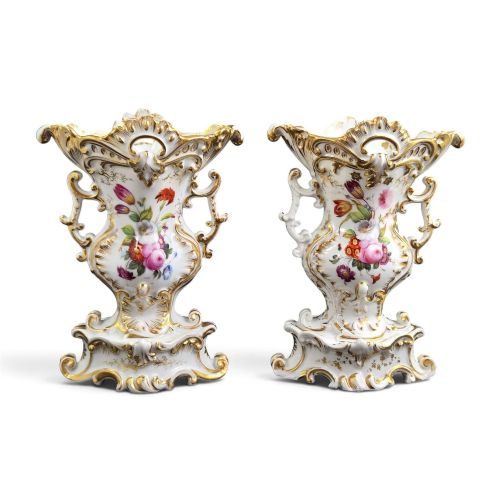
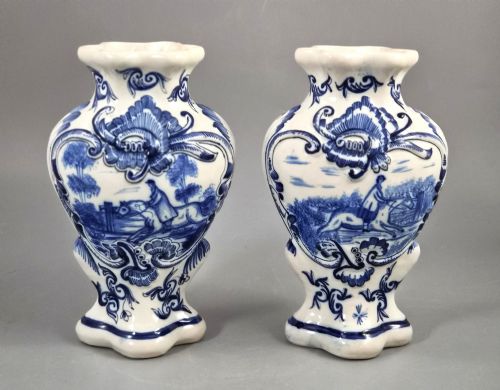
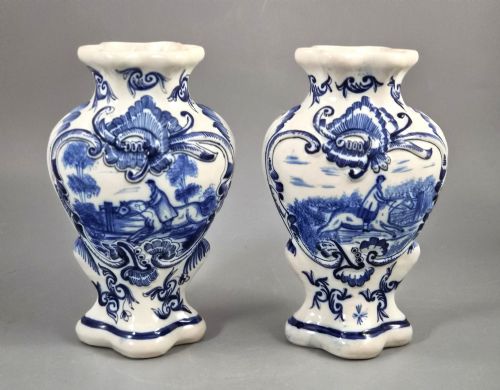
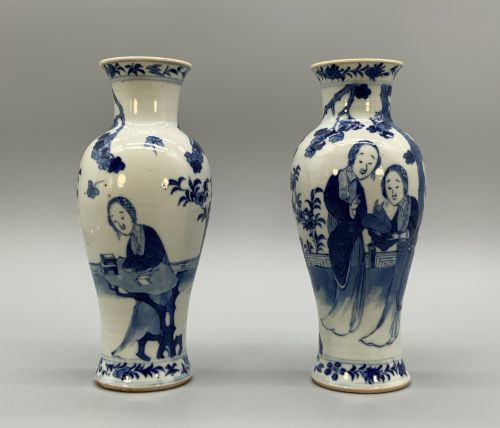
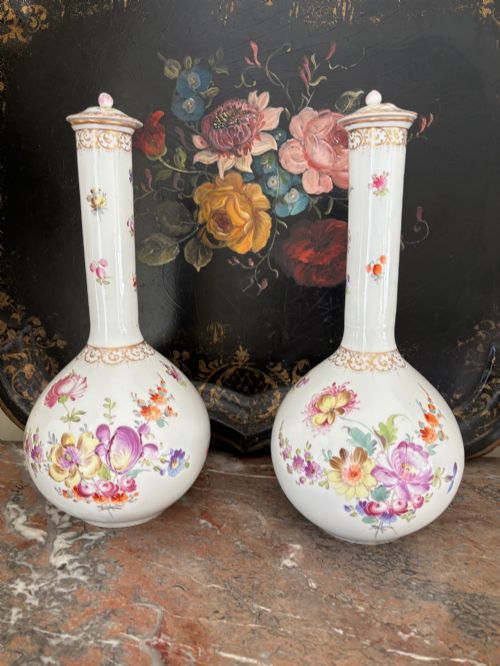
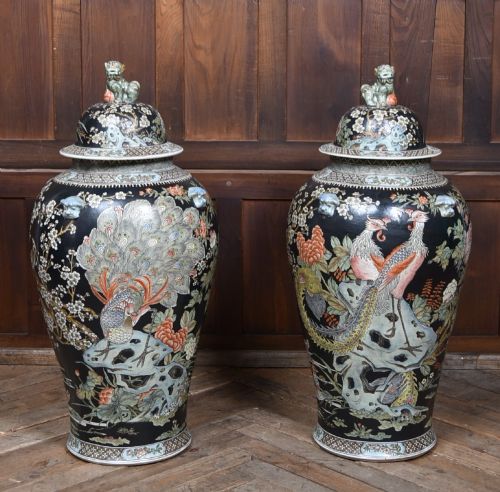
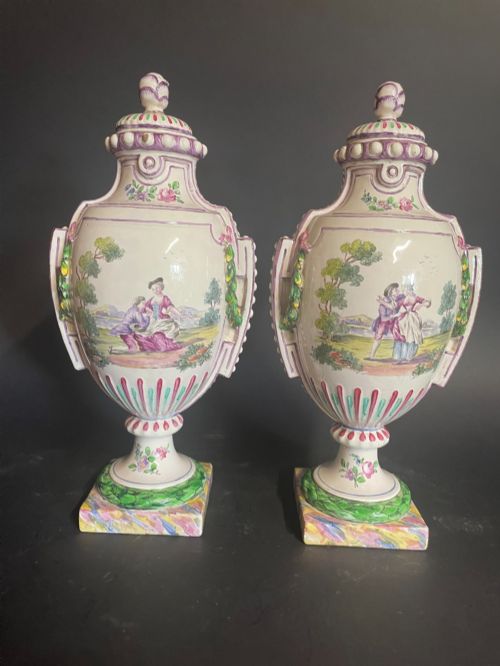
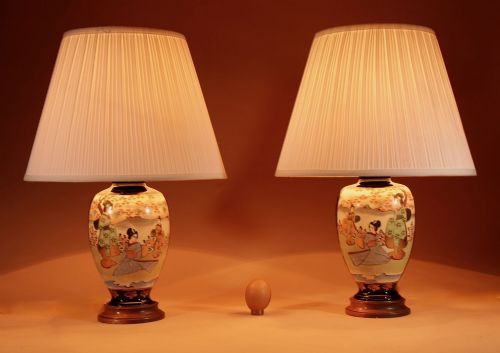
An antique painted vase pair comprises matched ceramic, glass or earthenware vessels created to flank a central focal point in a room. These pairs range from English porcelain and Staffordshire pieces to French Sevres style works, Japanese Satsuma wares, and Chinese blue and white ceramics.
The selections span the nineteenth century through the Edwardian era and into the early twentieth century. Common forms include bulbous lidded jars, slender bud vases, amphorae, pedestals, and glass lustres hung with crystal drops.
Makers represented in these pairings include celebrated English factories like Royal Worcester alongside European porcelain houses and Japanese Kyoto and Kobe workshops.
How They Were Made
Potters formed these pieces using porcelain, earthenware, or blown glass before applying detailed hand-painted floral, figurative, or landscape motifs. Many designs incorporate gilding, gold leaf, and enamel accents fired onto the ceramic body to secure the pigments.
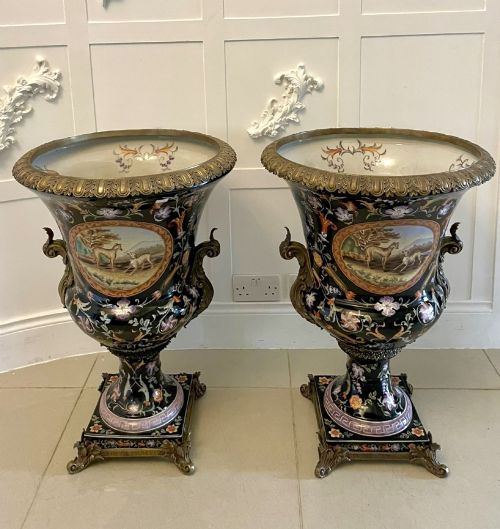
Gilders and painters often signed their work on the base, while brass mountings or cast iron stands provided structural support for heavier urns and jardinieres.
Listings feature 19th-century and Edwardian porcelain, earthenware, and glass, including Japanese Satsuma and Chinese blue and white ceramics.
What Varies in Quality
The distinction between standard production items and top-tier examples lies in the precision and delicacy of the hand-painted brushwork. Superior pairs display finely detailed figures, botanicals, or landscapes executed by named artists rather than generic transfer printing.
The application of gilding and the preservation of the original glaze, along with matched covers and undamaged lustre drops, separate exceptional works from routine factory output.
Flight Barr and Barr·Coalbrookdale·Jacob Petit·Fourmaintraux Courquin·Sitzendorf·Samson Paris·Walter Slater·Helena Wolfsohn·Royal Worcester·Doulton Lambeth·Manpei Kobe·Noritake
The Antique Painted Vase Pair Glossary
- Lustre
- A type of ceramic or glass decorated with a metallic glaze that creates an iridescent sheen. These pieces often reflect light across a room.
- Blush Ivory
- A specialised cream-coloured porcelain body developed by Royal Worcester with a soft matte finish. It served as a background for delicate floral hand-painting.
- Satsuma
- Earthenware originating from Japan featuring a crackle-glaze ivory body heavily decorated with enamels and gilding. These ceramics typically depict figures, birds, or landscapes.
- Amphora
- A two-handled jar with a narrow neck, modelled on ancient Greek and Roman vessel shapes. They frequently feature classical Revival styling.
- Faience
- Tin-glazed earthenware produced across France and Europe. This technique yields a smooth white surface suitable for painted blue or polychrome designs.
Antique Painted Vase Pair: Frequently Asked Questions
How do I display a vase pair?
Symmetrical placement works best when positioning an antique painted vase pair on a mantelpiece, credenza, or pier table. They anchor a central mirror or painting by framing the space evenly.
Ensure both pieces receive adequate light to highlight the hand-painted details and gilding without placing them in direct, damaging sunlight.
Were these vases meant for flowers?
Many pairs, particularly bud vases and amphorae, served a practical function for cut stems and floral arrangements. Others functioned purely as decorative ornaments.
Heavier urns and lidded jars were designed as architectural decor for formal rooms rather than utilitarian water vessels.
How do I clean antique glass lustres?
Dust glass surfaces gently with a dry, soft microfiber cloth to remove everyday particles. Avoid harsh chemical cleaners that might damage the surface.
If the glass lustres have hanging crystal prisms, remove them carefully for washing in lukewarm water before drying and reattaching.
How do I identify Satsuma pottery?
Satsuma ware is characterised by a distinctive cream-coloured earthenware body covered in a fine network of visible crackle glaze. The decoration relies on dense hand-painted enamels and raised gold leaf.
Most authentic pieces carry Japanese workshop or artist signatures painted on the underside.