
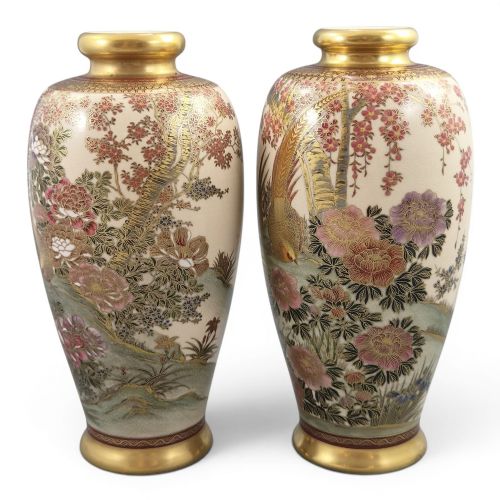


Cream Porcelain Floral Vase
A cream porcelain floral vase brings nineteenth-century and Edwardian botanical painting directly into a room.
Cream Porcelain Floral Vase
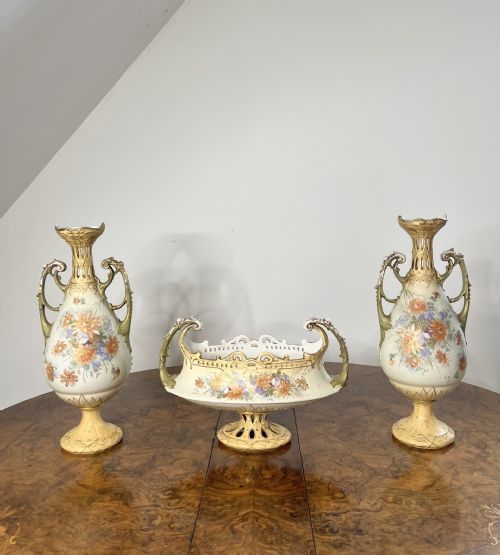
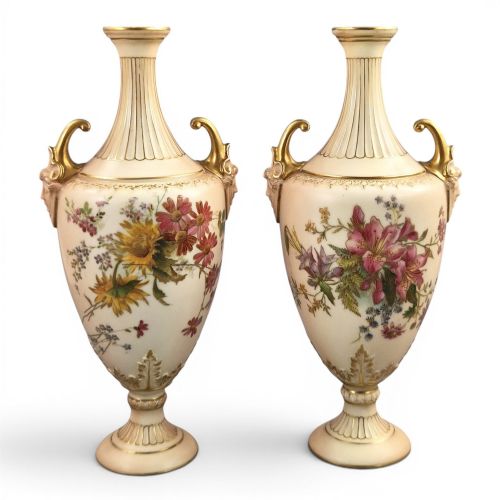
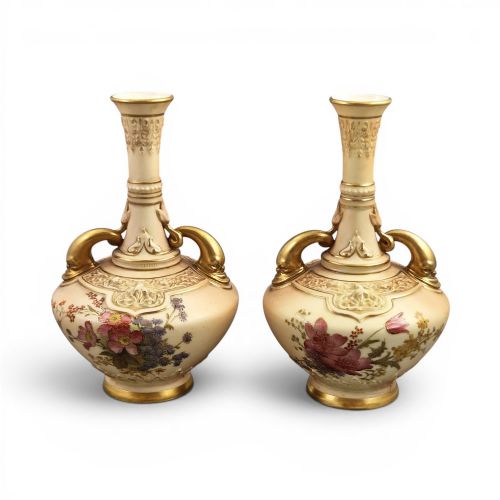
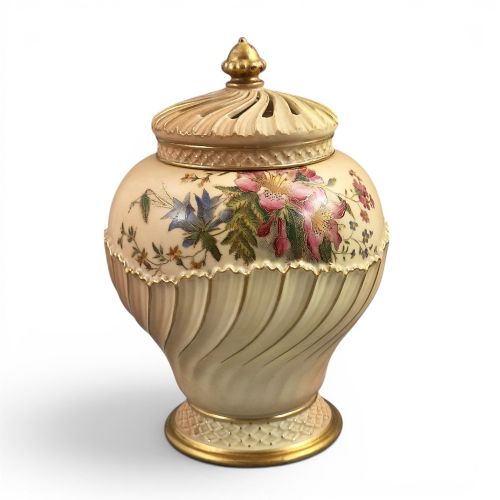
A cream porcelain floral vase is typically encountered in nineteenth-century and Edwardian forms, spanning styles from Victorian blush ivory to Japanese Meiji period Satsuma ware. The pieces appearing in these listings include delicate spill vases, pedestal ewers, and pot-pourri jars decorated with hand-painted chrysanthemums, roses, and wisteria. Buyers searching this phrase meet domestic decorative vessels originating largely from English potteries like Royal Worcester and Doulton, alongside continental porcelain and earthenware.
The selection ranges from small cabinet pieces to large garniture sets and clock garnitures designed for a mantelpiece. Forms often incorporate gilt handles, dolphin bases, or pierced details, combining functional vessel shapes with elaborate nineteenth-century ornamentation. Most examples originate from the Victorian and Edwardian eras, reflecting a period of intense decorative experimentation in ceramic production.
Materials and construction
Construction relies on fired porcelain, earthenware, and ceramic bodies shaped into vases, ewers, and urns. Potters utilised specialised glazes to achieve the characteristic cream and blush ivory surfaces that provide the background for botanical subjects. Gold leaf and gilding highlight handles, rims, and pierced sections, adding metallic contrast to the painted ceramic.
Decoration was applied through hand-painting and enamelling, with artists rendering chrysanthemums, blackberries, and floral garlands directly onto the glazed surface. Kiln firing fixed these enamel colours and gold accents to the ceramic body, creating durable decorative finishes characteristic of late nineteenth-century and Edwardian workshops.
Listings incorporate nineteenth-century and Edwardian pieces, utilising porcelain, earthenware, and gold leaf across forms like garniture sets and pot-pourri jars.
Assessing quality
Quality rests in the precision of the hand-painted botanical decoration and the finesse of the porcelain body. Pieces featuring named artists and specific pattern numbers demonstrate superior execution compared to unmarked or standard production wares. The crispness of moulded elements, such as dolphin bases and pierced handles, distinguishes finer works.
The integration of gilding and enamel work also defines the hierarchy of pieces. Sophisticated application of gold leaf and subtle tonal gradations in the floral painting indicate higher studio output, whereas heavier, mechanical application points to standard commercial manufacturing.
Royal Worcester·Doulton Burslem·Meissen·Kinkozan·Ernst Wahliss
The Cream Porcelain Floral Vase Glossary
- Blush ivory
- A soft cream-coloured ceramic glaze developed by nineteenth-century potteries to imitate the tone of ivory. It provides a warm background for hand-painted floral decoration.
- Garniture set
- A matched group of three or more vases or urns designed to be displayed together on a mantelpiece or sideboard. These sets typically comprise a central piece flanked by smaller matching vessels.
- Ewer
- A large pitcher-shaped ceramic vessel with a wide spout and a handled body. In nineteenth-century ceramics, these often served a purely decorative function.
- Pot-pourri jar
- A covered ceramic vessel pierced with holes to release the scent of dried flowers and spices stored inside. They frequently feature elaborate pierced covers and pedestal bases.
- Meiji period
- The era of Japanese history lasting from 1868 to 1912, associated in ceramics with intricate Satsuma earthenware vessels decorated with fine enamel and gold leaf.
Cream Porcelain Floral Vase: Frequently Asked Questions
How do I clean a painted porcelain vase?
Dust ceramic surfaces gently with a soft, dry brush to prevent accumulation. Avoid liquid cleaners or submerging pieces with gold leaf and hand-painted enamel.
Moisture can damage fragile historic enamels and nineteenth-century gilding. Keep these decorative objects away from direct water contact.
What is blush ivory porcelain?
Blush ivory refers to a specialised cream-coloured ceramic glaze pioneered during the late nineteenth century. It creates a warm matte background that resembles natural elephant ivory.
Potters used this pale surface to enhance the delicacy of hand-painted floral subjects like roses and chrysanthemums.
Were these vases meant for flowers?
Many nineteenth-century ceramic vessels served entirely decorative purposes within a room. Garniture sets and large ewers were displayed on mantelpieces to demonstrate household refinement.
Smaller spill vases and specific floral forms did hold cut stems, though surviving examples often show minimal interior wear.
How do I identify the date of a porcelain vase?
Maker marks stamped or painted on the underside provide the primary evidence for dating. Potteries often utilised specific date ciphers, dot systems, or registration numbers corresponding to production years.
Stylistic indicators such as Art Nouveau curves or Victorian blush ivory glazes further narrow the manufacturing period.