
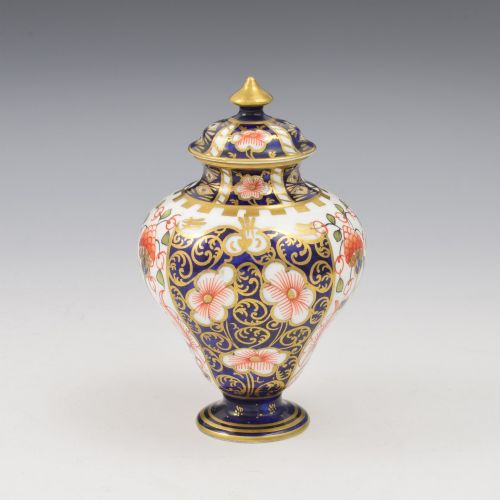
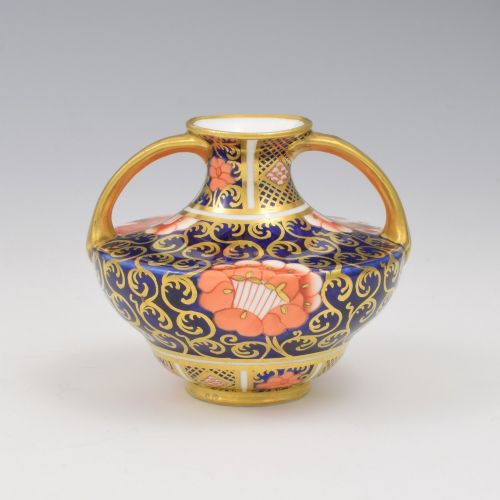


Miniature Porcelain Urn
Miniature porcelain urn options bring together delicate ceramic craft and intricate hand-painted detail from the nineteenth and early twentieth centuries.
Miniature Porcelain Urn
The pieces on this page span Victorian, Edwardian, and Meiji periods, reflecting both British factory production and imported Japanese wares. Buyers will encounter single vessels, matched pairs, and small collections displaying intricate hand painting and gilding.
Materials and production techniques
Potters shaped these small forms using porcelain, bone china, earthenware, and specialised bodies such as Doulton Lambeth Carrara ware. Artisans then applied detailed enamels, gold leaf, and rich gilding to ornament the surfaces.
Many examples feature hand-painted scenes, ranging from British floral and cattle subjects by named artists to traditional Japanese figural processions. Kiln firing fixed these pigments and metallic accents onto the ceramic bodies.
Assessing quality in small ceramic pieces
Quality rests upon the precision of the hand painting and the crispness of the gilt detailing applied across the tiny ceramic body. Finer examples show careful brushwork in figural scenes and botanical motifs rather than simple transfer printing.
The reputation of the maker and the presence of artist signatures or specific factory patterns elevate certain pieces above standard production wares. Intact covers on small vases and well-preserved gold leaf further distinguish superior items.
Royal Crown Derby·Crown Staffordshire·Doulton Lambeth·Flight Barr And Barr·Royal Worcester·Chosei·Shuzan·William Ricketts·Harry Stinton
The Miniature Porcelain Urn Glossary
- Imari
- A style of Japanese ceramic decoration featuring rich iron red, underglaze blue, and gold highlights. This aesthetic influenced various British potteries during the nineteenth century.
- Satsuma
- A type of Japanese earthenware characterised by a ivory-coloured, crackle-glaze body decorated with elaborate enamels and gilt. These wares were widely exported during the Meiji period.
- Bone china
- A type of porcelain incorporating animal bone ash, producing a strong, slightly translucent white body. British factories utilised this material for highly refined miniature vases and scent bottles.
- Gilding
- The application of gold leaf or gold paint to ceramic surfaces for decorative emphasis. Skilled artisans used this technique to highlight rims, handles, and painted panels.
- Meiji Period
- A notable era in Japanese history spanning from eighteen sixty-eight to nineteen twelve, associated with intricate Satsuma and Imari decorative arts sent abroad.
Miniature Porcelain Urn: Frequently Asked Questions
How were miniature porcelain urns used originally?
These small vessels served purely decorative purposes on mantelpieces, in cabinets, or upon dressing tables during the Victorian and Edwardian eras. Some specific forms functioned as scent bottles or cabinet vases to display delicate hand-painted artistry.
Because of their small scale, they allowed households to accumulate varied collections of ceramic art without requiring extensive display space.
How do I identify a Meiji period Satsuma piece?
Satsuma ceramics from the Meiji period typically display a distinctive creamy crackle glaze beneath intricate enamel and gilt decorations. They often feature Japanese figural processions, landscapes, or signature marks from artists such as Chosei.
Examining the base for handwritten signatures or workshop marks helps confirm the Japanese origin and nineteenth-century dating.
What is the difference between Imari and Satsuma?
Imari ceramics rely on a palette of deep underglaze blue, iron red, and gold, traditionally utilising porcelain or hard earthenware bodies. Satsuma pieces feature a characteristic warm, ivory-coloured crackle glaze painted with elaborate polychrome enamels and gold leaf.
Both styles were produced in Japan and exported to Western markets, but their visual textures and colour schemes remain distinct.
How should I display miniature porcelain urns?
Display these small items within enclosed glass cabinets or secure shelves where their detailed gilding and hand-painted scenes catch adequate light. Grouping pairs or small collections creates a balanced visual impact.
Keep them away from direct sunlight and high-traffic areas to protect delicate enamel work and gold leaf from accidental knocks.
How can I tell English factory pieces apart?
English miniature porcelain and bone china pieces often bear printed or impressed factory backstamps on the base indicating makers like Royal Worcester, Royal Crown Derby, or Flight Barr and Barr. The paste, glaze style, and pattern numbers provide further clues to their origin.
Artist signatures on painted landscape or animal scenes also point towards specific British studio hands from the Edwardian period.