
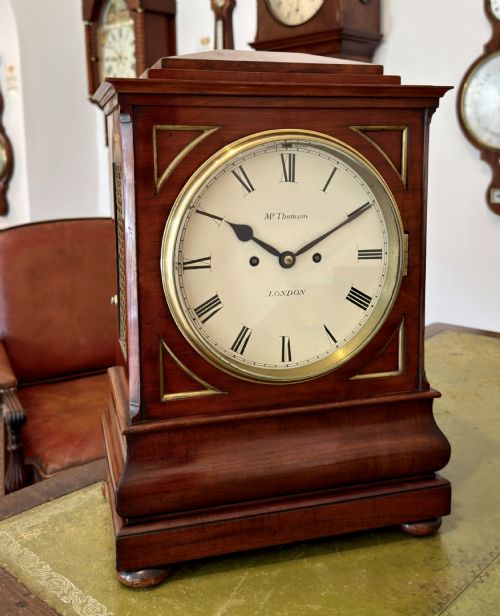
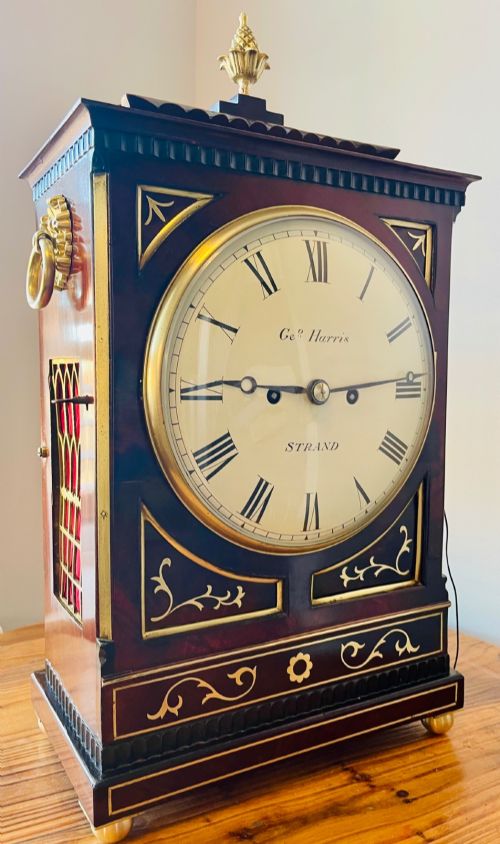
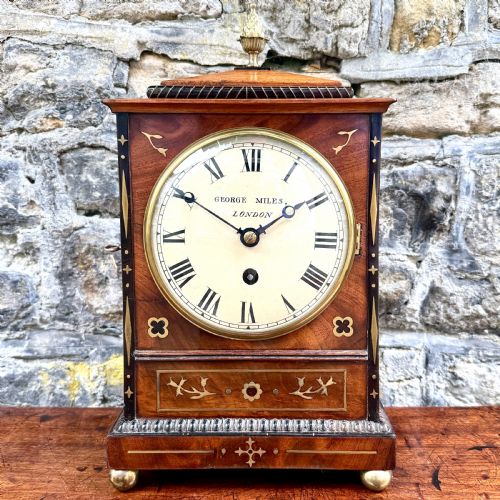
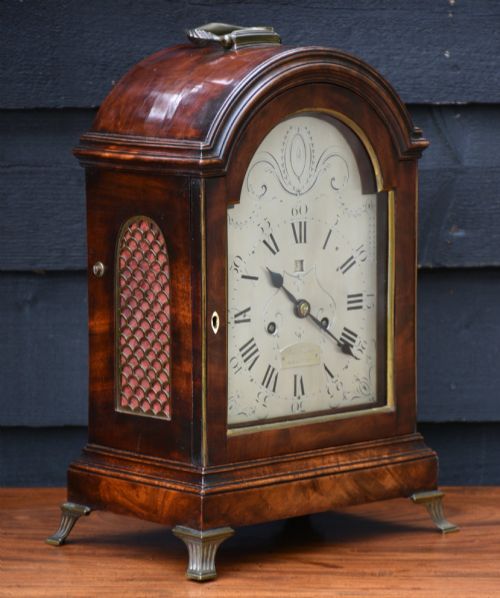




Regency Mahogany Mantel Clock
A regency mahogany mantel clock brings architectural proportion and precision timekeeping into a room, forged during an inventive era of British cabinet-making.

Regency Mahogany Mantel Clock
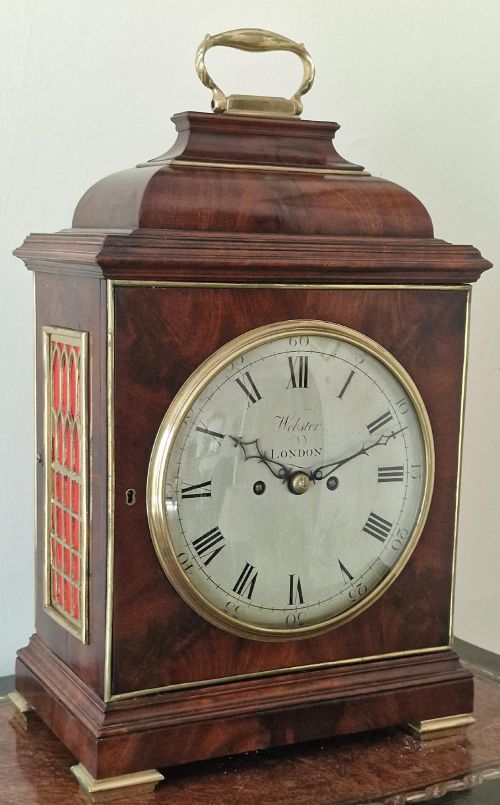
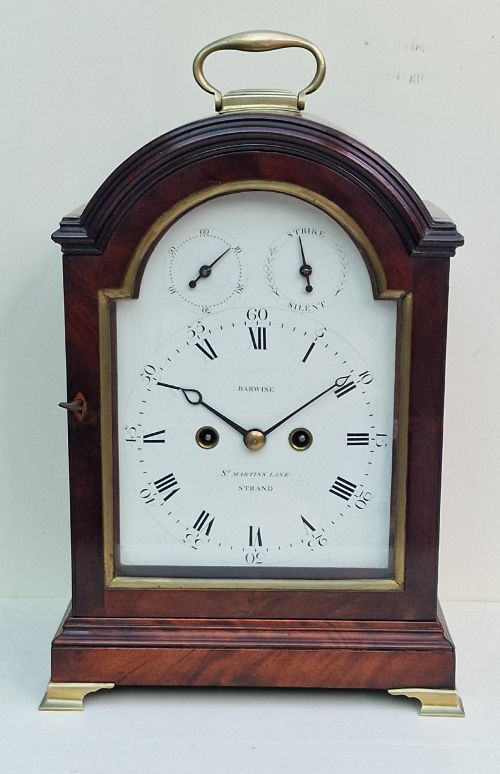
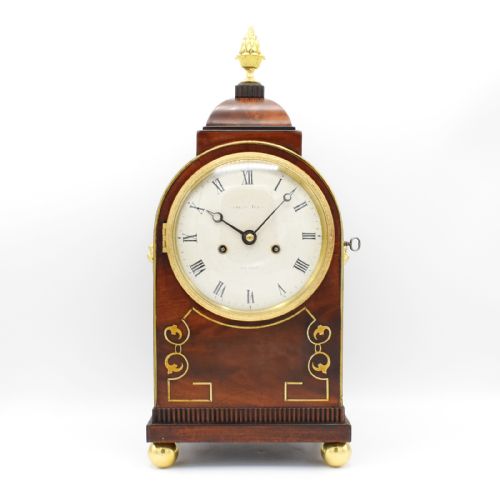
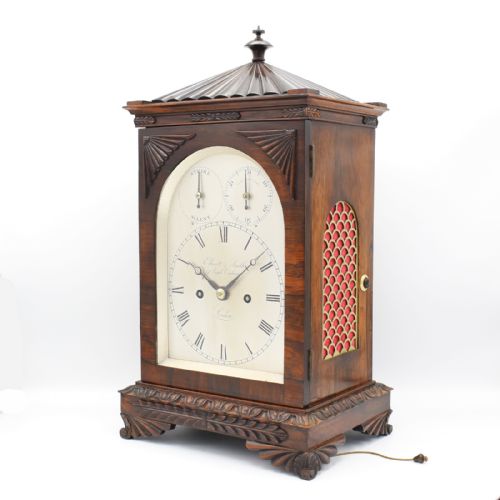
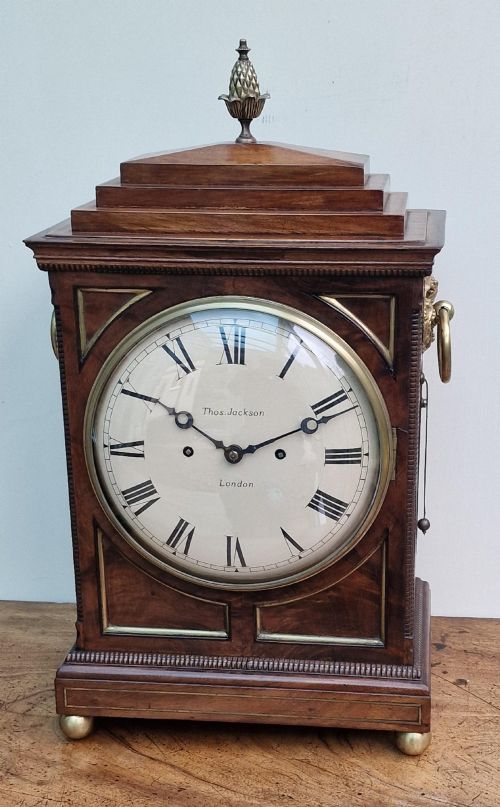
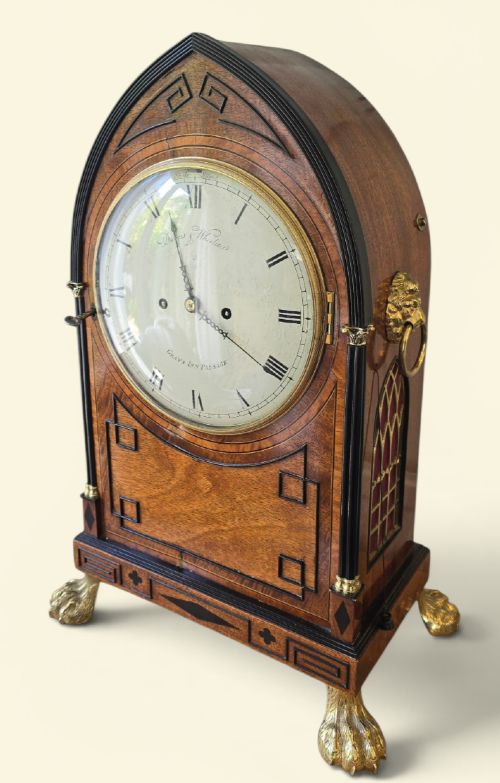
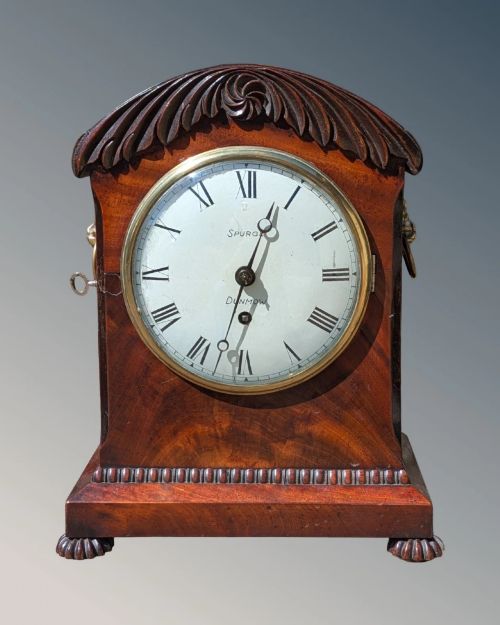
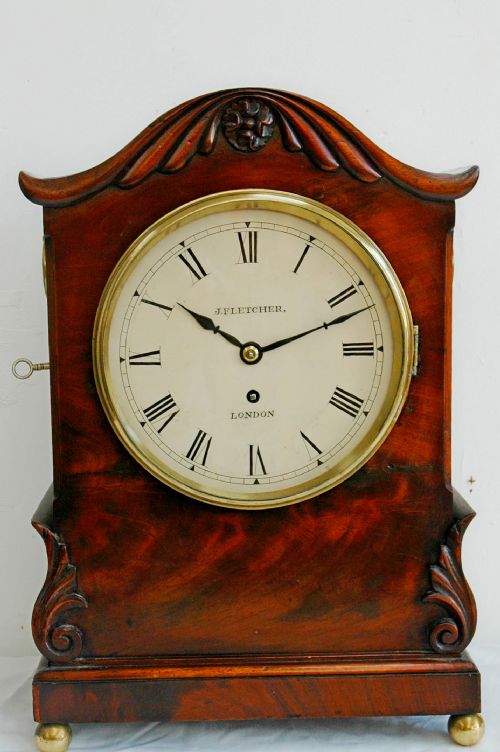
When you search for a regency mahogany mantel clock, you encounter timepieces shaped by the aesthetic preferences of the early nineteenth century, including the Regency, Georgian, and George IV periods. The inventory on this page consists predominantly of bracket clocks and table clocks housed in mahogany cases, spanning the late eighteenth century through to the Victorian era.
Makers housed these movements in distinct architectural silhouettes such as lancet-top, pad-top, chamfer-top, and balloon-cased forms. Provincial and London workshops produced these pieces, utilising durable timber alongside decorative elements like brass inlay and ebony stringing to anchor the dial visually.
The objects served primarily as dependable timekeepers for libraries, halls, and sitting rooms, often featuring fusee movements designed to maintain even tension as the mainspring unwound. You will also find simpler timepieces alongside sophisticated striking and repeating bracket clocks that chimed the hours.
Distinctions in craftsmanship
Quality separates the standard provincial production from the masterwork of notable London makers through the crispness of the brass inlay and the depth of the cabinet carving. A superior case exhibits tight joinery and well-figured mahogany grain that accentuates the architectural silhouette without relying on excessive ornamentation.
Internally, the refinement of the fusee movement dictates the standard, with signed, finely engraved backplates and robust striking trains indicating superior workshop standards. The legibility of the silvered or enamelled dial and the proportion of the brass bezel relative to the wooden case further distinguish an exceptional timepiece.
Listings feature mahogany, rosewood, and ebony cases accented with brass inlay, silk, and silvered metal dials across the Regency and Georgian periods.
Thomson of London·Webster, London·Barwise, London·Charles Pratt London·Ellicott & Smith·Thomas Jackson, London·George Orpwood·Bush of London·Desbois & Wheeler·L. Vick of Stroud·Spurge Dunmow·Cording of London·Thomas Moss·Wilkinson Leicester·Barrett London·J Kingerley Manchester·Paul Philip Barraud·Thomas Connold of Alysham·Hyde of Salisbury·Hampson & Son·Taylor of London·Leplastrier of London·J. CONDLIFF LIVERPOOL
The Regency Mahogany Mantel Clock Glossary
- Fusee
- A conical pulley used in clockwork to maintain even power from the mainspring as it unwinds. This mechanism ensures consistent timekeeping throughout the duration of the wind.
- Bracket clock
- A portable household clock originally designed to sit on a wall bracket or table. Despite the name, many examples function independently as mantel clocks.
- Lancet top
- A case design featuring a pointed, gothic arch shape at the crown. This silhouette became popular during the Regency and George III periods.
- Pad top
- A raised, domed section surmounting the flat or caddy top of a clock case. It provides a balanced termination to the mahogany superstructure.
- Silvered metal
- A brass dial plate treated with a silver solution and engraved with numerals. The resulting matte finish offers clear contrast against dark clock hands.
Regency Mahogany Mantel Clock: Frequently Asked Questions
Where should I place a bracket clock?
These timepieces suit stable surfaces like mantelpieces, sideboards, or dedicated wall brackets where vibrations are minimal.
Ensure the location is away from direct heat sources and drafts to protect the antique wood and delicate internal mechanics.
How do fusee movements work?
A fusee uses a conical pulley connected to the mainspring via a cord or chain, equalising the torque as the spring relaxes.
This clever engineering prevents the clock from running fast when fully wound or slow as power diminishes.
What is the difference between a timepiece and a clock?
In horological terms, a timepiece simply tells the time without any striking or chiming mechanisms.
A clock includes additional gear trains that ring bells or gongs on the hour and sometimes the quarters.
How can I date a mahogany clock?
Dating relies on stylistic clues such as brass inlay patterns, dial materials, feet shapes, and the architectural silhouette of the case.
Signatures on the dial or engraved backplates often lead directly to the working dates of the maker.