
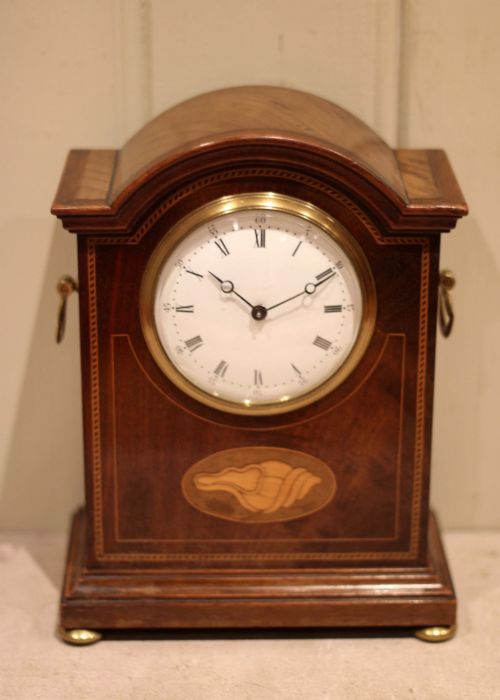
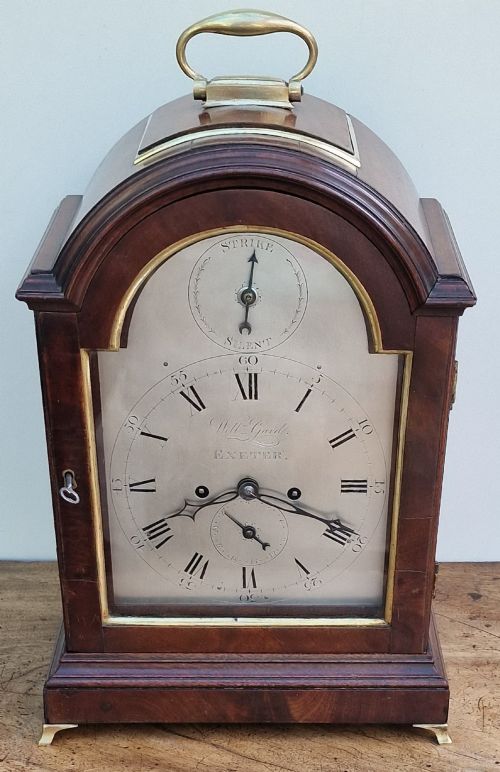
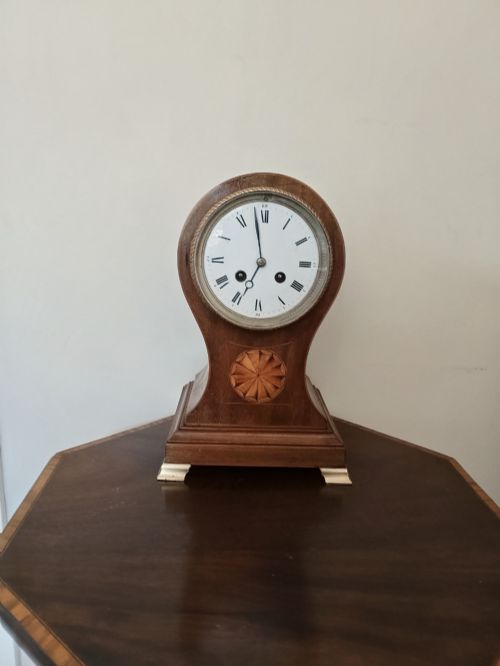
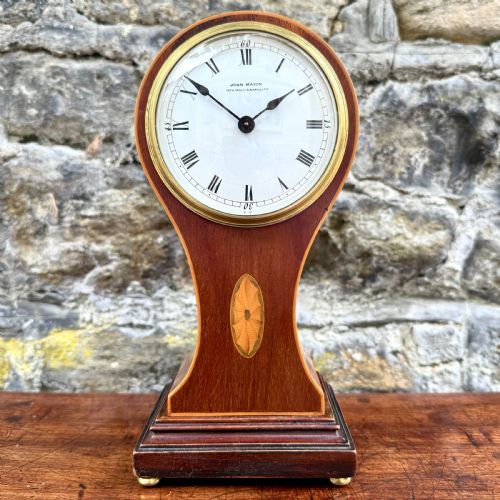




Brown Mahogany Table Clock
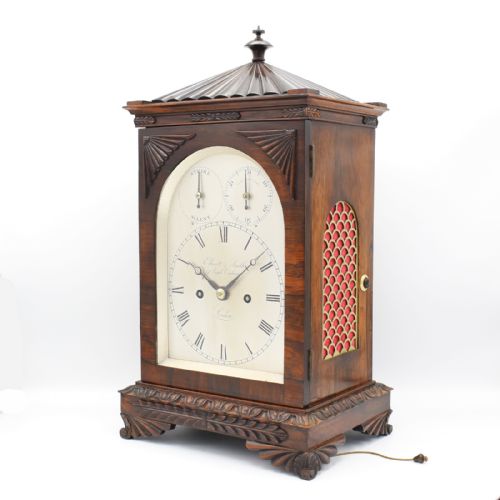
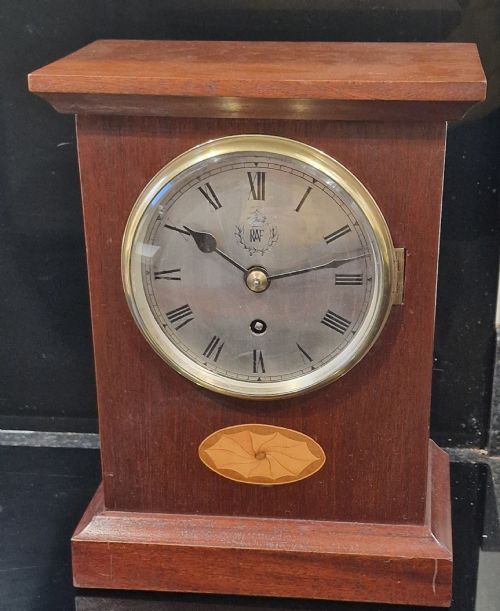
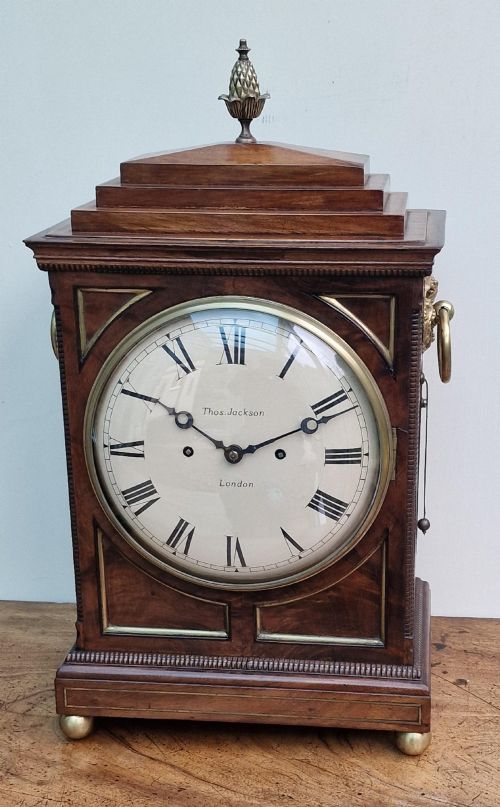
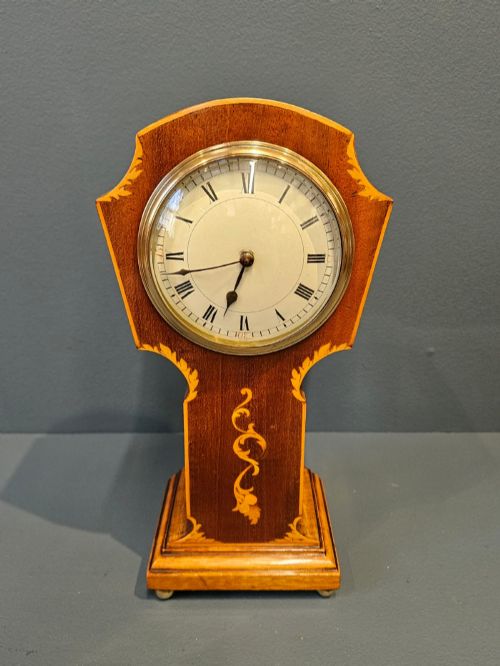
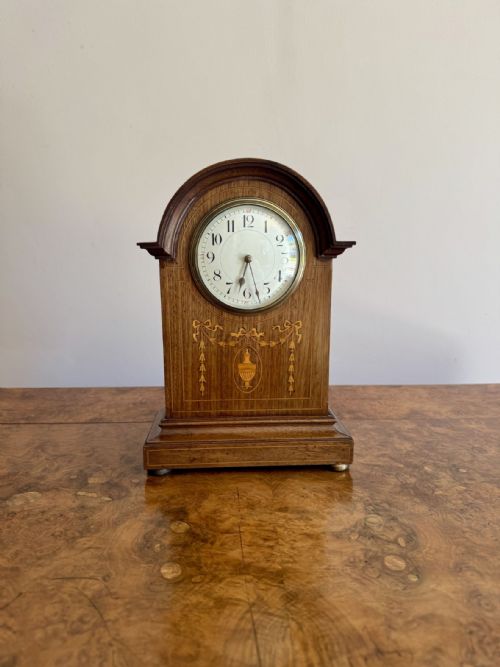
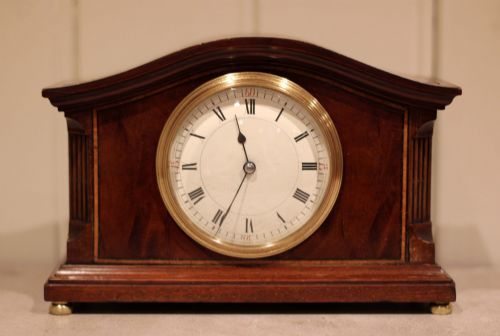
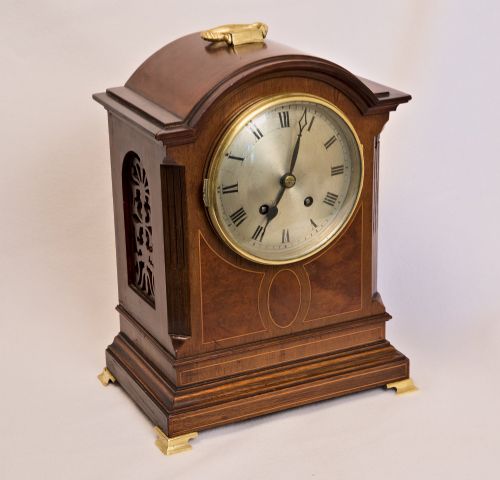
These brown mahogany table clock examples span Georgian, Regency and Edwardian eras, offering solid wood cases and dependable movements for domestic spaces.
Brown Mahogany Table Clock
A brown mahogany table clock serves as a functional timepiece and a decorative object designed for placement on mantels, brackets or tables. These pieces appear across Georgian, Regency, Victorian, and Edwardian periods, reflecting changing domestic tastes in cabinet design.
The inventory on this page ranges from simple timepiece movements to complex striking mechanisms housed in architectural wooden cases. Buyers encounter varying forms such as balloon cases, lancet tops, bracket clocks, and five-glass library clocks.
Makers from London and provincial towns contribute signed examples, alongside unmarked domestic pieces from the nineteenth and early twentieth centuries. Each item demonstrates the period specific proportions and dial layouts typical of British and continental clockmaking.
Materials and construction methods
Makers built the cases primarily from mahogany, frequently incorporating brass for bezels, dial details, carrying handles, and feet. Cabinetmakers enhanced the timber surfaces using boxwood, ebony, and satinwood inlay to create contrasting borders and geometric motifs.
Movements rely on brass gear trains, steel pivots, and escapements driven by weights, mainsprings, or fusee cones that regulate the power delivery. Dials feature white enamel or painted surfaces with Roman or Arabic numerals, protected behind bevelled or flat glass panels.
Materials recorded across the inventory include solid mahogany, brass, glass, enamel, satinwood, boxwood, and ebony.
Distinctions in quality and execution
The standard of a brown mahogany table clock depends upon the crispness of the cabinetwork, the depth of the mahogany grain, and the precision of any wood inlay. Finer pieces demonstrate hand-engraved dial plates, substantial brass fusee movements, and well-proportioned architectural cases.
Signed movements by known makers or provincial watchmakers generally indicate higher workshop standards than anonymous mass-produced equivalents. The integration of original brass fittings, sound acoustic bells or gongs, and well-preserved dial enamel further separates standard production from superior examples.
William Gard Exeter·Ellicott And Smith·Thomas Jackson London·Bush Of London·Vick Of Stroud·Webster Cornhill London·Thomas Moss·Dent·Cording Of London·W Burton·Piggin Norwich·Geo Carter Hackney·Wilkinson Leicester·J Kingerley Manchester·Hyde Of Salisbury·William Evans Handsworth
The Brown Mahogany Table Clock Glossary
- Fusee
- A conical pulley used in spring-driven clocks to equalize the diminishing torque of the mainspring as it unwinds. This mechanical device ensures consistent force reaches the escapement throughout the running period.
- Bracket clock
- A portable table clock originally designed to sit on a wall bracket to distribute sound effectively through a room. Later examples retained the name despite resting directly on tables or mantelpieces.
- Timepiece
- A clock that indicates the time without possessing a striking or chiming mechanism. These movements require fewer gears and focus purely on maintaining accurate time duration.
- Lancet top
- A clock case design featuring a pointed, arched apex resembling a Gothic lancet window. This architectural silhouette gained popularity during the Regency and nineteenth-century periods.
- Enamel dial
- A metal dial face coated with fused glass powder and fired to produce a smooth, white glossy surface. Artisans then painted numerals and maker signatures directly onto this durable layer.
Brown Mahogany Table Clock: Frequently Asked Questions
Where should I place a brown mahogany table clock?
These clocks suit sturdy horizontal surfaces such as mantelpieces, sideboards, bookcases, or dedicated wall brackets. Positioning them away from direct sunlight and damp walls protects the mahogany veneer and internal brass mechanisms.
Ensure the surface is level so the pendulum or balance wheel maintains an even beat. A stable location prevents unnecessary wear on the pivot holes and keeps the clock running accurately.
How do fusee movements work?
A fusee movement uses a spiral-grooved cone connected to the mainspring barrel by a fine brass chain or cord. As the spring unwinds and loses tension, the chain pulls higher up the wider part of the cone to maintain steady torque.
This ingenious mechanical solution compensates for the declining power of a relaxing spring. It represents a hallmark of better quality British clockmaking across the Georgian and Victorian eras.
How do I date a mahogany clock case?
Dating relies on stylistic clues in the cabinetwork, such as the geometric stringing of Georgian pieces, the architectural severity of Regency designs, or the Edwardian revival of earlier bracket forms. Dial materials, signature styles, and lettering fonts also offer reliable chronological indicators.
Examining the interior movement layout and winding holes helps confirm the manufacturing era. Comparing construction techniques against documented workshop periods narrows down the decade of production.
What is the difference between a timepiece and a striking clock?
A timepiece simply measures and displays the hours and minutes without sounding any acoustic signals. These movements contain fewer components, focusing entirely on the precision of the gear train.
A striking clock includes an additional gear train, hammers, and a bell, gong, or rack to chime the hours or quarters. These audible mechanisms require more maintenance and periodic synchronisation.