
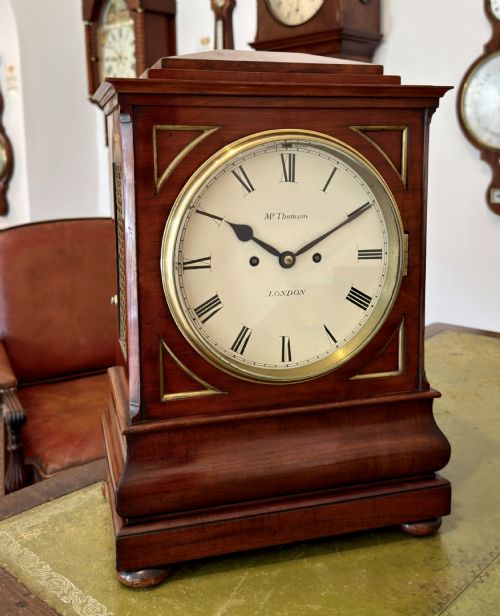
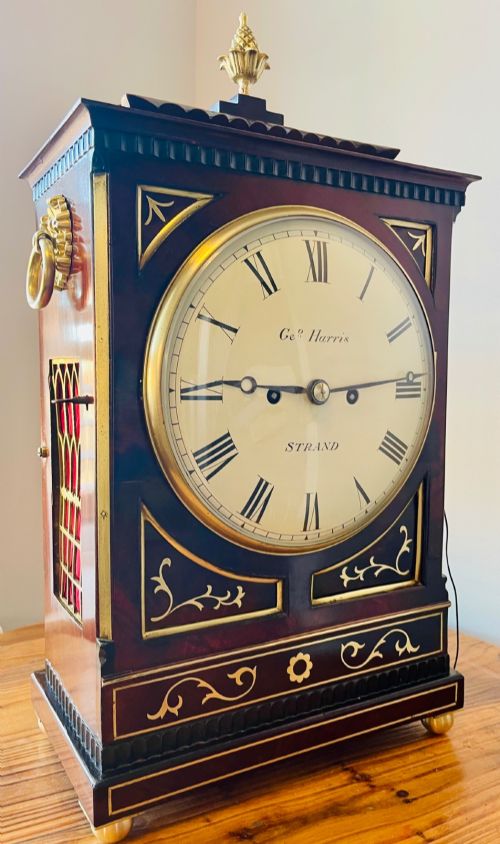
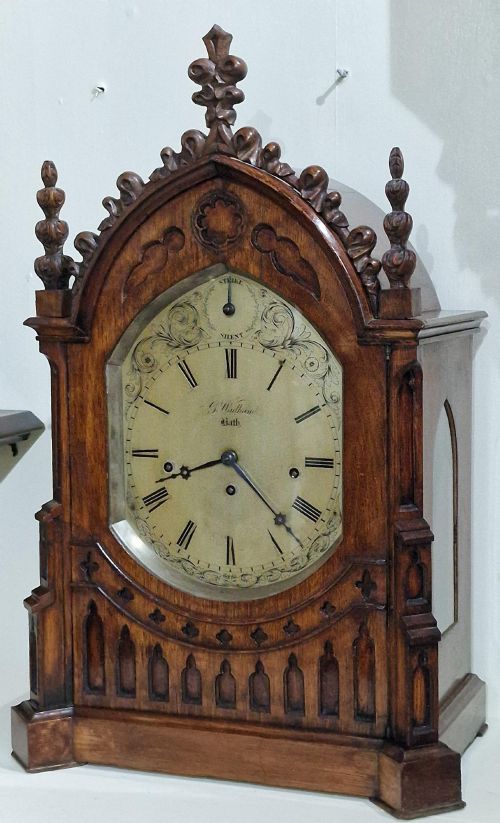
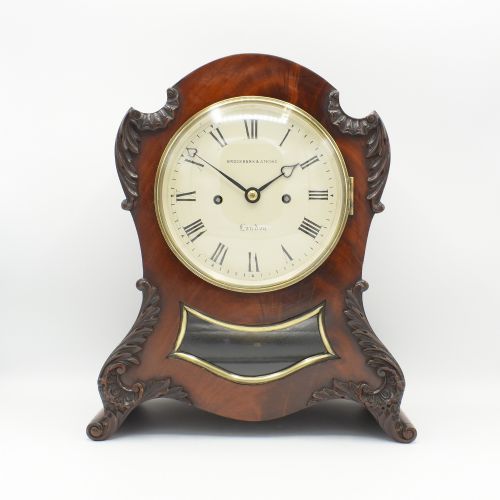


Dark Wood Bracket Clock
A dark wood bracket clock brings architectural presence and mechanical precision to a room, offering the rich grain of mahogany and the gleam of brass.
Understanding a dark wood bracket clock
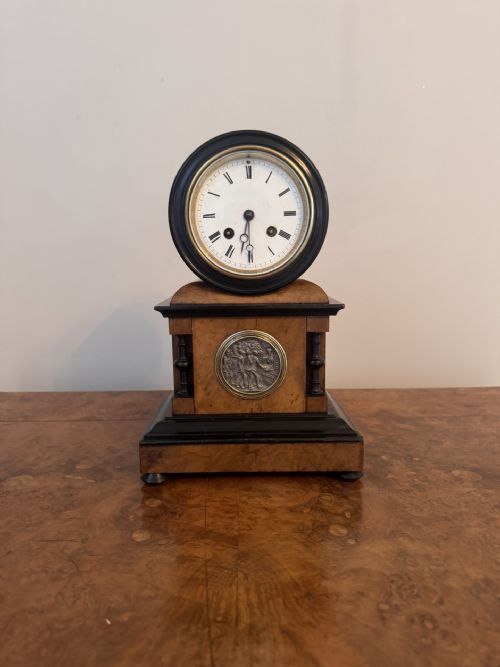
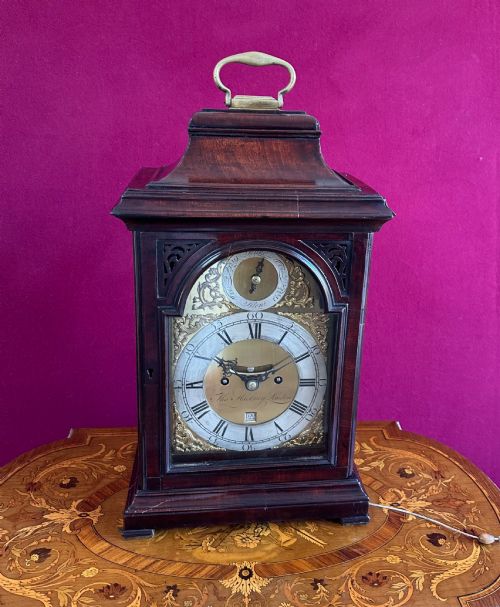
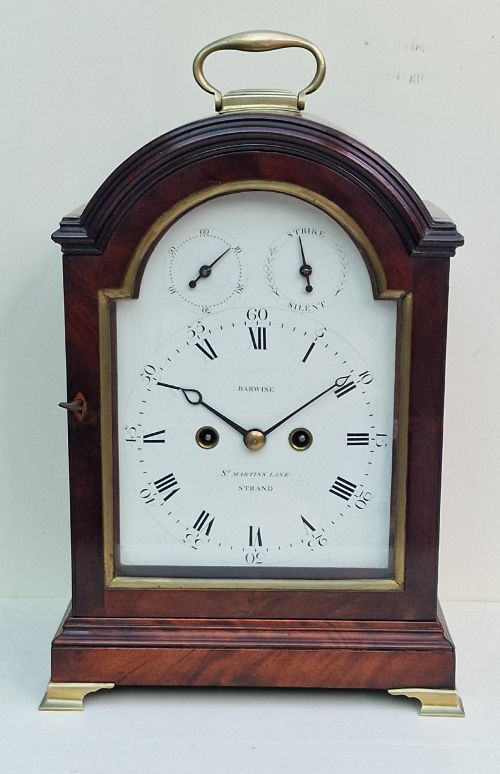
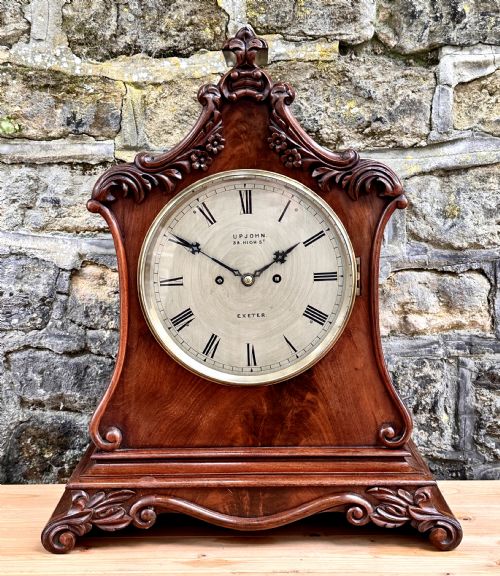
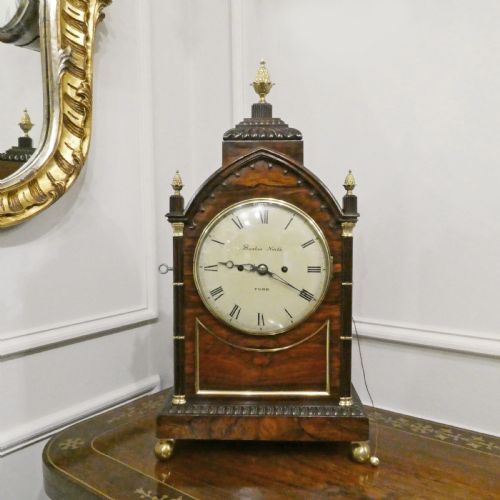
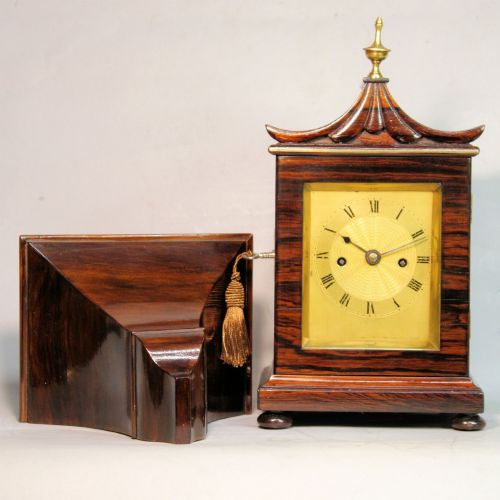
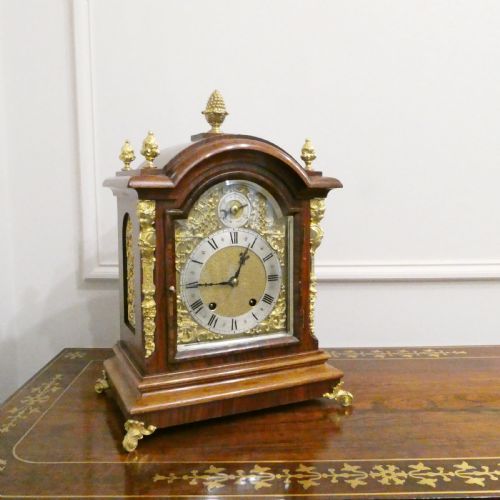
A dark wood bracket clock encompasses mantel clocks and bracket clocks produced across the Georgian, Regency, Victorian, and 1930s periods. These pieces serve as portable timekeepers traditionally designed to sit on a bracket or furniture surface.
The versions most commonly met on this page are mahogany mantel clocks and bracket clocks reflecting Georgian, Georgian Revival, Victorian, and Regency Egyptian Revival styles.
Makers recorded in the evidence include Brockbanks of London, representing the Regency era through specialised pieces featuring distinct regional and stylistic influences.
Materials and construction
These clocks utilise mahogany for the primary timber case, providing a dense structure with deep brown and reddish tones. Metal and bronze components form structural and decorative elements.
Dials incorporate brass and enamel to display the time clearly behind protective glass panes. Internal mechanisms rely on traditional metal clockwork engineering typical of each period.
Retail Price Guide 2026
Typical UK retail prices for dark wood bracket clock, calculated from the Sellingantiques database of over a million retail prices indexed since 2003. This retail price guide relies exclusively on Sellingantiques data; no external sources or auction records are used, so the figures do not describe the wider market.
Listings span four distinct periods: Georgian, Regency, Victorian, and the 1930s.
Distinctions in quality
The hierarchy of quality rests upon the sophistication of the mahogany cabinetwork and the refinement of the brass and bronze mountings. Finer examples display meticulous joinery and cohesive stylistic unity, such as the Regency Egyptian Revival aesthetic.
Dial execution also separates standard production from superior work, where enamel numerals and delicate hands show greater artisan skill. Brockbanks of London pieces illustrate how maker reputation influences the standing of a clock.
Brockbanks of London
The Dark Wood Bracket Clock Glossary
- Bracket clock
- A portable timepiece originally designed to stand upon a wall bracket to aid projection of sound and visibility. These clocks typically feature sturdy wooden cases with carrying handles.
- Mahogany
- A durable tropical hardwood prized for its rich reddish-brown colour and stable grain. It forms the primary casing material for Georgian and Regency examples.
- Enamel
- A glassy substance fused to a metal dial substrate to create a smooth, white surface for painted numerals. This finish provides high contrast against dark wood cases.
- Egyptian Revival
- A nineteenth-century decorative style drawing motifs from ancient Egyptian architecture and symbolism. The evidence shows this style appearing on Regency bracket clocks.
Frequently Asked Questions
What is a dark wood bracket clock?
A dark wood bracket clock is a portable timepiece housed in a wooden case, typically made from mahogany. These pieces date from periods including the Georgian era, the Regency era, the Victorian era, and the 1930s.
They combine cabinetmaking with mechanical movement, featuring materials like brass, enamel, and glass to create functional domestic objects.
How do I tell periods apart?
Identifying the period involves looking at the stylistic details of the mahogany case and the design of the dial. Regency pieces may show distinct motifs like Egyptian Revival influences, whilst Georgian and Victorian examples follow the prevailing furniture aesthetics of their respective times.
Changes in dial materials, such as enamel and brass combinations, also help indicate the era of manufacture.
Where were bracket clocks placed?
Bracket clocks earned their name from the wall brackets that originally supported them, allowing the sound of the bell or chime to carry effectively through a room. Over time, many of these clocks transitioned to sitting directly on mantelpieces, sideboards, or tables.
Their portable nature meant owners could move them between rooms as needed.
What materials are used in these clocks?
The primary material for the exterior case is mahogany, selected for its dark grain and durability. Metal, bronze, and brass components are utilised for bezels, mounts, and internal movements.
Enamel provides the smooth background for clock faces, protected behind fitted glass panels.