


Georgian Spring Driven Clock
A georgian spring driven clock brings mechanical mastery and rich timber cases into a room, serving as both timekeeper and sculptural centrepiece.
Georgian Spring Driven Clock
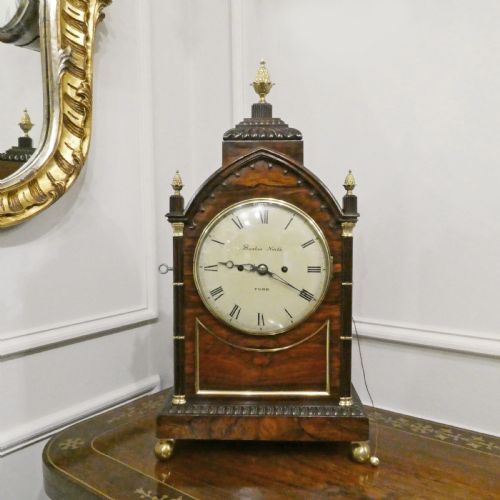
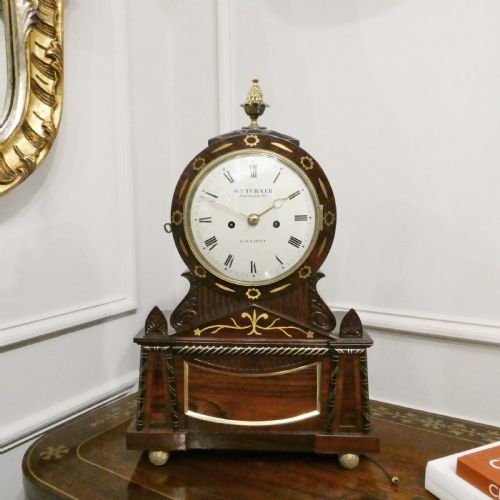
A georgian spring driven clock generally takes the form of a table, bracket or mantel clock designed to sit on a surface or wall bracket. These pieces emerge from the Georgian, Regency, William IV and Victorian eras, spanning the eighteenth and nineteenth centuries.
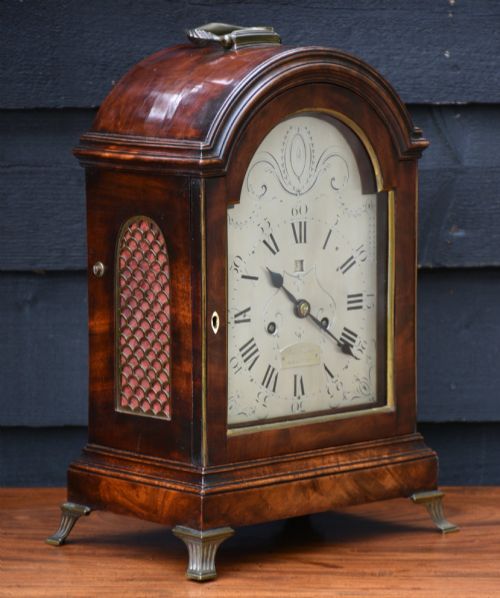
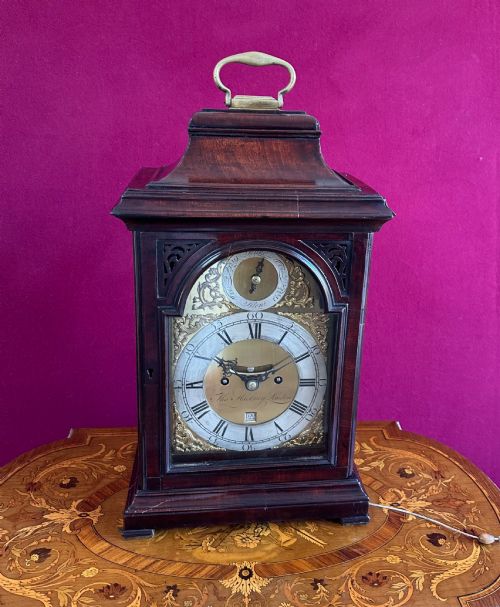
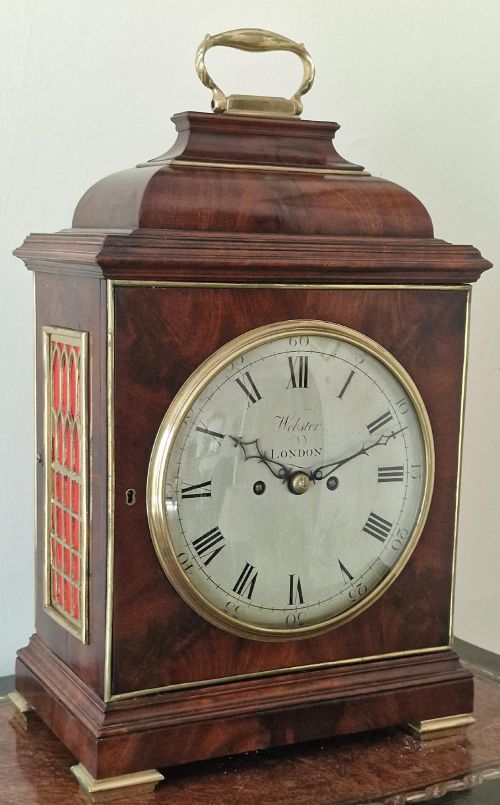
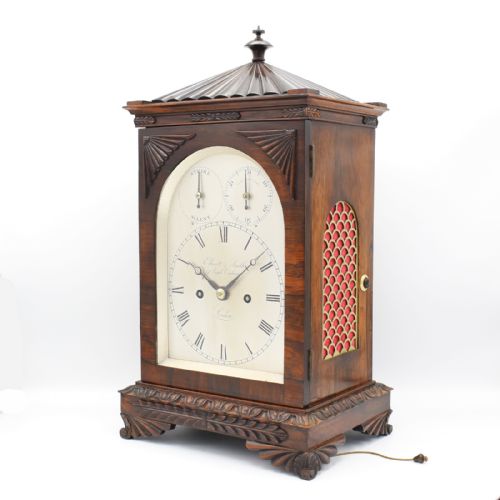
Makers housed these movements in architectural timber cases, often featuring bell tops, inverted bell tops, lancet arches or caddy tops. The listings show forms ranging from compact provincial timepieces to large quarter-striking library clocks.
Materials and Construction
Craftsmen built the structural cases primarily from mahogany, rosewood and ebonised wood, sometimes incorporating ebony, brass mounts and glass panels. Cabinets frequently display fine veneer work and inlay.
The mechanical interiors rely on brass for plates, wheels and escapements, paired with silvered metal or enamel dials. Fusee and verge mechanisms drive the internal gear trains, often linked to bells for striking the hours.
Listings feature mahogany, rosewood and ebonised wood cases paired with brass movements.
Distinctions in Quality
The refinement of the movement and the crispness of the case carving separate standard examples from finer works. Original dials with clear engraving and intact brass fretwork elevate a piece.
Provenance and maker attribution also influence standing, as signed movements by notable London or provincial clockmakers demonstrate higher levels of horological skill.
Webster London·Ellicott Smith·Barber North of York·Turner of London·L Vick of Stroud·Seller of Reading·Thomas Moss·John Witherston of Hereford·Cording of London·Paul Philip Barraud·Hyde of Salisbury·Louis Recordon·Leplastrier of London·Somersall London·Brockbanks of London·John Seddon of London·John McGregor Wick·Desbois Wheeler·Purvis of London·Plumbly Tupman·John Taylor London·Isaac Hurley London·Joseph Lum of London
The Georgian Spring Driven Clock Glossary
- Fusee
- A conical pulley used in spring-driven clocks to maintain equal power as the mainspring unwinds. This device ensures steady timekeeping throughout the running period.
- Verge escapement
- An early type of clock escapement that controls the release of power from the gear train. It works with a balance spring or pendulum to regulate ticks.
- Bracket clock
- A portable clock originally designed to sit on a wall bracket or a table. Many incorporate carrying handles on top of the wooden case.
- Silvered metal
- A brass dial plate treated with a silver compound to produce a pale, reflective surface for engraved numerals. This technique provides clear legibility against dark cases.
- Bell-top case
- A timber clock case featuring a stepped, dome-shaped roof reminiscent of a church bell. This silhouette characterises many eighteenth-century designs.
Georgian Spring Driven Clock: Frequently Asked Questions
How do I wind a fusee bracket clock?
Use the appropriate key on the winding squares located on the dial face, turning gently until resistance stops the motion. Avoid over-winding to protect the internal mainspring.
Ensure you support the heavy timber case if you need to move the clock after winding. Maintenance of these historical movements requires care and occasional professional attention.
Where should I place a bracket clock?
Position the clock on a stable, level surface such as a heavy mantelpiece, chest of drawers or dedicated wall bracket. Stability helps the pendulum or verge mechanism beat evenly.
Keep the timber away from direct sunlight and sudden temperature changes to protect the mahogany or rosewood veneer from drying out.
How can I tell a Georgian clock from a Victorian one?
Examine the timber selection, dial layout and case proportions, as Georgian pieces favour classic architectural lines and mahogany or ebonised finishes. Maker signatures often provide clues to the exact decade.
Later nineteenth-century examples, such as those from the William IV or Victorian periods, frequently introduce rosewood or elaborate revival styles like Gothic and Egyptian motifs.
Did these clocks always stand on brackets?
Many large bracket clocks gained their name from the wall brackets designed to support them, though the majority sat directly on tables or mantelpieces. Portable designs often feature brass handles for moving room to room.
Survival rates vary for the matching wall shelves, so many surviving clocks now live on flat surfaces.