
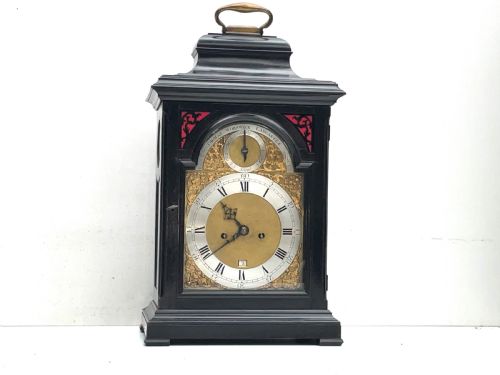


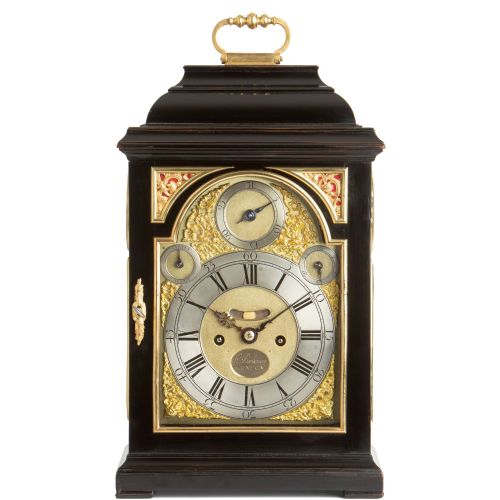


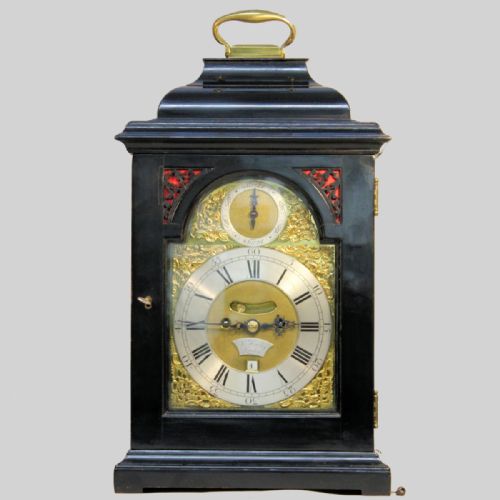

Bell Top Mantel Clock
A bell top mantel clock is a striking horological piece defined by its arched superstructure, sought after for precision timekeeping and period presence.
Bell Top Mantel Clock
When you search for a bell top mantel clock, you are looking at substantial timepieces predominantly housed in ebonised wood or mahogany cases. These objects span the eighteenth century and the Georgian period, often configured as bracket clocks or table clocks with distinct architectural profiles.
The version you are most likely to meet on this page is an eighteenth century ebonised or mahogany bell top clock featuring a verge escapement and striking mechanism. Makers from London feature heavily among these survivors, alongside occasional regional examples from makers such as Grey of Edinburgh.
How they were made
Cabinet makers constructed the cases using mahogany, walnut, or ebonised wood, shaping the distinctive arched summit to house the movement. Brass and silvered metal formed the dials and mounts, whilst glass protected the delicate face.
Horologists fitted verge escapements, fusee movements, and striking trains inside these wooden housings, often incorporating bells to mark the hours. Skilled artisans embellished dials with engraved details and signed their work directly onto the metal plates.
Listings feature eighteenth-century and Georgian pieces alongside nineteenth-century examples, constructed primarily in mahogany, ebonised wood, and brass.
What varies in quality
The fineness of the movement separates standard timepieces from exceptional examples, particularly the complexity of the escapement and striking train. Quarter repeating mechanisms and verge movements represent higher standards of period craftsmanship.
Case materials and originality dictate the standing of a piece within its period. Richly figured mahogany or pristine ebonised finishes paired with untouched dial signatures elevate the status of the clock.
Grey of Edinburgh·Andrew Marchant·William Withers·John Fletcher·John Taylor·Watson·Benjamin Maud·Richard Peckover·James Evans·Isaac Hurley·Joseph Lum·Junghans
The Bell Top Mantel Clock Glossary
- Bell top
- A distinctive arched wooden case profile resembling the shape of a bell, common on eighteenth-century bracket and table clocks. This silhouette defines the upper portion of the timber housing.
- Verge escapement
- An early mechanical regulator controlling the release of the gear train in a clock. It works in conjunction with a balance spring or pendulum to measure time.
- Fusee
- A conical pulley used in mechanical clocks to maintain even power from the mainspring as it unwinds. This mechanism ensures consistent timekeeping across the running duration.
- Quarter repeating
- A complication that chimes the hours and quarters upon demand via pulled cords or levers. Such mechanisms demonstrate advanced horological skill.
- Ebonised wood
- Timber treated to imitate ebony through staining or painting. This dark finish was popular for sophisticated eighteenth-century clock cases.
Bell Top Mantel Clock: Frequently Asked Questions
What is a bell top clock?
A bell top clock is a portable timepiece featuring an arched wooden case top, primarily produced during the eighteenth and nineteenth centuries.
These clocks were designed to sit on tables or brackets, often equipped with striking movements and carrying handles.
How do I wind my bracket clock?
Wind the clock using the appropriate key inserted into the dial holes, taking care not to overwind the mainspring.
Most fusee and spring-driven movements require regular winding to maintain accurate time and proper striking function.
Where should I place a mantel clock?
Position the clock on a stable, level surface away from direct sunlight, drafts, and sources of excessive heat.
A sturdy mantelpiece or dedicated table ensures the pendulum or balance wheel operates without disruption.
How can I tell the period of a clock?
Examine the materials, case construction, dial style, and the signature of the maker engraved on the movement backplate.
Eighteenth-century examples often employ verge escapements and ebonised or mahogany bell top cases characteristic of Georgian design.