
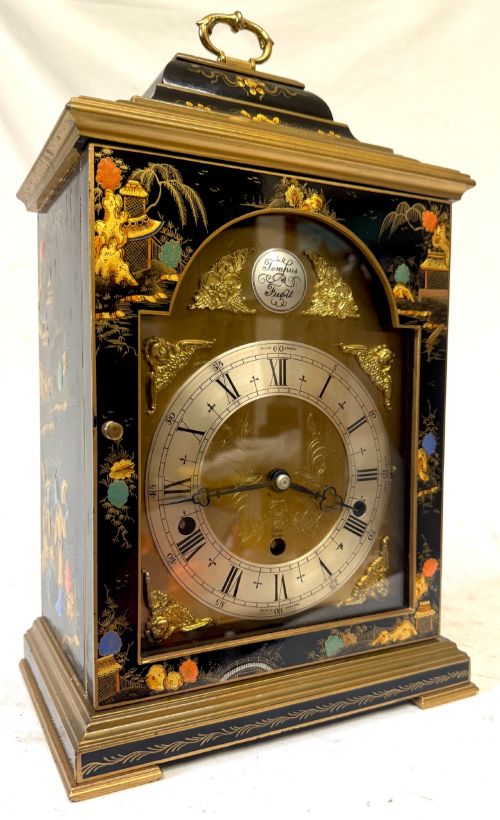
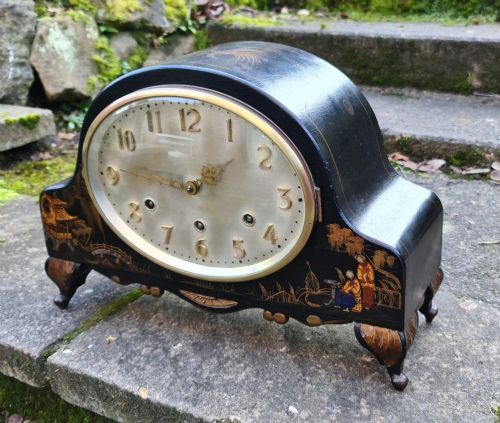
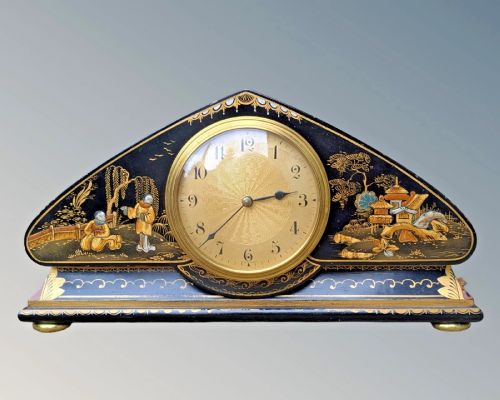


Lacquered Brass Mantel Clock
A lacquered brass mantel clock brings striking presence and rich colour to a room, offering both reliable timekeeping and decorative depth.
Lacquered Brass Mantel Clock
A lacquered brass mantel clock combines metal casing with painted or varnished surfaces, often taking the form of a mantel clock, desk clock, or bracket clock. These timepieces range from small decorative items to large bracket models complete with wall supports and complex movements.
Buyers meeting this search phrase encounter pieces spanning several distinct periods, from the eighteenth century through the Victorian era and into the twentieth century. The selection frequently includes Chinoiserie designs featuring colourful backgrounds alongside French movements and traditional English bracket clock formats.
How they were made
These clocks rely on brass structures combined with wood and glass, finished with lacquer coatings that provide smooth, protective surfaces. Many pieces incorporate enamel dials, cut glass, and gilt bronze mounts to enhance their decorative appeal.
Maker construction techniques involve mechanical movements such as eight day and three train systems, alongside specialised escapements like the chaff-cutter. Cases are decorated with painted Chinoiserie motifs or faux tortoiseshell effects set against red, green, black, or cream backgrounds.
Listings feature brass, glass, wood, and lacquer materials across periods ranging from the eighteenth century to the mid-twentieth century.
What varies in quality
Quality differences emerge in the complexity of the clock movement, ranging from standard timepieces to striking models with alarms and multiple trains. The intricacy of the lacquer work and the richness of the applied gilt bronze or enamel details also set finer examples apart.
The historical provenance and the fidelity of period styles, such as seventeenth-century English bracket formats or French carriage designs, influence the standing of an individual clock. Superior execution in the painted Chinoiserie decoration contributes significantly to a piece's overall character.
James Smith London·Chater And Son London
The Lacquered Brass Mantel Clock Glossary
- Chinoiserie
- European decorative style imitating Chinese artistic traditions, frequently featuring figures, landscapes, and gold motifs on lacquered surfaces.
- Bracket clock
- Portable mechanical clock originally designed to sit on a wall bracket or a furniture surface, often housed in a wooden or lacquered case with a carrying handle.
- Escapement
- Mechanical linkage in a clock that controls the release of power from the train, translating the spring or weight energy into regulated ticks.
- Enamel
- Vitreous substance fused to a metal dial surface by firing, providing a smooth, durable white ground for painted hour numerals.
- Train
- Series of gears within a clock movement that transmits power from the mainspring to the escapement or drives the striking mechanism.
Lacquered Brass Mantel Clock: Frequently Asked Questions
How do I wind a mantel clock?
Winding requires inserting the key into the appropriate dial holes and turning gently until resistance is felt, taking care not to overwind the mainspring.
Most mechanical movements need attention at regular intervals, typically weekly, to maintain accurate timekeeping across the brass gear trains.
Where should I place my clock?
Mantel and bracket clocks sit best on stable horizontal surfaces away from direct sunlight, dampness, and temperature fluctuations that might affect the lacquer or wood.
Ensuring the surface is level helps the pendulum or escapement maintain a steady beat and accurate time.
How do I identify the period?
Dating relies on examining the case style, such as Chinoiserie lacquer patterns or architectural bracket clock proportions, alongside the type of mechanical movement.
Signatures on the dial or movement backplate often provide clues to the maker and the active working era of the workshop.
What is a three train clock?
A three train movement powers three separate functions within the clock: timekeeping, striking the hours, and chiming melodies on quarters or hours.
Elliott London models frequently utilised this complex mechanical setup to deliver musical chimes alongside standard time display.