




Georgian Period Table Clock
A georgian period table clock brings precise mechanics and rich cabinetwork together, offering functional timekeeping wrapped in the heavy warmth of mahogany or rosewood.
Georgian Period Table Clock
When you search for a georgian period table clock, you find bracket clocks and mantel clocks built during the reigns of George III, George IV, and the Regency period. These pieces sit on tables, brackets, or mantelpieces, designed both to tell time and to anchor a room with their architectural presence.
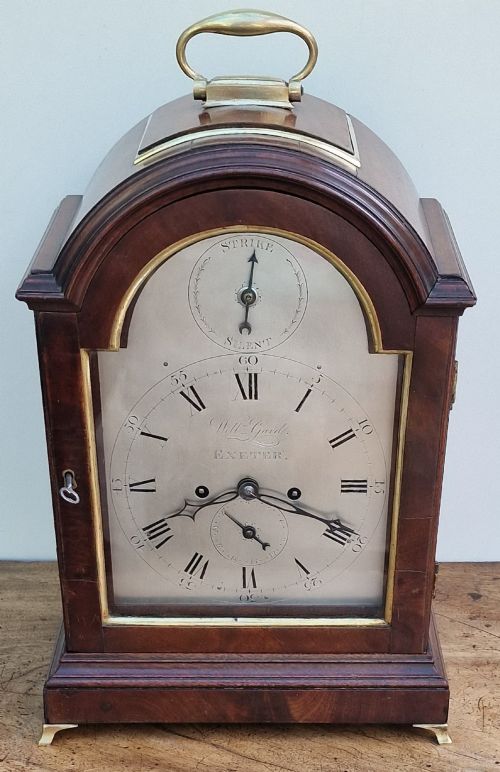
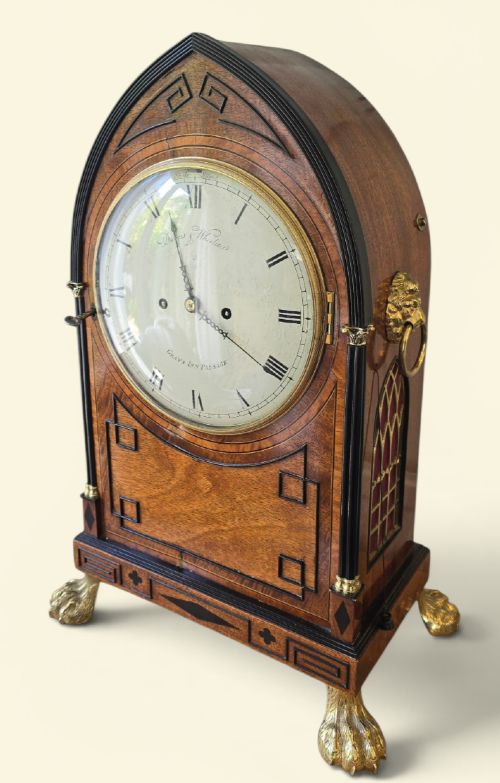
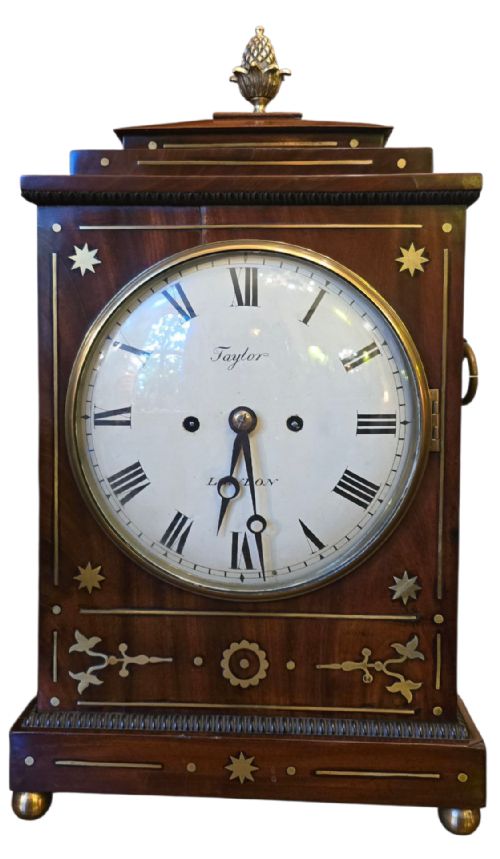
The versions you meet most often on this page are mahogany bracket clocks featuring fusee movements and brass mounts. Alongside these mahogany pieces, examples surface in rosewood, ebony, and gilt bronze, occasionally showing Regency Gothic Revival details or chamfered tops.
Makers working in London and provincial towns such as Exeter and Stroud shaped these clocks to serve as portable timekeepers for wealthy households. Their forms range from simple lancet tops and rectangular cases to elaborate designs decorated with brass inlay or ormolu.
How they were made
Cabinetmakers built the wooden cases from dense timbers like mahogany, rosewood, and ebony, often adding brass inlay, ormolu mounts, or gilt bronze details. The joinery created sturdy housings designed to protect delicate mechanical movements while displaying rich wood grain.
Clockmakers fitted these cases with single chain fusee movements, 8-day fusee driven mechanisms, and verge striking escapements. Enamel dials protected by glass faces displayed the hours, signed by makers who often inscribed their names directly onto the dial or movement.
Clockmakers signed their dials so future generations would know whose hands set the rhythm of the Georgian parlour.
What varies in quality
The grade of timber and the precision of the brass inlay distinguish standard examples from finer works. Cabinetmakers who selected highly figured mahogany or utilised intricate ormolu mounts produced pieces with greater visual depth.
Movement complexity and the reputation of the maker also divide the range. Clocks signed by noted London makers with specialised fusee or verge mechanisms reflect higher standards of period craftsmanship than unsigned provincial pieces.
Desbois and Wheeler·L Vick of Stroud·Taylor of London·William Hardy London·FB Adams London·William Gard Exeter
The Georgian Period Table Clock Glossary
- Bracket clock
- A portable spring-driven clock originally designed to sit upon a wall bracket. These timepieces feature sturdy wooden cases with carrying handles on top.
- Fusee
- A conical pulley used inside the clock to equalize the diminishing power of the mainspring as it unwinds. This mechanism helps maintain steady timekeeping over the course of eight days.
- Verge escapement
- An early type of escapement mechanism that controls the release of power in the gear train. It works with a balance wheel or pendulum to regulate the beat of the clock.
- Ormolu
- Gilt bronze ornamentation applied to the wooden case for decorative effect. Makers used this technique to add metallic highlights to the dark mahogany or rosewood surfaces.
- Lancet top
- A pointed, arched case shape resembling a lancet window. This architectural silhouette appears frequently on Regency period bracket clocks.
Georgian Period Table Clock: Frequently Asked Questions
What is a fusee movement?
A fusee movement uses a conical pulley to maintain constant tension on the gear train as the mainspring unwinds. This mechanical device ensures the clock keeps accurate time throughout its running cycle.
Collectors look for this traditional mechanism in period bracket clocks as a hallmark of quality English clockmaking.
Where did these clocks sit?
These timekeepers originally rested on wooden wall brackets or heavy tables where families gathered. Their portable nature allowed owners to move them between rooms as needed.
Today, they function as mantel clocks or desk pieces, fitting easily onto flat surfaces in living spaces and studies.
How do I spot a Regency clock?
Regency clocks often feature rosewood or mahogany cases adorned with brass inlay, ormolu mounts, or Gothic Revival architectural details. The silhouettes lean toward lancet arches or clean geometric lines.
Examination of the dial and interior fusee movement reveals the transitional styles bridging the Georgian era into the nineteenth century.
Are these clocks still running?
Many period bracket clocks retain their original 8-day fusee movements and function with regular care. Mechanical condition varies across individual pieces depending on past maintenance.
Owners often have specialist horologists service the brass gears and springs to keep the timepieces in working order.