




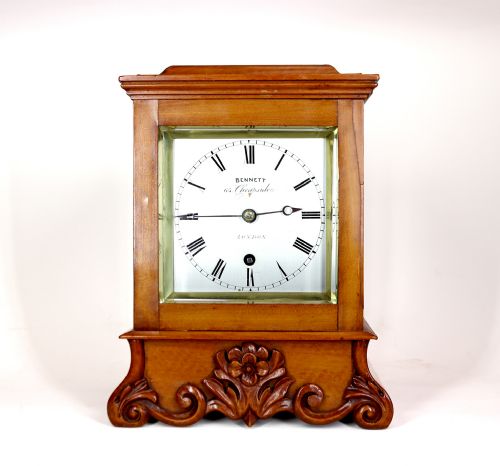


Antique Desk Clock Wood
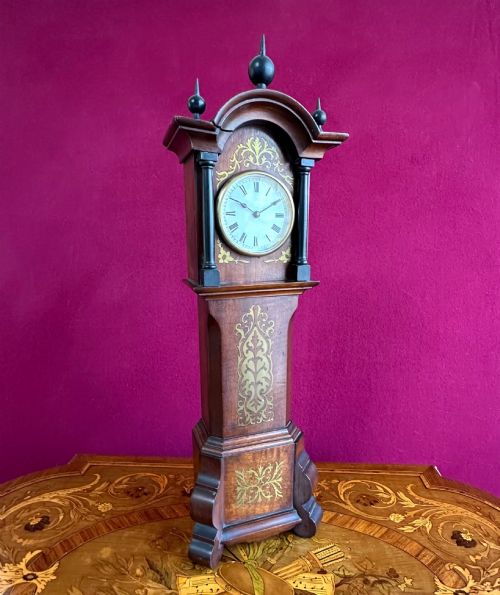
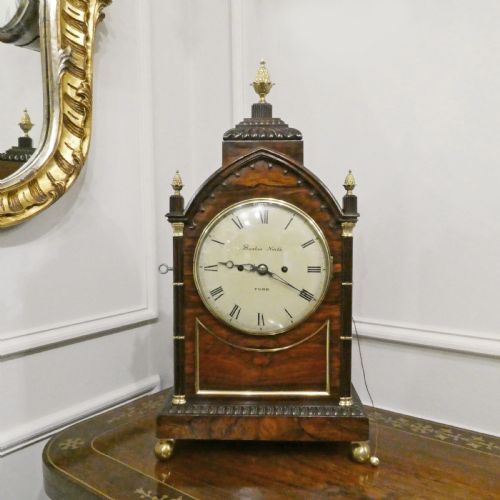
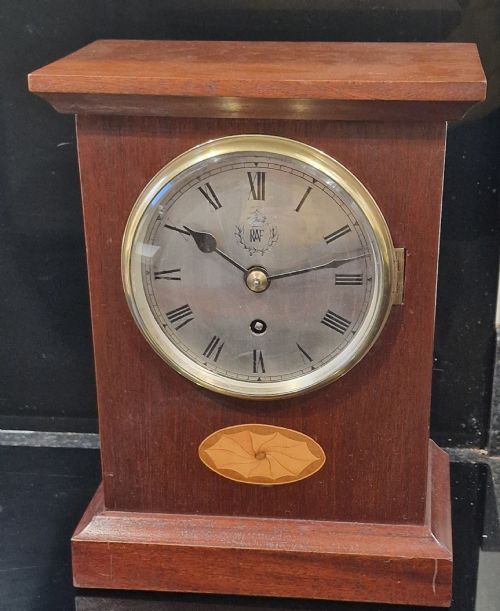
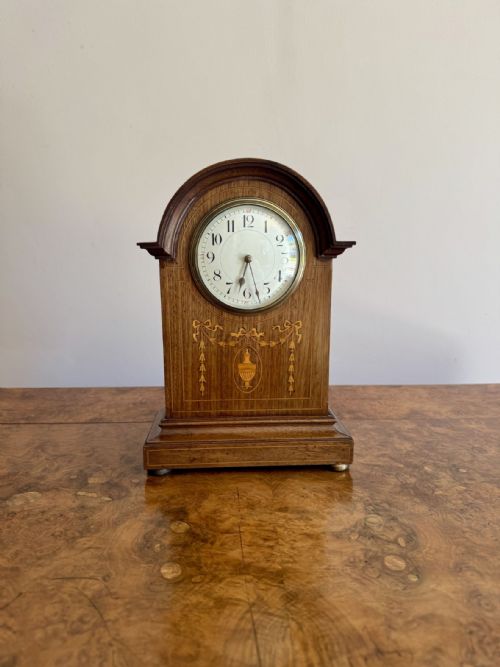
These antique desk clock wood pieces bring mechanical precision and rich timber cases together into a practical object for any interior.
How they were made
Cabinetmakers constructed the wooden housings using dense timbers like mahogany, rosewood, and walnut, frequently adding satinwood stringing, marquetry, or intricate hand-carved details found in Black Forest linden wood pieces.
Clockmakers fitted these timber cases with mechanical movements, including fusee mechanisms, eight-day or fourteen-day striking trains, and platform escapements, paired with brass bezels, glass panels, and painted enamel dials.
What varies in quality
The refinement of the cabinetwork largely determines the distinction between ordinary and superior examples, seen in the choice of figured timber veneers, precise marquetry inlay, and the crispness of hand-carved wooden elements.
Movement complexity and signature engravings also set pieces apart, where signed brass backplates from established makers and reliable fusee mechanisms reflect a higher tier of horological production.
Listings feature woods spanning mahogany, rosewood, walnut, satinwood, pollard oak, linden wood, and ebonised finishes across multiple historic eras.
Mappin & Webb·Barber & North of York·Sir John Bennett·Walker·Bergen & Co·Piggin Norwich·Winterhalder & Hofmeier·Henry Marc·Joseph Jump of London·Paul Garnier·Pennington of Camberwell·Budgen Croydon·Walker and Hall·H.A.C.
The Antique Desk Clock Wood Glossary
- Fusee
- A conical pulley used in mechanical clocks to maintain even power delivery as the mainspring unwinds. This mechanism helps the clock maintain consistent timekeeping throughout its running cycle.
- Bracket clock
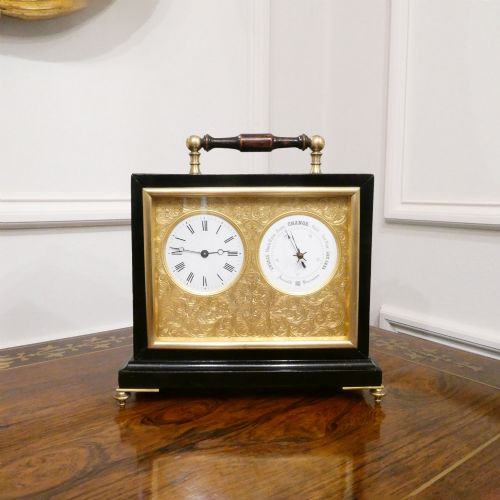
- A portable table clock historically designed to sit upon a matching wall bracket. These pieces typically feature wooden cases with carrying handles and glazed side panels.
- Library clock
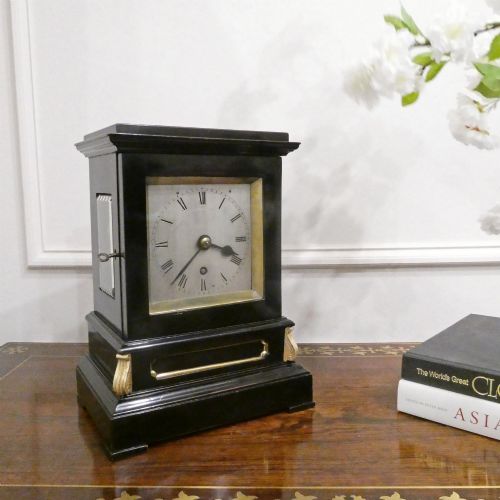
- A compact timepiece intended for study rooms or desks. They frequently employ fusee movements housed within architectural wooden cases.
- Balloon clock
- A mantel or desk clock characterised by an arched, curved case silhouette resembling a hot air balloon. Makers commonly produced these in mahogany during the Edwardian era.
- Marquetry
- Decorative veneer work created by fitting together thin pieces of wood and other materials to form pictorial designs. This technique embellishes the exterior of many rosewood and mahogany cases.
- Escapement
- The mechanical linkage that controls the release of gear train power to the pendulum or balance wheel. It regulates the ticking motion of the clock.
Antique Desk Clock Wood: Frequently Asked Questions
How do I wind an antique wooden desk clock?
Most mechanical desk clocks require a specific winding key inserted into the dial holes to tension the mainspring barrels or fusee chains. Care must be taken not to overwind the mechanism.
Consulting the specific movement type helps determine whether the clock runs for eight days, fourteen days, or requires daily attention.
Where should I place a wooden desk clock?
These clocks suit flat, stable surfaces such as desks, mantelpieces, tables, and bookshelves away from direct sunlight and damp environments. A level surface ensures the pendulum or escapement beats evenly.
Placing them in rooms with stable temperatures protects both the wooden case and the delicate internal metal gears.
How do I tell an Edwardian clock from a Victorian one?
Victorian clocks often feature heavier proportions, dark ebonised finishes, or robust mahogany cases with Gothic and classical influences. Edwardian examples tend to display lighter satinwood inlay, brighter mahogany tones, and more delicate proportions.
Examining the dial style, woodwork details, and any maker signatures helps clarify the period of production.
What is the difference between a bracket clock and a mantel clock?
Bracket clocks historically originated as portable timepieces with carrying handles on top designed to rest on wall brackets or tables. Mantel clocks generally evolved as broader, decorative pieces meant to sit directly upon fireplace mantelpieces.
Over time, the terms became somewhat interchangeable in descriptions of wooden table timepieces.
How are Black Forest wooden clocks different?
Black Forest clocks are distinguished by their deeply carved linden wood cases depicting foliage, animals, or rustic scenes. Unlike polished mahogany or rosewood bureau clocks, these pieces showcase raw carved timber sculpture.
Originating from the mountain region in Germany, they represent a distinct tradition of woodwork and clockmaking.