
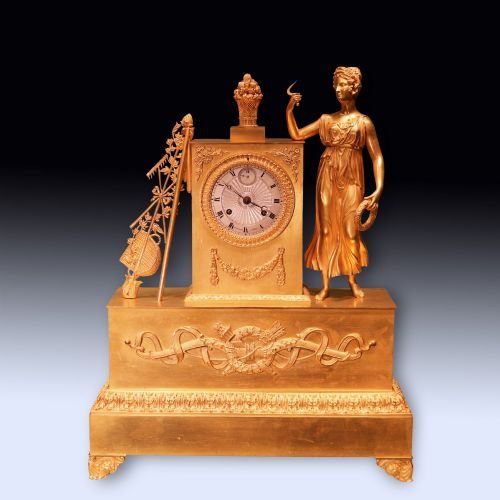
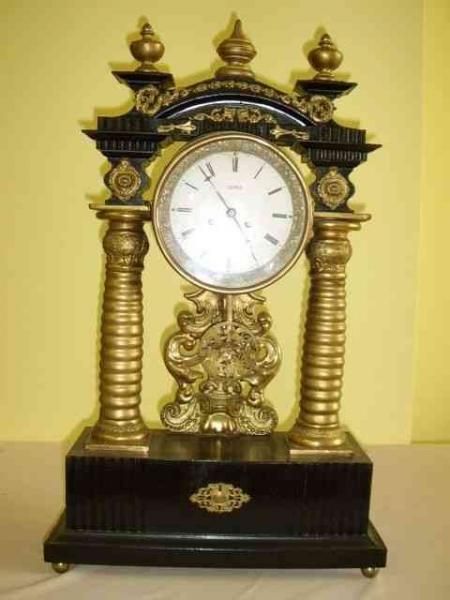


Empire Period Mantel Clock
An empire period mantel clock brings architectural weight and classical allegory into a room through contrasting patinated and gilded metals.
Empire Period Mantel Clock
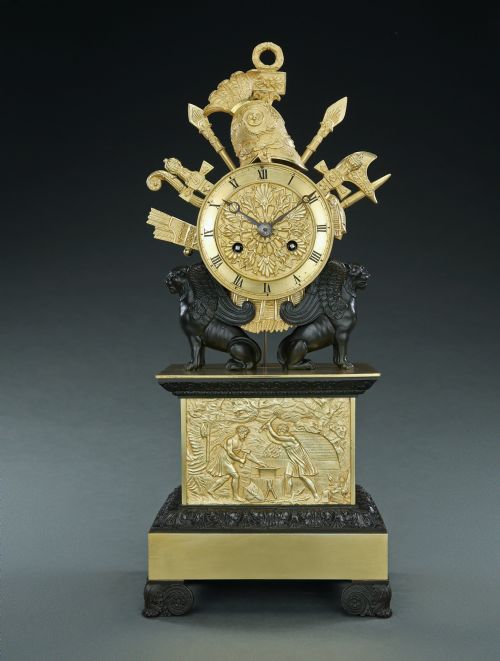
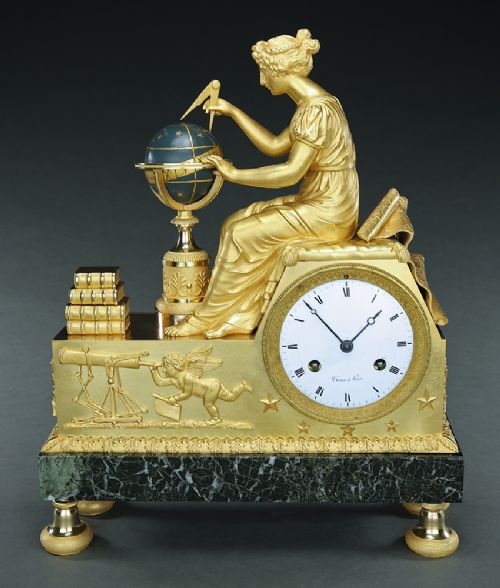
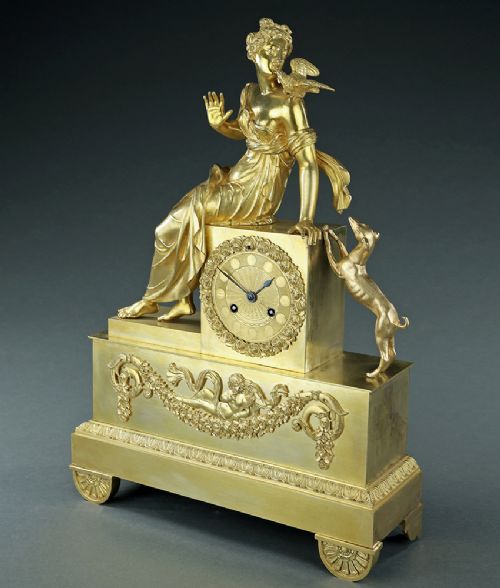
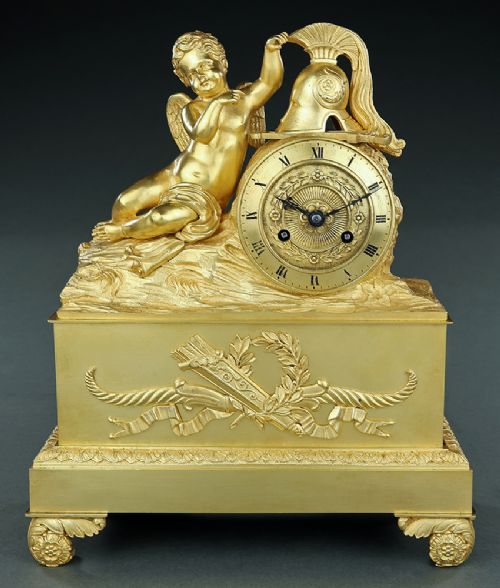
When you search for an empire period mantel clock, you encounter substantial freestanding timepieces designed for the principal rooms of grand houses. These objects draw heavily upon classical mythology, military trophies, and allegorical themes such as love and fidelity.
The versions most frequently met on this page belong to the nineteenth century, spanning French Empire, Regency, and subsequent revival styles. They often take architectural shapes, portico designs, or feature distinct figural subjects including lions, astronomers, and explorers.
Many examples pair a central clock movement with flanking garnitures or present elaborate sculptural programmes involving bronze, marble, and gilt metalwork. Their presence dominates a mantelpiece through sheer material contrast and upright proportion.
Materials and construction
The makers of an empire period mantel clock utilised contrasting finishes of ormolu and patinated bronze to create depth within figural and architectural scenes. These metals were cast and chased by hand before receiving fire gilding.
Cases frequently incorporate white marble, siena marble, or rouge marble alongside timber elements like Cuban mahogany, providing a dense foundation for the heavy metalwork. Enamel dials carry the numerals, protected beneath glass bezels.
Internal mechanisms rely upon intricate movements, including single chain fusee systems and silk suspension threads, which require careful setting and regular maintenance to keep accurate time.
Some dials feature reclining figures of explorers leaning casually against the clock face while studying distant maps.
Evaluating craftsmanship
The integration of the sculptural elements with the marble or timber housing indicates the original workshop ambition. Superior pieces align mechanical housings seamlessly within complex architectural compositions without awkward visual gaps.
The presence of signed movements by notable horologists elevates an object, demonstrating precision engineering that matches the external decorative programme.
Canaillor of Paris·Reiche·Ravrio·Pons de Paul·FB Adams London·FATTON ELEVE DE BREGUET LONDON
The Empire Period Mantel Clock Glossary
- Ormolu
- Finely chopped high-karat gold amalgamated with mercury and applied to a bronze base through intense heat. This process produces a durable, luminous surface characteristic of the period.
- Patinated bronze
- Darkened copper alloy used to create contrast against bright gilded elements in figural compositions. It highlights the musculature and fabric folds of sculptural figures.
- Fusee
- A conical pulley connected to a cord or chain that equalises the torque of the mainspring as it unwinds. This mechanical addition improves timekeeping accuracy across the power reserve.
- Silk suspension
- A method of hanging the pendulum from a fine loop of silk thread rather than a metal spring. This delicate arrangement appears frequently in earlier nineteenth-century movements.
- Portico clock
- A timepiece housed within a columnar architectural frame resembling a classical portico. These designs often feature a suspended pendulum swinging visibly between the vertical pillars.
Empire Period Mantel Clock: Frequently Asked Questions
How do I wind an empire period mantel clock?
You insert the winding key into the dial apertures and turn it gently until you feel resistance, taking care not to overwind the mainspring.
Most movements require a weekly attention to maintain the running cycle and keep the strike train synchronised.
What is a clock garniture?
A clock garniture consists of matching decorative side pieces, such as urns or candelabra, designed to sit alongside the main timepiece on a mantel shelf.
They repeat the materials and decorative motifs of the central clock to create a unified decorative scheme.
Where should I place my clock?
You position the clock on a stable, level surface away from direct sunlight, draughts, and damp walls that might affect the timber case or marble.
A secure mantelpiece or console table allows the pendulum to swing evenly without interference.