
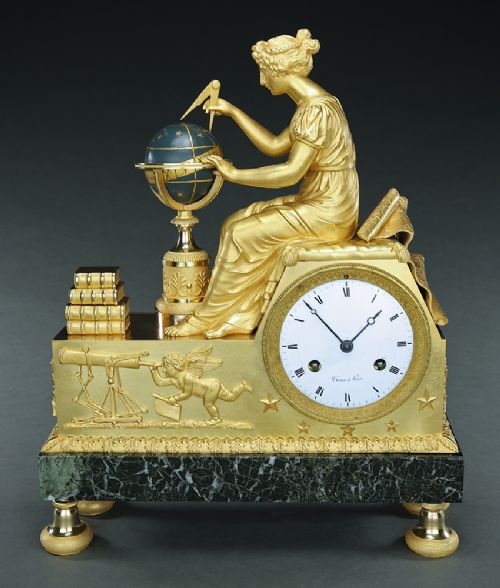
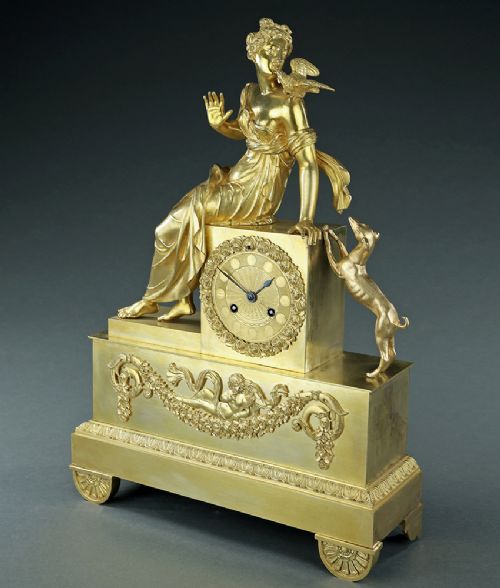


Allegorical Figure Clock
An allegorical figure clock brings narrative and symbolism to the mantel, capturing classical themes, literature, and virtue in metal and stone.
Allegorical Figure Clock
An allegorical figure clock is a decorative timepiece that uses sculptural human figures to represent abstract concepts, stories, or virtues. Buyers searching for an allegorical figure clock encounter substantial mantel clocks and clock garnitures that blend horology with narrative sculpture.
The pieces appearing on this page originate from the nineteenth century, including specific dates such as eighteen-sixty and eighteen-ninety, alongside Georgian and Victorian examples. Formats range from single mantel clocks to coordinated clock garnitures.
Stylistically, these clocks draw heavily on French design traditions. The selection spans French Empire, Louis XVI, French Restoration, Art Nouveau, and French Neoclassical aesthetics.
How they were made
The construction of these figural clocks relies on mixed media, frequently pairing cast metals with stone bases. Gilt bronze, ormolu, and patinated bronze provide the sculptural forms and case details, often combined with enamel dials.
Bases and architectural elements frequently incorporate marble, notably rouge marble, which offers a contrasting heaviness and rich colour beneath the metal figures. Brass also appears in the internal mechanics or secondary mountings.
Some figures point directly at fonts of holy water, ensuring your mantel clock comes with a built-in moral reminder.
What varies in quality
The integration between the sculptural allegory and the clock housing also dictates worth. Superior pieces use named makers or distinct after-models, such as works influenced by Reiche, Remond, or Deniere et Fils, demonstrating greater artistic ambition in the narrative scheme.
Reiche·Remond·Deniere Et Fils
The Allegorical Figure Clock Glossary
- Ormolu
- Gilded bronze produced through a mercury amalgamation process, yielding a distinctive golden surface. This technique was widely utilised in French clockmaking.
- Garniture
- A set of decorative matching objects for a mantelpiece, usually comprising a central clock flanked by two matching vases or candelabra. These matched sets provide symmetrical balance.
- Patinated bronze
- Bronze treated with chemical solutions to produce a darkened or coloured surface finish. It creates contrast against brighter ormolu mounts.
- Rouge marble
- A deep red, variegated limestone often used for decorative clock bases. Its rich tones complement gilded bronze figures.
Allegorical Figure Clock: Frequently Asked Questions
What is an allegorical figure clock?
An allegorical figure clock is a timepiece featuring sculpted figures that symbolise abstract ideas, historical narratives, or moral virtues. These pieces combine timekeeping with sculptural art.
They serve as decorative centerpieces designed for prominent display on mantelpieces.
How do I identify the style?
You can identify the style by examining the architectural motifs, the posture of the figures, and the materials used. French Empire and Louis XVI pieces display classical symmetry and military or mythological themes.
Later Victorian and Art Nouveau examples introduce flowing organic lines and softer allegorical subjects like literature or chastity.
What is a clock garniture?
A clock garniture is a matched set consisting of a central mantel clock accompanied by side pieces such as urns or candelabra. They were designed to create a unified decorative arrangement on a fireplace mantel.
These sets share identical materials, such as marble and ormolu.
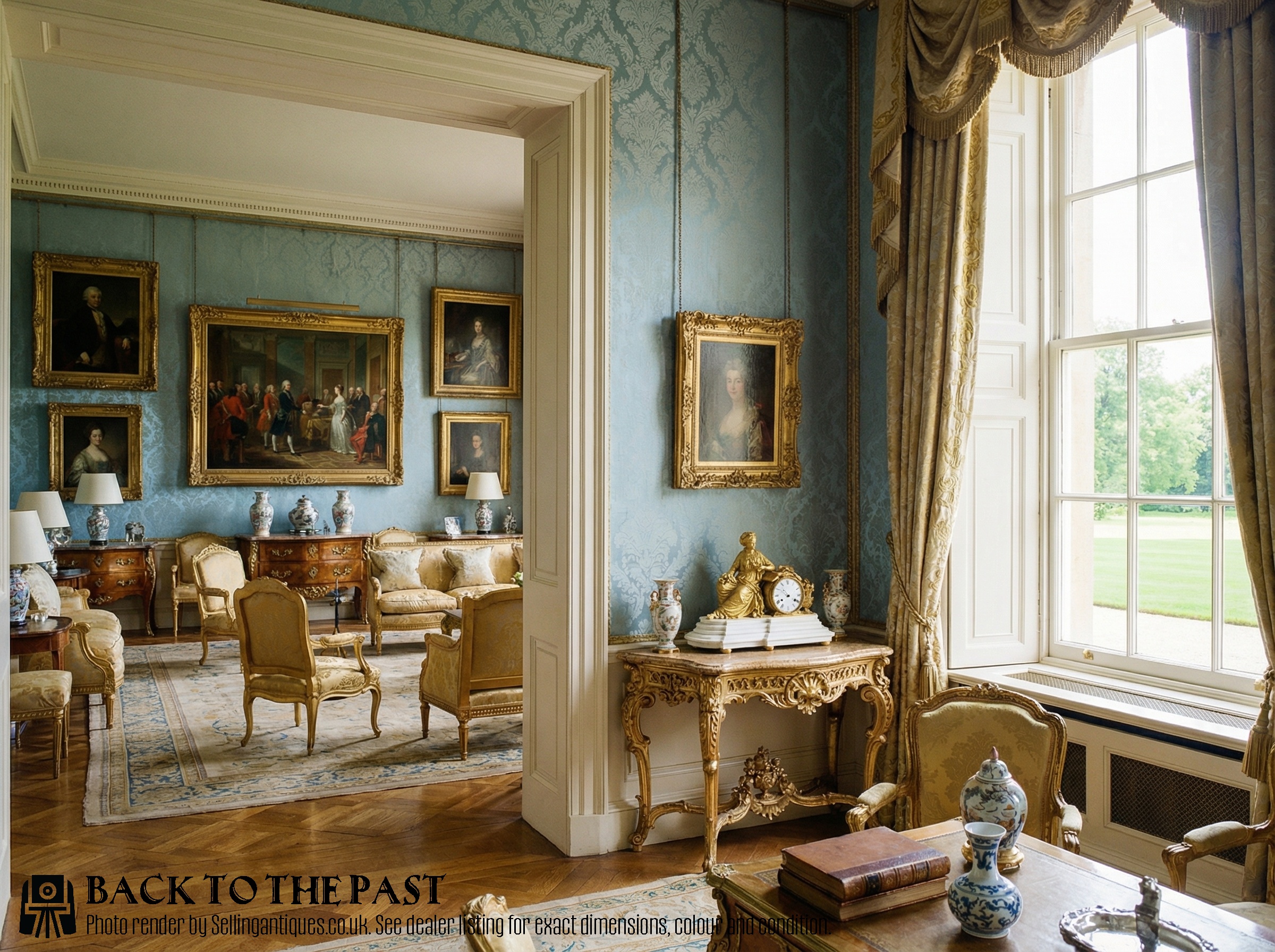
How should I place one in a room?
These clocks require a stable, deep surface like a mantelpiece or a heavy sideboard to support their substantial weight in bronze and marble. Positioning them away from direct heat sources protects the delicate enamel dials and movement.
Ensure the room has sufficient clearance to display any accompanying garniture pieces.