
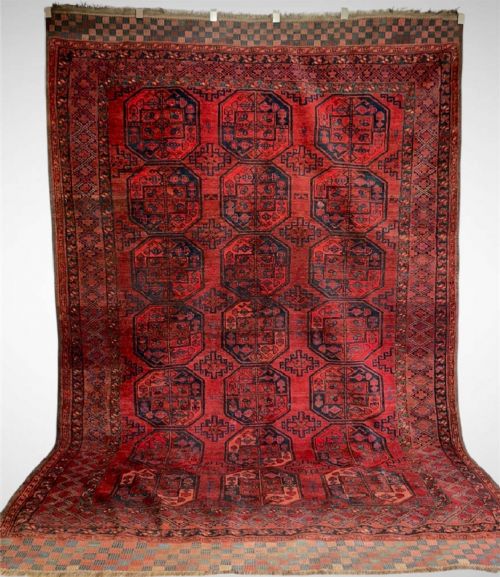


Red Ersari Carpet
A red ersari carpet brings the rich, earthy tones and tribal geometry of Central Asia directly onto the floor.
Red Ersari Carpet
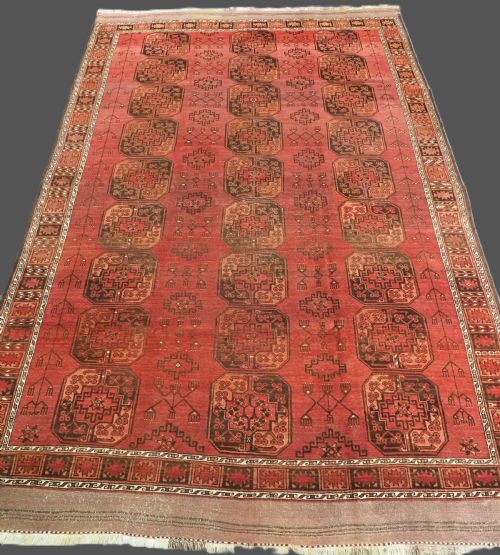
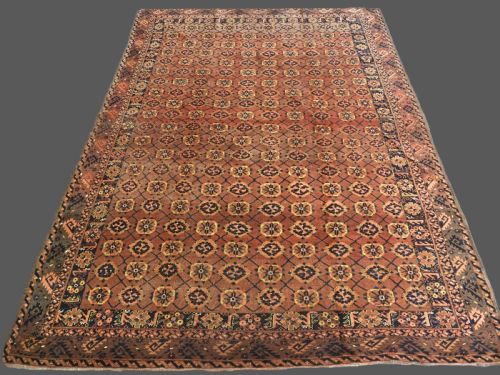
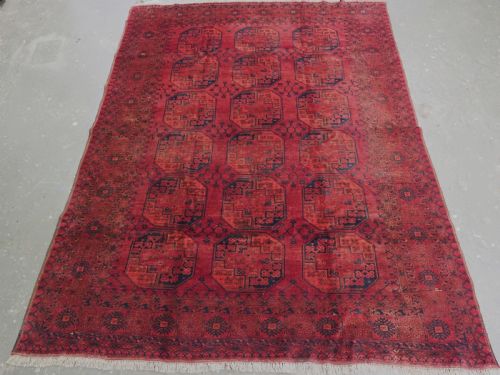
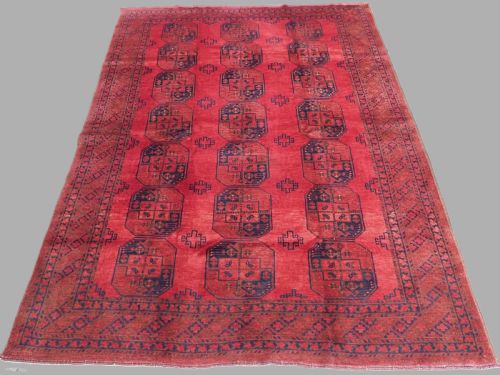
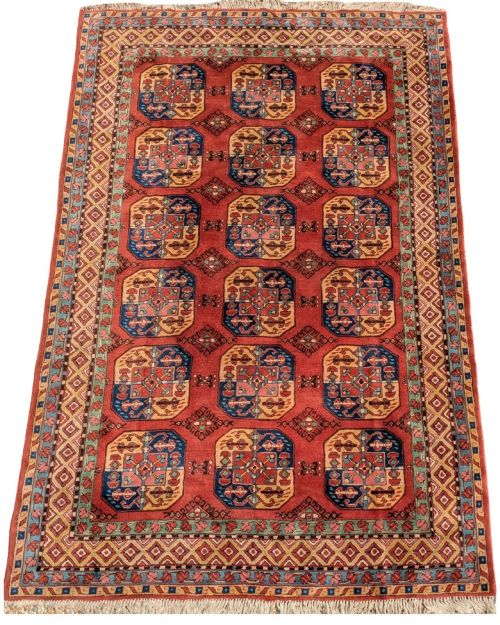
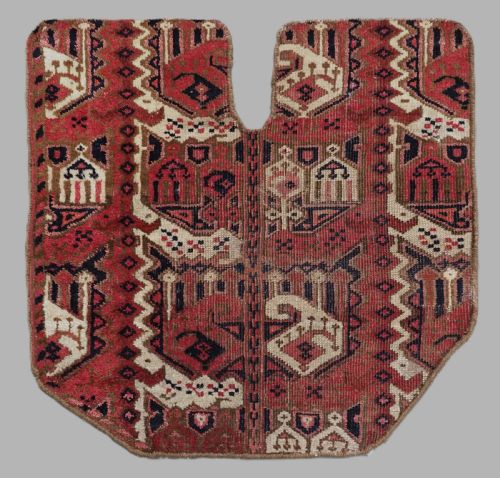
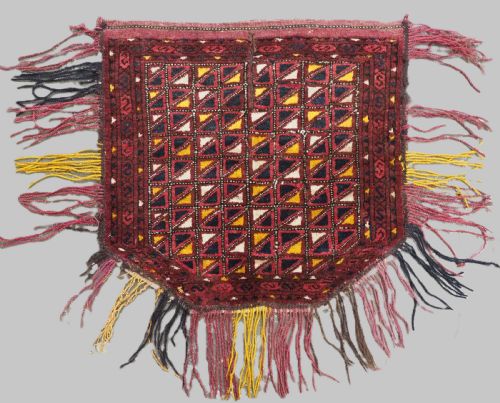
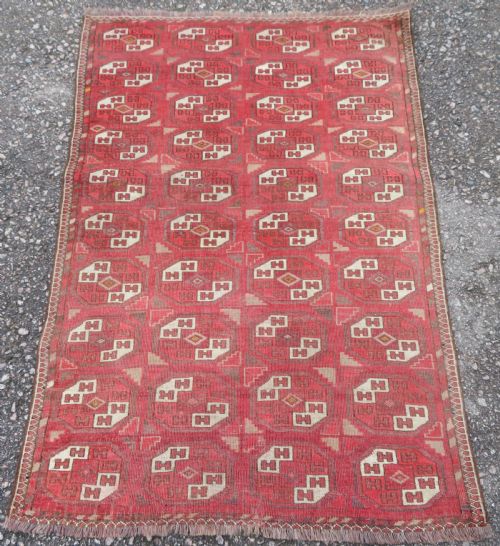
When searching for a red ersari carpet, buyers encounter hand-knotted textiles originating from Turkmen and Afghan tribal traditions spanning the nineteenth and early twentieth centuries. These pieces encompass large main carpets, village rugs, and smaller household formats such as torbas and saddle covers.
The dominant visual characteristic across these specimens is a warm red ground, frequently complemented by secondary tones and traditional motifs like the gul, turreted patterns, or ikat designs. Pieces range from grand country house proportions down to intimate utility covers.
Examples frequently display the distinct design grammar of Ersari, Beshir, or Kizil Ayak weavers, reflecting the rich heritage of Central Asian nomadic and village workshops.
Materials and Construction
Weavers constructed these textiles using hand-spun wool for the pile, often supported by foundations containing goat hair or horsehair for added durability.
Colours relied heavily on natural dyes, yielding deep red, plum, and warm earth hues that mellow gracefully with age.
The careful knotting technique and robust materials ensured that these carpets withstood heavy daily use while retaining structural integrity.
Assessing Quality and Execution
The density of the knotting and the fineness of the wool determine the tactile weight and longevity of the textile.
Depth and saturation of the natural dyes separate standard utility rugs from pieces exhibiting exceptional artistic nuance in their red grounds.
Completeness of original borders, tassels, and structural edges distinguishes well-preserved examples from those with extensive historical restoration.
The Red Ersari Carpet Glossary
- Gul
- A primary octagonal medallion motif repeated across Turkmen and Ersari carpets. This design element forms the structural backbone of many tribal compositions.
- Torba
- A small storage bag face produced by nomadic weavers for domestic utility. These smaller formats often display intricate subsidiary patterns.
- Beshir
- A sub-style associated with Ersari weavers known for borrowing ikat and floral influences. These pieces stand apart from strict geometric tribal norms.
- Kapunuk
- A specialised tent door rug hung at the entrance of a nomadic dwelling. They typically feature a distinct three-sided architectural format.
- Chuval
- A large storage bag face created for household organisation. Their formats frequently mirror the main carpet motifs in miniature.
Red Ersari Carpet: Frequently Asked Questions
How do I care for a vintage wool carpet?
Vacuum gently without a rotating brush to protect the hand-spun wool pile and delicate edges. Professional cleaning by specialists in antique textiles prevents dye migration.
Keep the rug away from direct sunlight to preserve the natural red tones. Rotate the piece periodically to ensure even wear across high-traffic areas.
Were these carpets made for daily use?
Nomadic and village weavers produced these textiles primarily for practical domestic flooring and camp organisation. Their sturdy construction with goat hair foundations met the demands of daily household life.
Larger formats served main living spaces, while smaller bags and covers fulfilled storage and transport functions within the community.
What defines the typical colour palette?
Natural dyes derived from local plants and minerals produced the characteristic warm red, plum, and terracotta grounds. These pigments interact with hand-spun wool to create subtle variations known as abrash.
Secondary tones of indigo, ivory, and dark brown provide contrast for the geometric guls and borders.
How can I distinguish different tribal designs?
Look closely at the repeating medallions and border arrangements to identify specific weaving groups like the Ersari, Saryk, or Kizil Ayak. Motif variations such as the turreted gul or ram's horn offer clear clues to origin.
Sub-styles like Beshir introduce ikat-inspired patterns that diverge from strict tribal geometries.