


Octagonal Gul Carpet
An octagonal gul carpet brings the rhythmic geometry of tribal weaving into a room.
Octagonal Gul Carpet
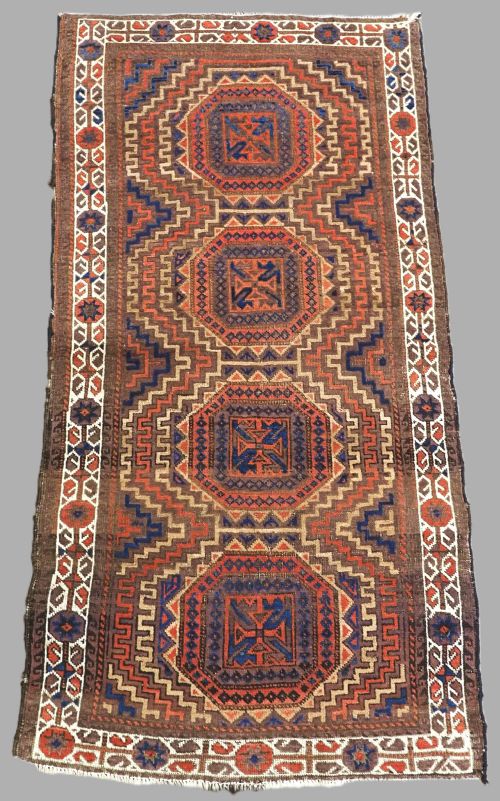
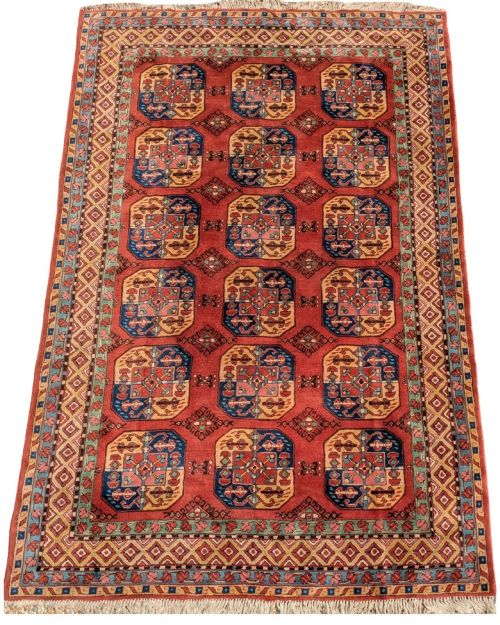
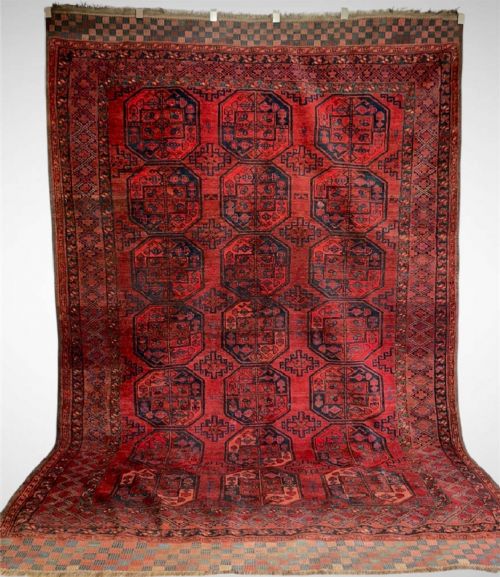
An octagonal gul carpet displays distinct repeated medallion motifs known as guls across the field. When you search for an octagonal gul carpet, you encounter traditional tribal weavings predominantly originating from Turkmen and Afghan makers. The pieces available range from compact village rugs to country house size main carpets.
The format you meet most often on this page is the large Ersari main carpet or Afghan village rug bearing traditional gul designs. These textiles date principally from the late nineteenth century through to the early decades of the twentieth century. They serve primarily as floor coverings but frequently appear as wall panels or face pieces.
How they were made
The weavers utilised wool for the pile, often pairing it with goat hair or horsehair foundations for structural durability. These natural fibres absorb dye readily and withstand centuries of foot traffic.
Makers relied on natural dyes to achieve deep red, gold, and earthy tones that patine softly over time. The structural weave combines sturdy warp and weft threads to support the dense woolen knots.
Listings span four distinct periods: 1880, 1900, 1920, and 1930.
What varies in quality
Quality rests in the precision of the gul motifs and the depth of the wool pile. A superior rug maintains crisp geometry within each octagonal medallion and rich, saturated colour throughout.
The foundation materials also dictate the grade of the weaving, with sturdy horsehair or goat hair foundations providing exceptional stability. Finer specimens display a glossy surface texture and intact original edges.
The Octagonal Gul Carpet Glossary
- Gul
- A primary medallion motif characteristic of Central Asian tribal carpets. These octagonal shapes repeat systematically across the field of the rug.
- Ersari
- A major Turkmen tribal group known for producing large main carpets with traditional gul designs. Their weaving tradition spans parts of Turkmenistan and Afghanistan.
- Chuval
- A large tribal bag face or storage sack woven by nomadic groups. These pieces frequently feature multiple guls arranged in rows.
- Foundation
- The underlying structural grid of warp and weft threads that supports the woolen knots. Goat hair and horsehair often appear in older tribal examples.
- Patina
- The soft sheen and mellowed coloration developed by wool and natural dyes through age and use. This visual depth distinguishes older rugs from recent production.
Octagonal Gul Carpet: Frequently Asked Questions
Where were these carpets made?
These carpets originate principally from nomadic and village traditions across Afghanistan and Turkmenistan. Weavers in regions such as Aqcha and areas associated with Ersari and Yomut tribes produced the majority of these pieces.
Local workshops and tribal groups maintained distinct design vocabularies passed down through generations. This heritage explains the consistent presence of traditional gul motifs across the surviving inventory.
How do I date an octagonal gul carpet?
Dating relies on assessing the wool quality, dye palette, and structural characteristics visible in the foundation. Pieces from the nineteenth century often feature denser wool and specific tribal structures not found in later work.
Changes in dyestuffs and weaving precision help narrow the period of origin. Comparative examination of known archival examples provides further context for specific decades.
Are these rugs suitable for heavy traffic?
The dense wool pile and sturdy foundations of these carpets make them well-suited for daily use. Goat hair and horsehair foundation threads add considerable strength to the structure.
Placing an appropriate underlay beneath the carpet prevents excessive friction against the floorboards. Regular gentle cleaning preserves the integrity of the pile over time.
What is an Ersari main carpet?
An Ersari main carpet is a large floor covering produced by the Ersari tribe of Turkmenistan and northern Afghanistan. These pieces typically measure large enough to anchor a primary room.
They feature repeated octagonal gul patterns arranged in orderly rows across a rich red or golden field. Their generous proportions distinguish them from smaller tribal bags and fragment panels.