
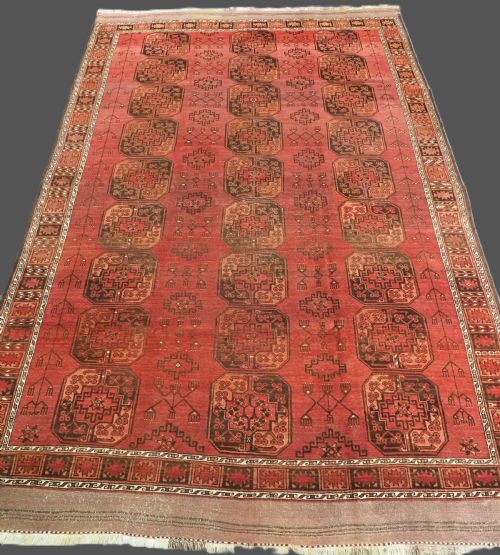
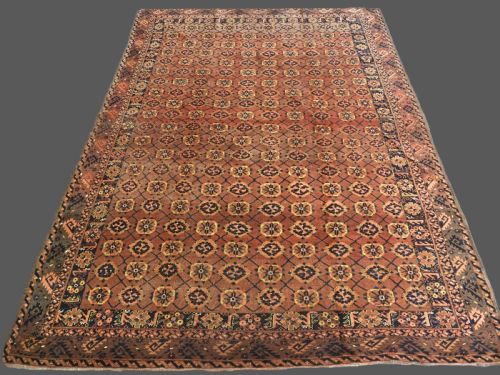
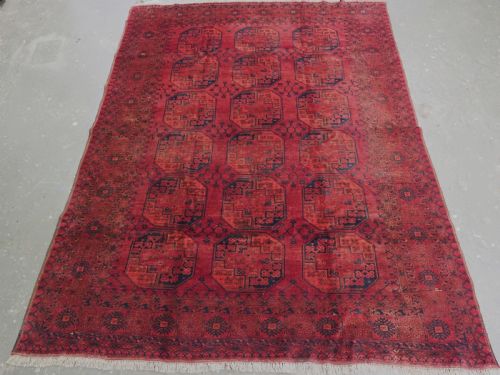
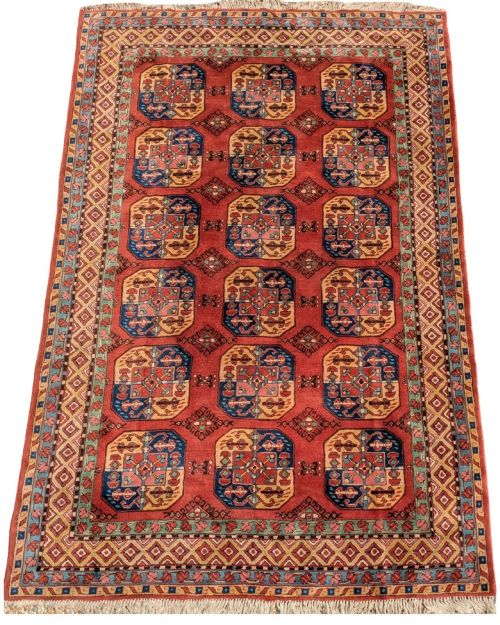
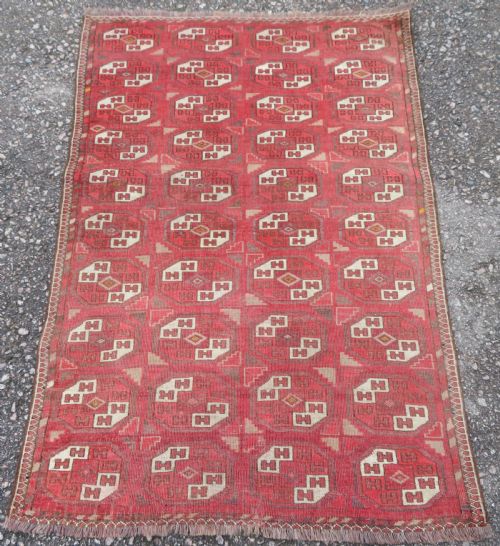
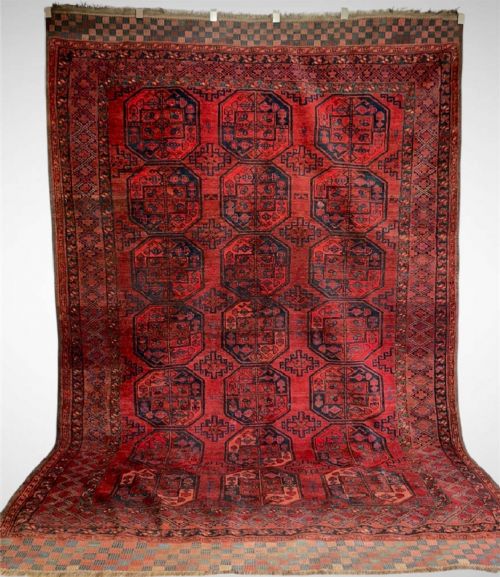


Ersari Gul Rug
An ersari gul rug brings deep red tones and tribal geometry into a room, offering tactile history through traditional Central Asian weaving.
Ersari Gul Rug
An ersari gul rug is a tribal textile originating from Central Asian weavers, most commonly encountered here as large main carpets, village rugs, or smaller utilitarian bag faces dating from the nineteenth and early twentieth centuries.
The inventory on this page spans formats from expansive country house carpets down to tent door rugs, torbas, and chuvals, reflecting the varied domestic and nomadic uses of these tribal groups.
Most examples hail from the nineteenth century up to the 1930s, showing characteristic Turkmen and Afghan village influences expressed through repeating geometric motifs.
Materials and Construction
The foundation and pile rely heavily on wool and hand-spun wool, occasionally incorporating goat hair or horsehair into the structure for added resilience.
Weavers utilised natural dyes to achieve the warm red colours and golden hues recorded across the pieces, creating depth that matures with age.
Ersari Gul Rug Retail Price Guide 2026
Typical asking prices for ersari gul rug among the pieces listed under this phrase on Sellingantiques today, from the lower quarter to the upper quarter. They describe what is for sale here now, not the wider market.
Some sturdy examples incorporate horsehair into the foundation, ensuring the rug could handle the daily stampede of nomadic camp life.
Assessing Quality and Character
Quality rests in the handling of the hand-spun wool and the saturation of the natural dyes, which determine how richly the surface catches the light.
Structural integrity also separates examples, with sturdier foundations utilising goat hair or horsehair demonstrating the heavy-duty nature required for nomadic life.
The Ersari Gul Rug Glossary
- Gul
- A repeating primary octagonal medallion motif used across tribal carpets. These motifs often identify the specific sub-tribe or weaving group.
- Torba
- A small storage bag face produced by tribal weavers. These wall-hanging or utility pieces display compressed versions of main carpet designs.
- Chuval
- A large tent storage bag face. They typically feature multiple guls arranged in precise grid patterns.
- Kapunuk
- A decorative tent door rug designed to frame the entrance of a yurt. These horseshoe-shaped doorway hangings are uncommon survivors.
- Elem
- The decorative lower panel of a rug situated beneath the main field design. This section often displays distinct secondary motifs or borders.
Ersari Gul Rug: Frequently Asked Questions
What is an ersari gul rug?
An ersari gul rug is a traditional hand-knotted tribal textile originating from Central Asian and Afghan weavers. These pieces are defined by repeating geometric medallion patterns known as guls.
They encompass a variety of formats, from large domestic carpets down to small storage bag faces made for nomadic daily life.
How were these rugs used?
Nomadic and village weavers utilised these textiles for practical domestic purposes inside tents and houses. Large formats served as floor coverings in main living spaces.
Smaller formats like torbas and chuvals functioned as storage bags for bedding and belongings, while kapunuks decorated tent entrances.
How do I date an antique rug?
Dating relies on examining the materials, dye types, and structural wear visible across the piece. Nineteenth-century examples often display softer handle characteristics and organic colour variations.
Twentieth-century pieces generally present heavier commercial influences while retaining traditional village designs passed down through generations.
How do I care for my rug?
Living with these textiles requires gentle maintenance such as regular light vacuuming without a rotating brush head. Keeping them out of direct sunlight preserves the natural dyes used in the wool.
Professional cleaning should be undertaken sparingly by specialists familiar with antique tribal carpets.