

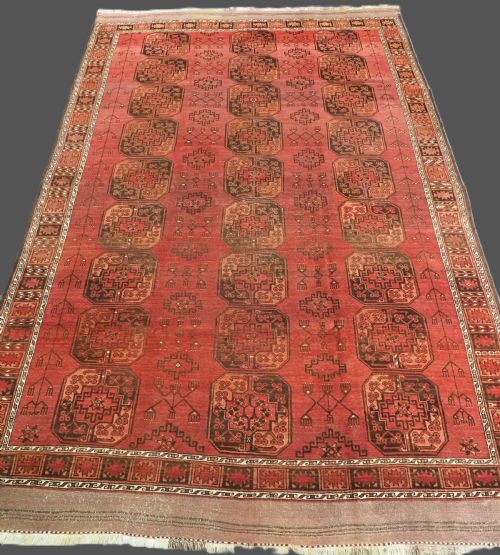
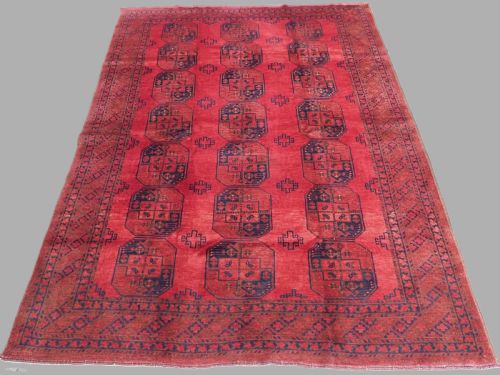
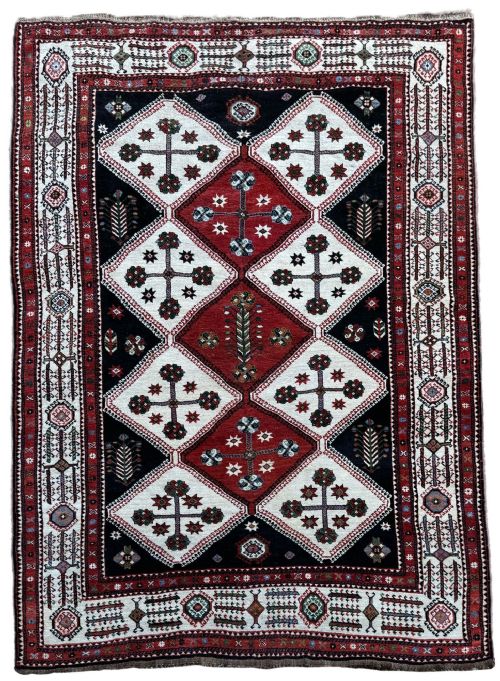
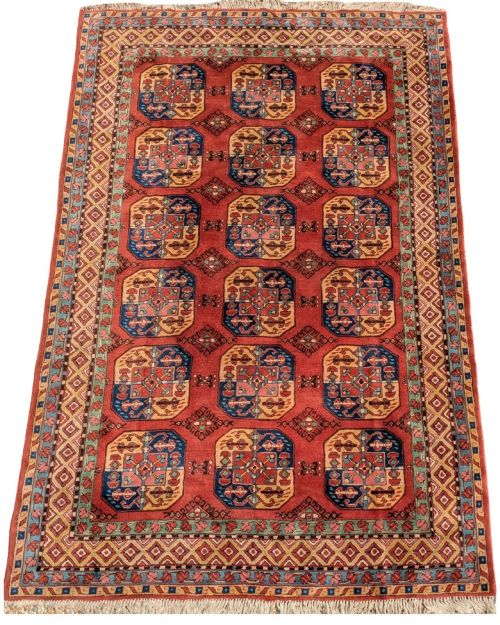

Large Red Area Rug
A large red area rug anchors a room with saturated warmth, offering heavy floor coverings woven across Persian and tribal workshops.
Large Red Area Rug
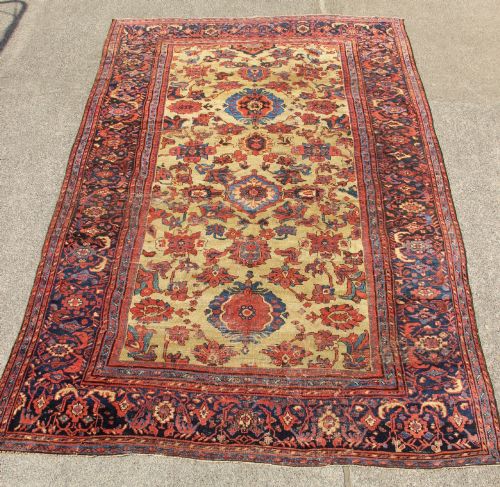
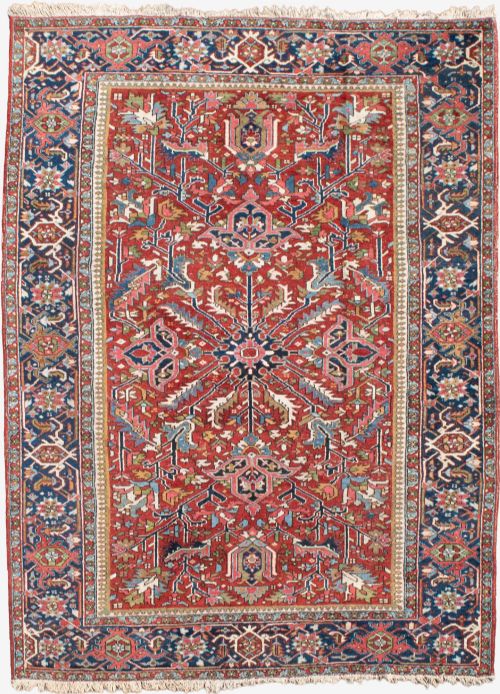
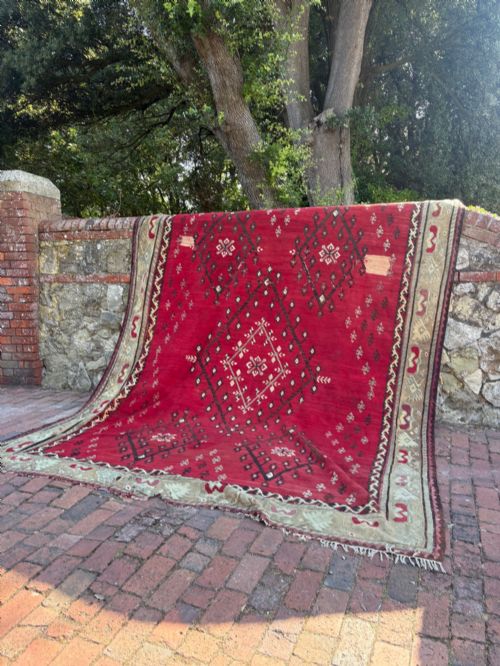
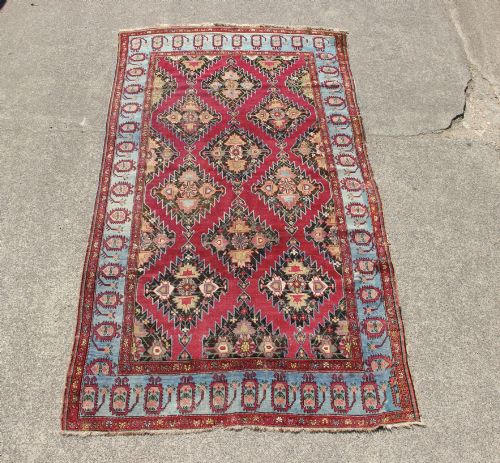
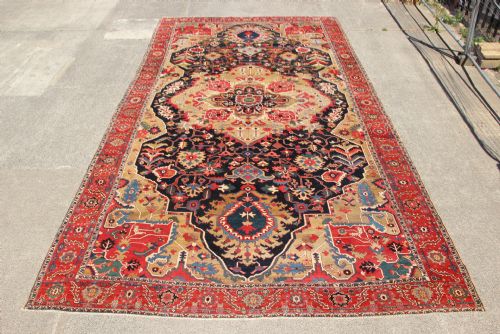
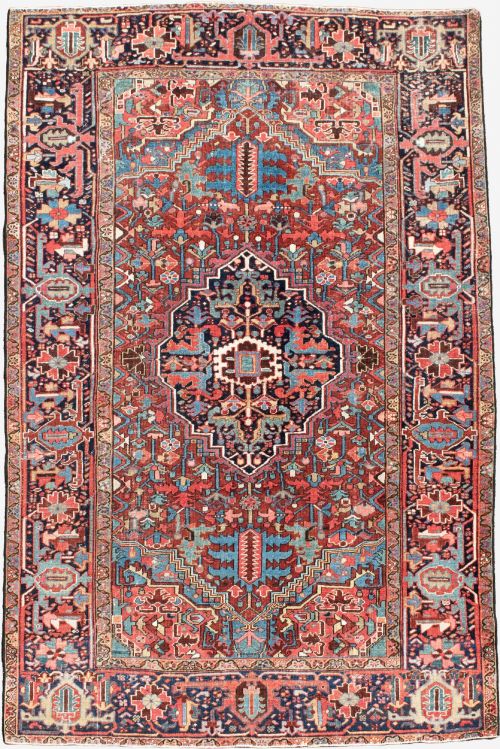
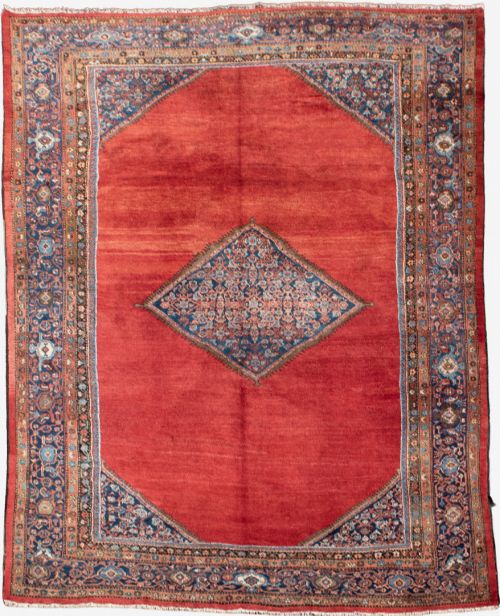
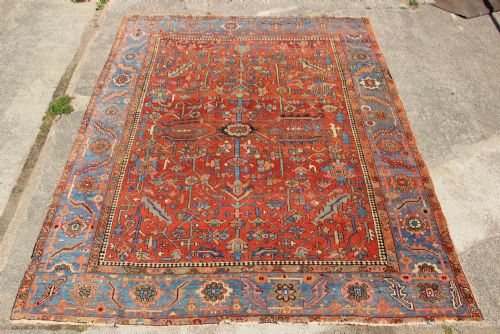
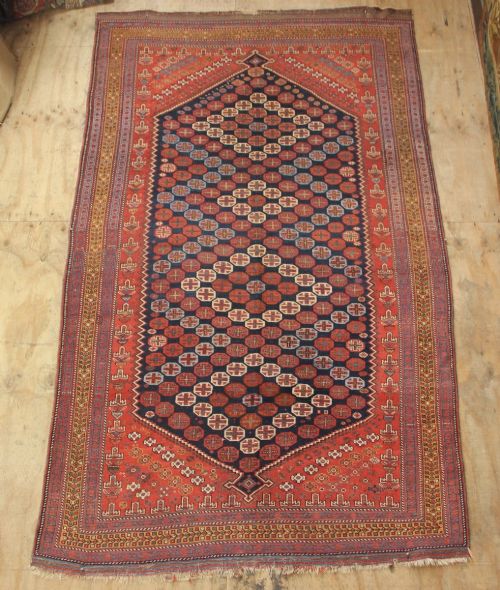
When you search for a large red area rug, you encounter hand-knotted room-size carpets originating from Persian towns and tribal confederations. These pieces range from substantial Heriz and Serapi carpets to nomadic Turkmen and Afghan village weaves.
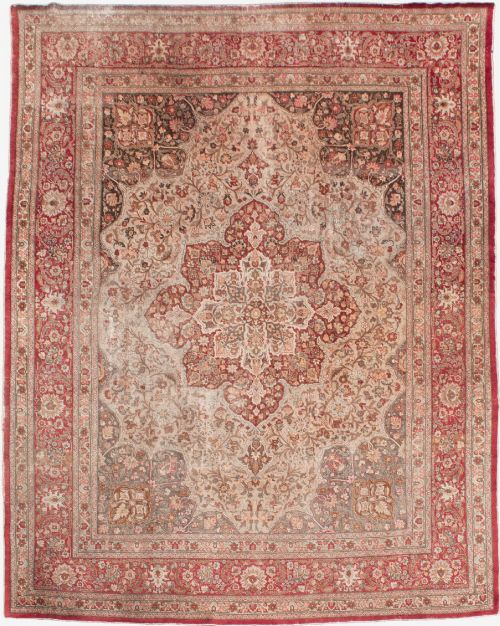
The version you are most likely to meet on this page is a nineteenth or early twentieth-century room-size Persian carpet dominated by terracotta, madder, or crimson tones. They span grand city workshops like Tabriz and Kirman alongside village productions such as Bakshiash and Mahal.
These floor coverings bring monumental scale and deep dye variations into domestic spaces. Their formats suit broad expanses, functioning as the primary textile focus of a reception room or study.
How they were made
The structural foundation relies on spun cotton for warps and wefts, providing a stable grid for intricate knotting. Wool serves as the pile material, taking rich red dyes derived from natural sources like madder root.
Weavers tied dense piles by hand onto upright looms, following traditional geometric or medallion designs passed down through regional workshops and nomadic tribes. Edges and ends were finished with wool binding to secure the structure against daily wear.
Large Red Area Rug Retail Price Guide 2026
Typical asking prices for large red area rug among the pieces listed under this phrase on Sellingantiques today, from the lower quarter to the upper quarter. They describe what is for sale here now, not the wider market.
Nomadic weavers frequently incorporated small accidental wool colour changes mid-row, known as abrash, proving that even traditional looms loved a spontaneous design shift.
What varies in quality
Quality rests upon the density of the knotting and the complexity of the design layout. Finer carpets exhibit precise drawing in their medallions and borders, executed with tightly packed pile wool.
The vibrancy and depth of the red tones dictate visual success, stemming from the quality of the wool and the sophistication of the dye bath. Superior pieces maintain crisp secondary colours alongside a resilient, heavy handle.
The Large Red Area Rug Glossary
- Heriz
- A town in northwest Persia known for producing robust carpets with bold geometric medallions and substantial corner spandrels. These pieces often utilise durable wool and strong madder red grounds.
- Madder
- A natural red dye extracted from the roots of the Rubia plant, widely used in traditional carpet production. It yields deep, shifting terracotta and crimson shades that soften gracefully over time.
- Knot
- The individual loops of wool tied around the warp threads to form the pile of a carpet. Higher knot counts generally allow for greater clarity in curved floral and geometric motifs.
- Warp
- The stationary vertical threads stretched onto the loom before weaving commences. Cotton warps provide a rigid foundation that keeps large carpets stable across the floor.
- Turkmen
- A grouping of Central Asian tribal weavers known for producing deep red carpets featuring repeated octagonal gul motifs. These village and nomadic pieces display sturdy wool construction.
Large Red Area Rug: Frequently Asked Questions
How do I clean a large wool carpet?
Vacuum gently with the suction attachment, avoiding aggressive rotary brush heads that pull at the wool pile. Professional specialist cleaning remains essential for removing deep grit without damaging the natural dyes.
Keep the carpet out of direct, blazing sunlight to prevent the red madder tones from fading unevenly across the room. Rotate the floor covering periodically to ensure balanced foot traffic wear.
What is the difference between Heriz and Tabriz carpets?
Heriz carpets typically present bold, geometric central medallions and robust structural wool suited to heavy domestic use. Their designs favour angular forms and stark colour contrasts.
Tabriz workshop carpets embrace curvilinear floral patterns with intricate details and finer knot densities. They represent urban Persian weaving traditions rather than the village aesthetics of Heriz.
Are these carpets suitable for heavy foot traffic?
Thick wool pile combined with a sturdy cotton foundation makes these room-size carpets exceptionally resilient for everyday living spaces. Their dense construction absorbs pressure from furniture and footfalls.
Placing a quality rug underlay beneath the carpet prevents slipping and reduces internal friction between the wool fibres. This simple measure extends the working life of antique floor textiles.
How can I tell a village rug from a city rug?
Village and tribal rugs often display slightly irregular geometry, memory-driven designs, and varied abrash colour shifts in the red field. These characteristics reflect individual weaver expression without rigid cartographic paper cartoons.
City workshop pieces demonstrate precise symmetry, fine symmetrical knotting, and curated floral palettes derived from master designers. They adhere strictly to planned compositions from urban centres.