


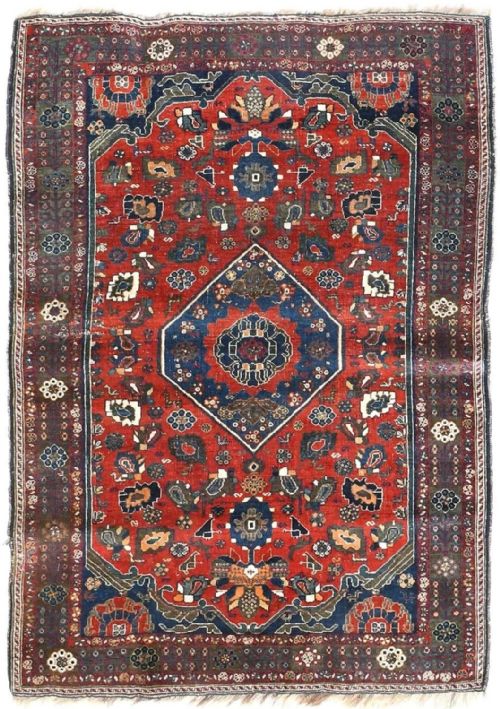

Heriz Medallion Carpet
When you want a heriz medallion carpet, you are looking for a robust North-West Persian floor covering defined by bold geometry and enduring village craftsmanship.
Heriz Medallion Carpet
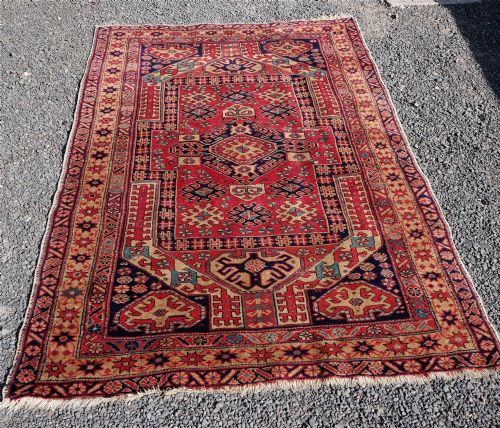
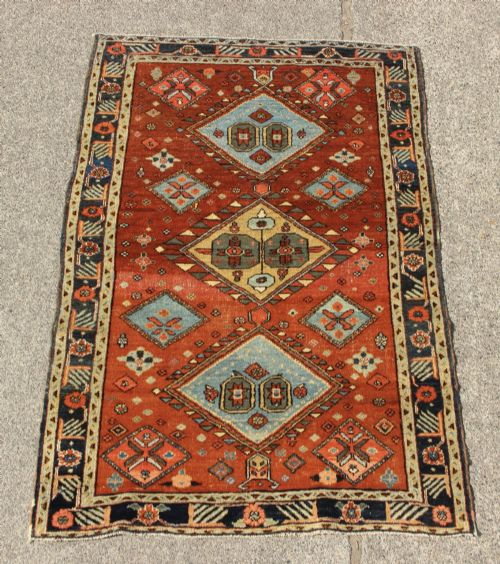
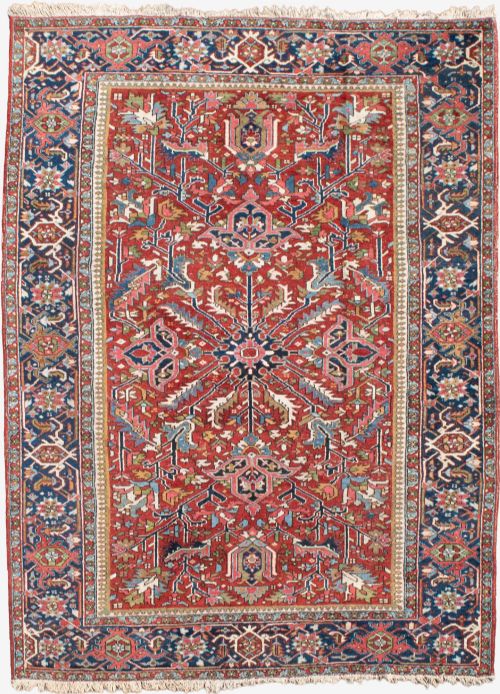
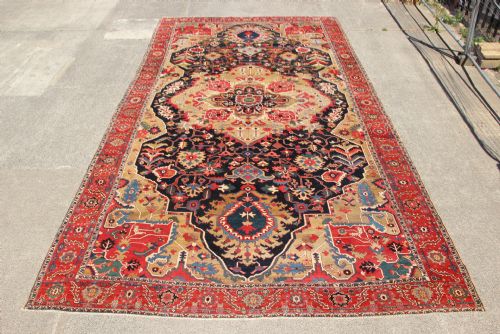
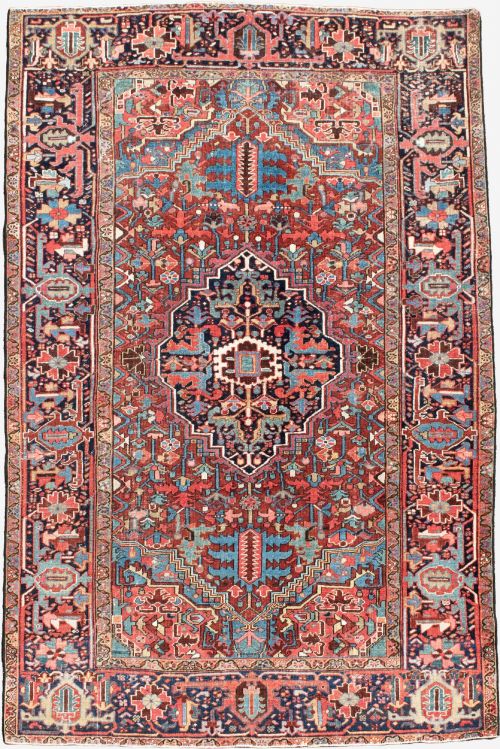
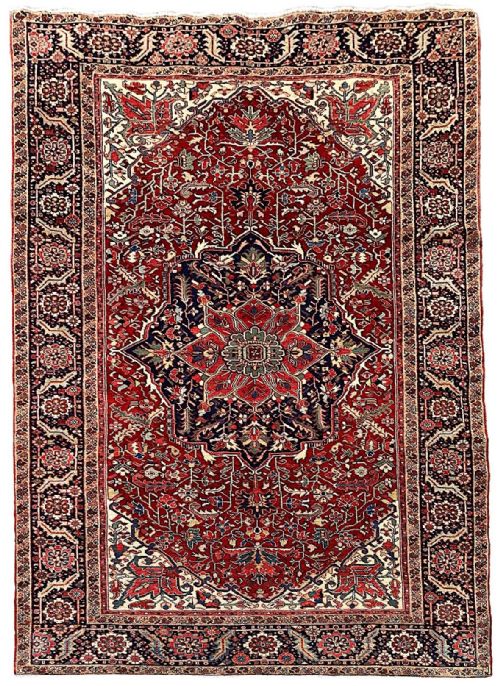
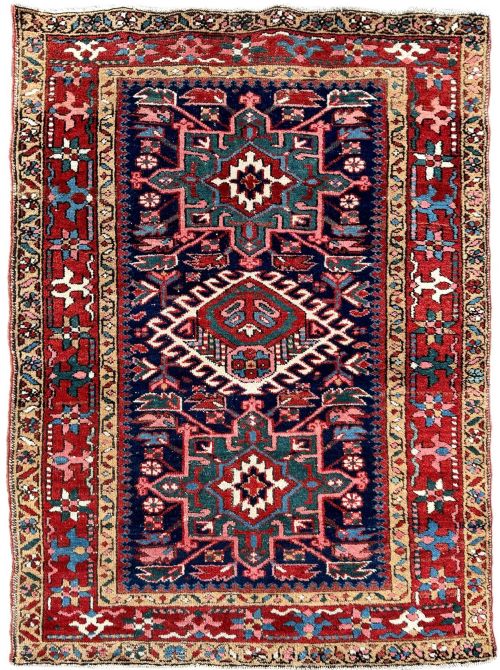
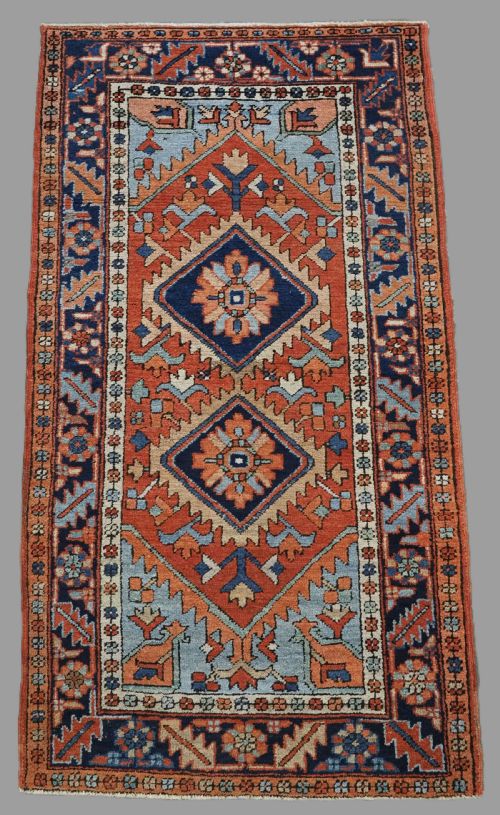
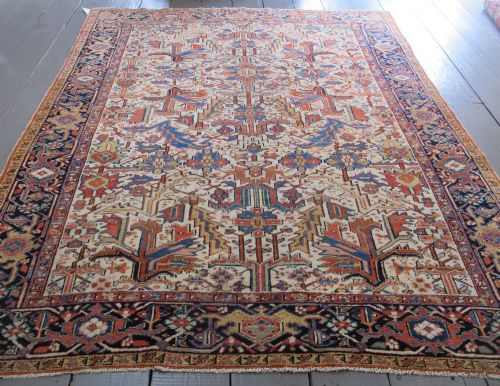
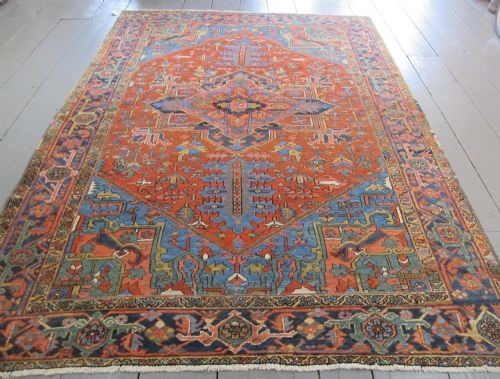
A heriz medallion carpet is a substantial North-West Persian textile traditionally centred around a strong geometric medallion motif. These floor coverings range from smaller rugs to large room-sized carpets dating from the late nineteenth century into the early twentieth century.
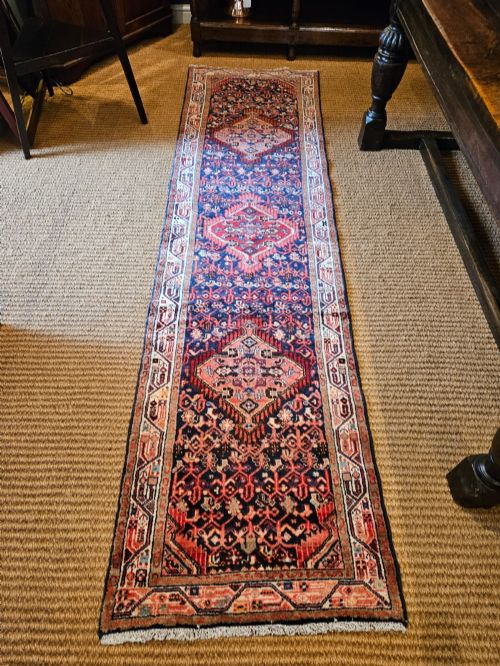
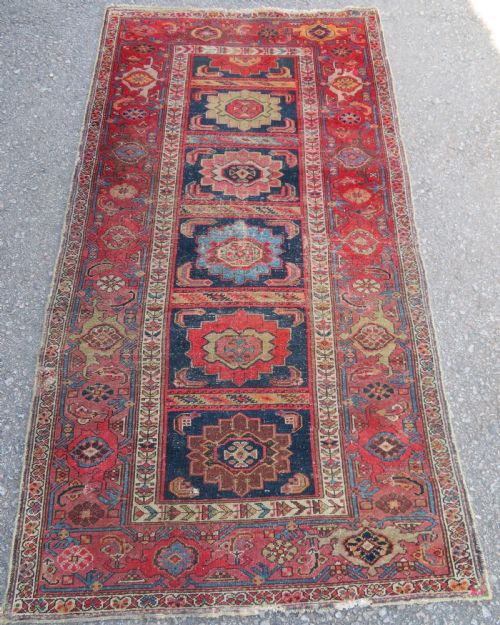
Buyers will encounter various formats on this page, including expansive carpets exceeding three or four metres, smaller scatter rugs, and narrow runner rugs. Regional neighbours such as Serapi, Karadja, and Bakshaish also appear alongside the primary Heriz attribution.
Materials and construction
These carpets are constructed using durable wool piles woven onto cotton warps, providing the structural stability necessary for heavy domestic use. Hand-spun wool is frequently utilised across the older pieces, yielding a dense and resilient surface.
The weaving technique relies on sturdy knotting traditions rooted in North-West Persia. This combination of materials and tight construction produces the characteristic heavy handle associated with village and town production in the region.
Heriz Medallion Carpet Retail Price Guide 2026
Typical asking prices for heriz medallion carpet among the pieces listed under this phrase on Sellingantiques today, from the lower quarter to the upper quarter. They describe what is for sale here now, not the wider market.
Listings span from the mid-nineteenth century to the nineteen-thirties, featuring wool piles on cotton warps in regional styles from Heriz to Bakshaish.
Assessing quality
Quality in these carpets rests upon the crispness of the geometric drawing and the harmony of the palette. Stronger pieces display a well-balanced distribution of vegetable and traditional dyes across the field and medallion.
Structural integrity also dictates worth, as density of knotting and uniformity of the cotton warp influence the longevity of the pile. Finer examples maintain an architectural precision in their angular motifs that lesser weaves lack.
The Heriz Medallion Carpet Glossary
- Medallion
- A central ornamental motif dominating the field of the carpet. In these pieces, it typically takes a bold, geometric form rather than a curvilinear one.
- Warp
- The vertical foundation threads stretched lengthwise on the loom. Cotton is standard for these North-West Persian pieces.
- Serapi
- A sub-style associated with older Heriz carpets, generally characterised by a more open design and a softer, muted palette.
- Karadja
- A related village weaving style from the same region, frequently seen in smaller formats and runner dimensions with distinct geometric patterns.
- Bakshaish
- An adjacent weaving centre known for producing carpets with looser, highly archaic village designs dating back to the mid-nineteenth century.
Heriz Medallion Carpet: Frequently Asked Questions
How do I care for my Heriz carpet?
Regular gentle vacuuming without a rotating brush roll helps keep the wool pile free of abrasive grit. Professional cleaning by a specialist familiar with antique Persian textiles is essential every few years.
Positioning the carpet away from direct, harsh sunlight prevents the natural dyes from fading unevenly over time. Rotating the piece occasionally ensures balanced wear in high-traffic hallways or living rooms.
What is the difference between Serapi and Heriz?
Serapi carpets represent an earlier, finer subset of Heriz weaving typically dated to the nineteenth century. They generally feature more spacious layouts and subdued, harmonious colour palettes.
Standard Heriz carpets from the early twentieth century often display denser geometric patterning and stronger, more saturated primary colours. Both share the same robust North-West Persian village heritage and durable cotton warp construction.
Are these carpets suitable for heavy foot traffic?
The sturdy wool pile and strong cotton warp make these floor coverings exceptionally resilient for daily use. They were originally built by village weavers to withstand generations of household activity.
Placing a quality underlay beneath the carpet prevents slipping and reduces friction against hard flooring. This simple addition cushions the wool fibres and significantly extends the lifespan of the textile.
How can I tell the approximate age of a carpet?
Age is typically estimated through a combination of structural analysis, dye characteristics, and design evolution. Earlier pieces from the mid-to-late nineteenth century often exhibit softer hand-spun wool and more archaic drawing styles.
Early twentieth-century examples frequently show tighter, more standardised geometric repeats and brighter chemical or improved natural palettes. Comparing the knot count and the wear patterns against documented regional timelines helps narrow down the decade of production.