


Polychrome Delft Dish
These polychrome delft dish examples bring vibrant tin-glazed earthenware into modern interiors with hand-painted floral and geometric schemes.
Polychrome Delft Dish
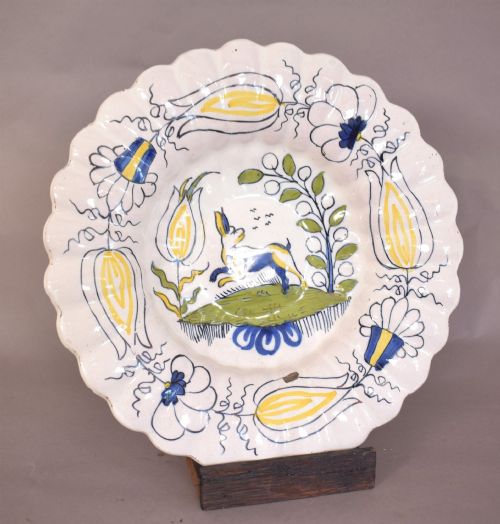
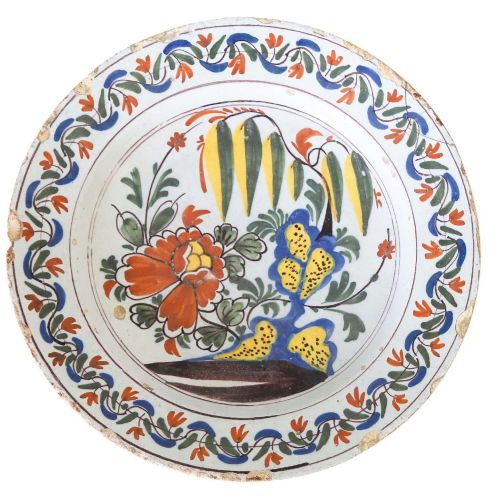
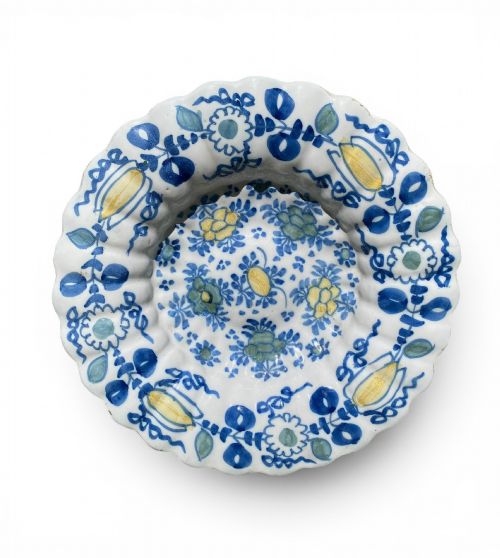
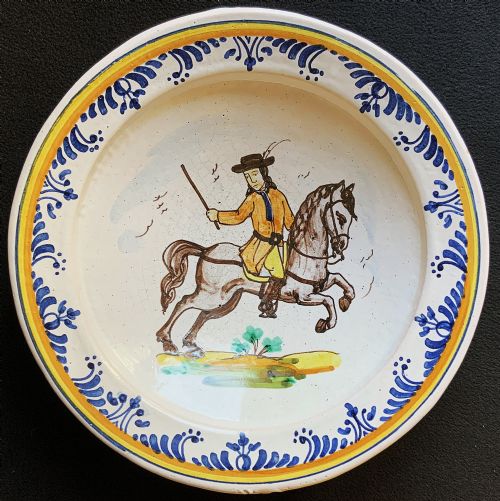
A polychrome delft dish represents tin-glazed earthenware produced across England, the Netherlands, and Spain during the seventeenth and eighteenth centuries. These vessels take the form of chargers, lobbed dishes, sweetmeat presentiers, and decorative plates.
Collectors encounter pieces spanning Dutch Baroque and Dutch Golden Age traditions alongside Georgian and Spanish Catalana productions. The seventeenth-century examples share space with eighteenth-century iterations featuring floral and Chinoiserie decoration.
The dominant presentation on this page involves large chargers and smaller dishes designed for display rather than heavy dining use. Their surfaces carry hand-applied pigments over opaque white tin glaze.
How They Were Made
Potters shaped local clay into earthenware bodies before coating them in a metallic tin glaze that provided an opaque white ground for painting. Pigments were brushed directly onto this unfired or partially fired glaze surface.
The firing process bonded the mineral colours into the white tin glaze, locking in hues of blue, yellow, green, and orange. Makers utilised moulded lobes or flat plates as their canvases depending on regional workshop practices.
Prince William of Orange occasionally stared out from the dinner table once seventeenth-century Dutch potters painted his likeness onto commemorative chargers.
What Varies in Quality
Quality rests in the crispness of the hand-painted brushwork and the stability of the tin glaze across the earthenware body. Superior examples display confident floral or figurative compositions with minimal glaze crawling or pooling.
The complexity of the form dictates distinction, separating simple round plates from moulded lobed dishes and large presentation chargers. Rich multi-coloured palettes show greater pigment control than simpler monochrome applications.
The Polychrome Delft Dish Glossary
- Tin-Glazed Earthenware
- Pottery coated in a glaze containing tin oxide to create an opaque white surface suitable for painting. This material forms the foundation of all delft production.
- Charger
- A large decorative plate or dish intended for display on a wall or dresser rather than for serving food at the table. These pieces often measure over thirty centimetres across.
- Chinoiserie
- European artistic interpretations of Chinese decorative motifs, frequently found on eighteenth-century English and Dutch pieces. These designs include stylized landscapes and figures.
- Lobing
- A decorative moulding technique creating scalloped or indented rims on plates and dishes. This shaping appears on seventeenth-century Dutch examples.
- Sweetmeat Presentier
- A specialised raised dish used for serving small confections or sweet delicacies during formal gatherings. These elevated vessels are uncommon survivals.
Polychrome Delft Dish: Frequently Asked Questions
Can I hang chargers on the wall?
Displaying chargers on walls requires specialised coated wire hangers that distribute weight evenly across the rim.
Ensure the mounting hardware fastens securely into solid wall anchors to prevent accidental falls.
How do I date an antique delft dish?
Dating relies on examining the thickness of the earthenware body, the tone of the tin glaze, and the painting style.
Seventeenth-century items often show heavier potting and distinct Dutch Baroque palette choices compared to later Georgian wares.
Where were these dishes made?
Production centres clustered in the Netherlands, notably around Delft, alongside significant English potteries in London, Bristol, and Lambeth.
Spanish workshops in regions like Catalonia also produced distinctive tin-glazed chargers during the same period.