


Delft Tin Glaze Earthenware
Delft tin glaze earthenware brings centuries of painted blue-and-white pottery into the home, prized for its hand-decorated tin-glazed surfaces.
Delft Tin Glaze Earthenware
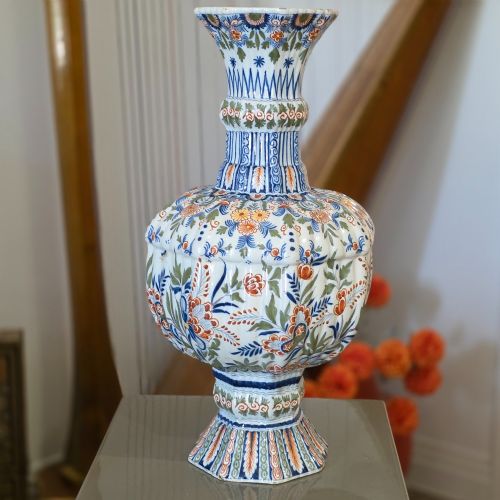
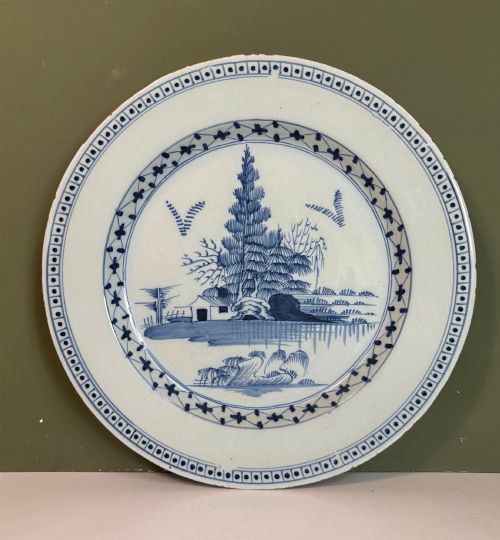
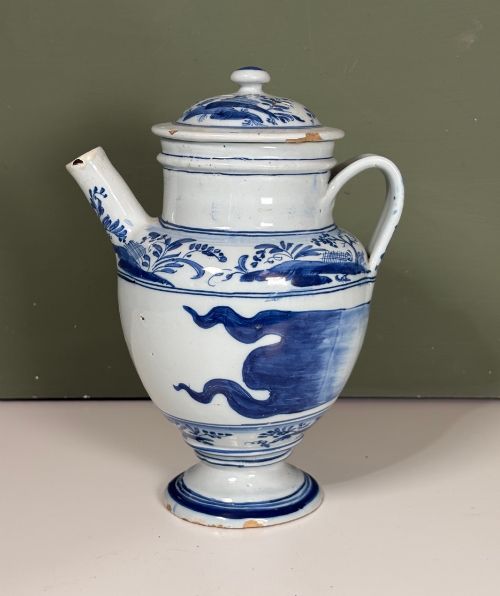
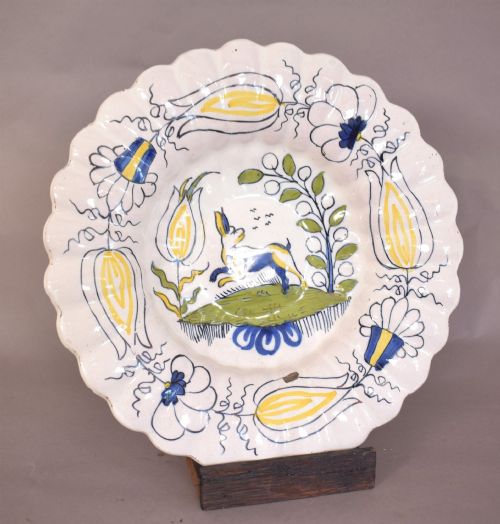
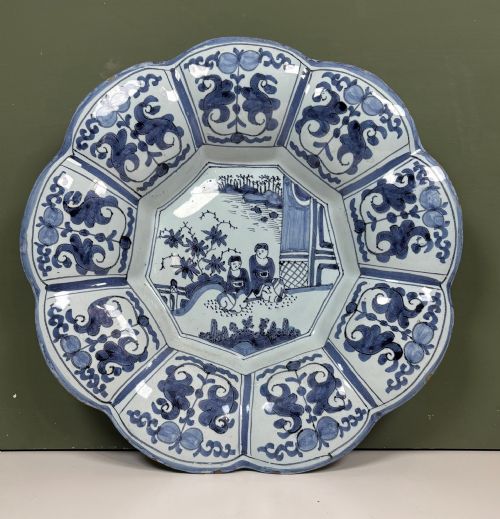
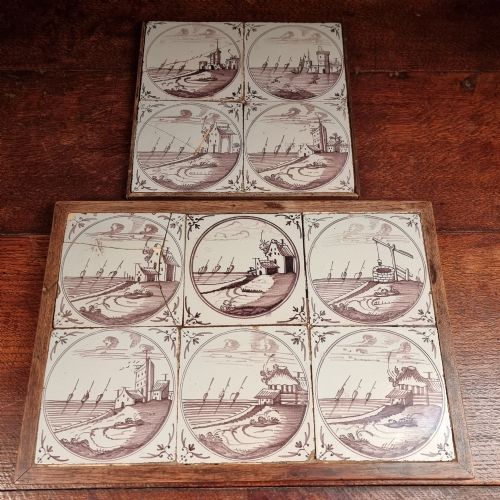
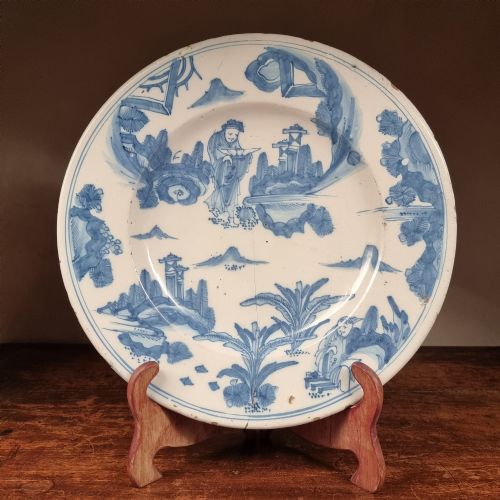
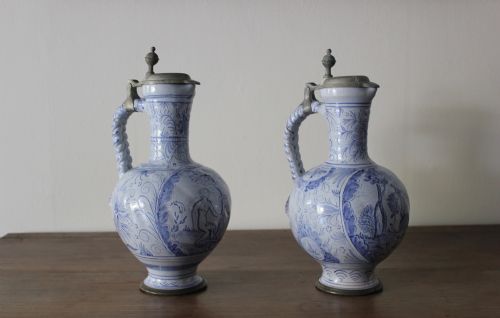
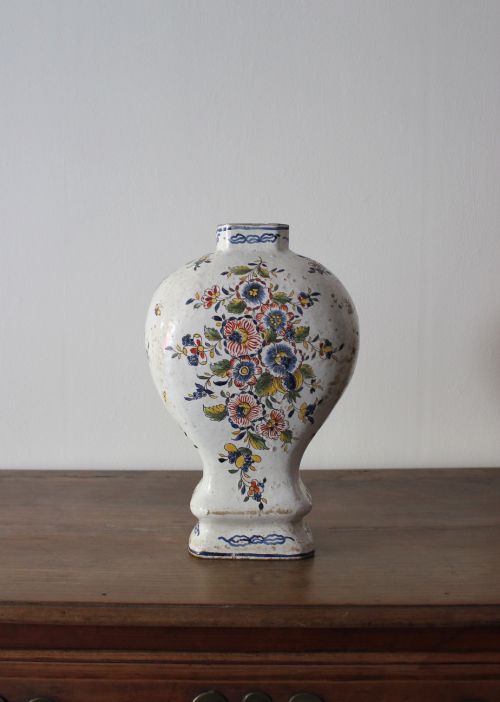
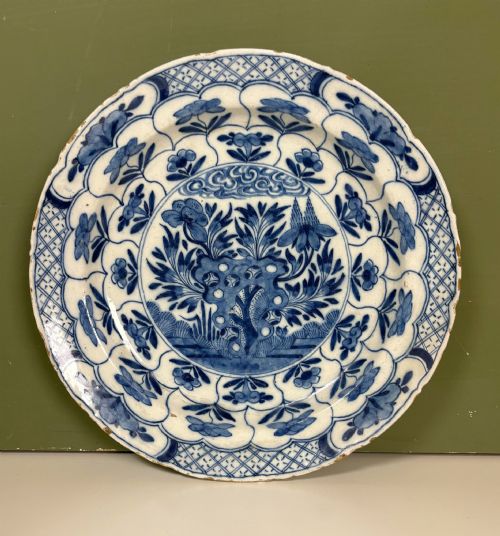
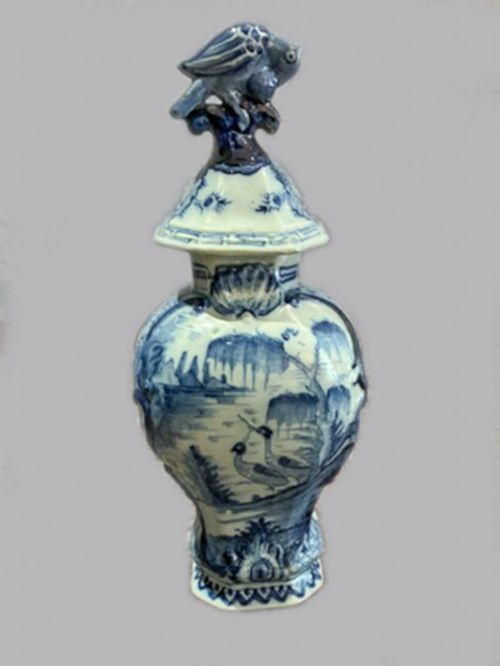
Delft tin glaze earthenware spans chargers, plates, vases, apothecary jars and tiles from the seventeenth, eighteenth and nineteenth centuries. Buyers encounter Dutch Delftware alongside English, French and Spanish examples, often decorated in cobalt blue.
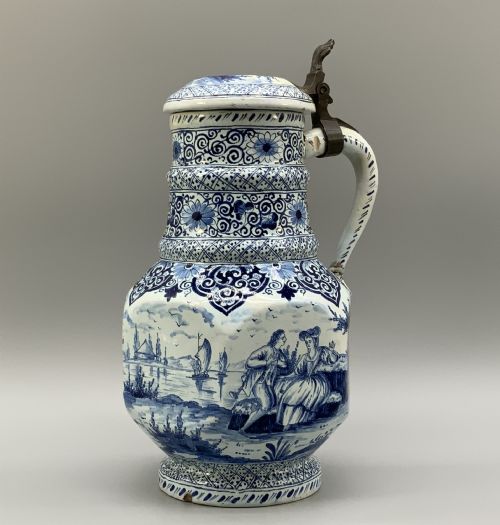
Vessels range from large wall chargers and lidded vases to puzzle jugs, posset pots and barber's bowls. The forms follow utilitarian and decorative domestic traditions across European production centres.
How They Were Made
Potters shaped earthenware bodies and coated them in an opaque tin-glazed slip that provided a white surface for painting. Cobalt pigment and manganese oxides were then applied by hand before firing.
Makers drew on Chinese Kraak styles, Moorish Revival motifs and European floral designs, producing both blue-and-white and polychrome colour palettes.
Listings feature earthenware vessels from the seventeenth century through to the twentieth century, incorporating Dutch, English, French and Spanish forms.
What Varies in Quality
Quality rests in the crispness of the hand-painted brushwork and the depth of the tin glaze. Pieces with fluid, detailed floral or figurative motifs command attention.
The stability of the earthenware body and the preservation of the glaze layers distinguish standard utility pots from superior display chargers and vessels.
The Delft Tin Glaze Earthenware Glossary
- Charger
- A large decorative plate designed for display on a wall or dresser rather than dining. These wide earthenware dishes frequently carry cobalt blue or polychrome painted scenes.
- Tin Glaze
- An opaque white ceramic glaze containing tin oxide applied to earthenware. It creates the smooth, pale surface characteristic of European faience and Delftware.
- Faience
- A term for tin-glazed earthenware produced in France, Italy and other continental European regions. It shares the characteristic white glaze and painted decoration of Delft.
- Polychrome
- Decoration employing multiple colours rather than a single pigment. In these ceramics, this typically includes manganese, yellow and green alongside cobalt blue.
- Bough Pot
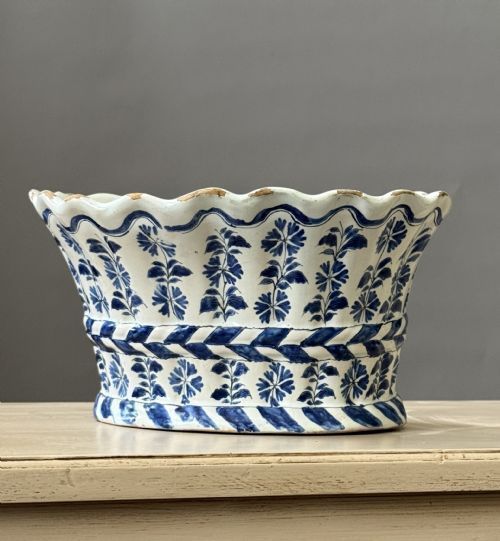
- A vessel with multiple openings made to hold cut flowers or leafy branches. These containers belong to domestic interiors of the seventeenth and eighteenth centuries.
Delft Tin Glaze Earthenware: Frequently Asked Questions
How are these pieces cleaned safely?
Dusting with a dry, soft cloth protects the porous earthenware body and fragile tin glaze from moisture damage.
Avoid immersion in water, as old earthenware and crazed glaze absorb liquid over time.
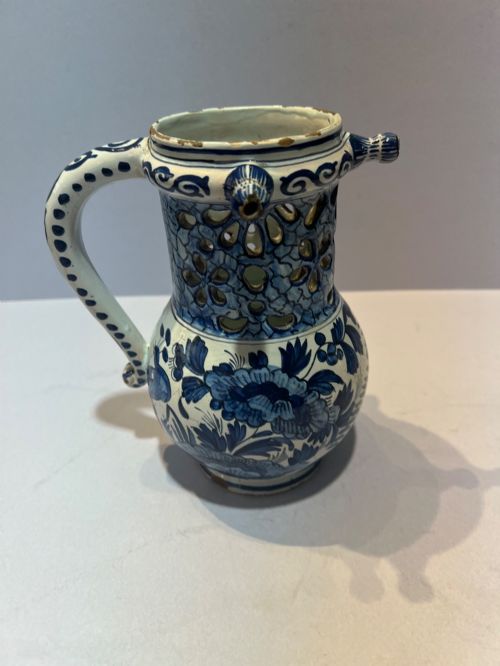
What is a puzzle jug?
A puzzle jug is a drinking vessel featuring a pierced neck and multiple spouts that challenge the user to drink without spilling.
Potters made these novelty items for taverns and domestic gatherings during the eighteenth century.
Why do some pieces show manganese instead of blue?
Manganese oxide produces a purple, brown or reddish hue when fired on tin-glazed earthenware.
Potters used this pigment alongside cobalt blue to create varied polychrome patterns on dishes and tiles.
How do charger plates differ from standard plates?
Charger plates measure significantly larger in diameter and feature deep, sloping wells suited for display.
Owners hung them on walls or stood them on sideboards to showcase intricate painted scenes.
What is a barber's bowl?
A barber's bowl is an indented earthenware basin designed to fit against a customer's neck during shaving.
These pieces often include tin glaze and hand-painted blue-and-white motifs reflecting domestic trades.