



Dutch Pottery Dish
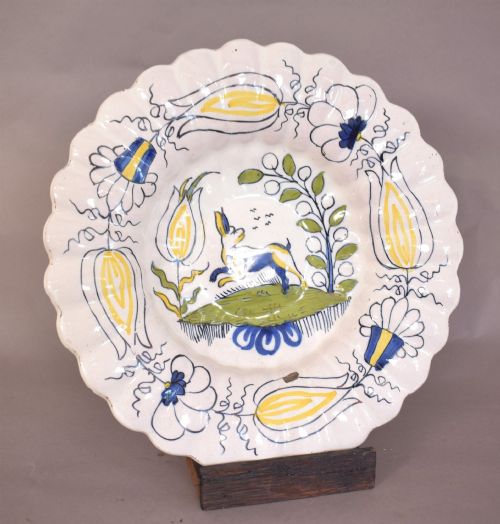
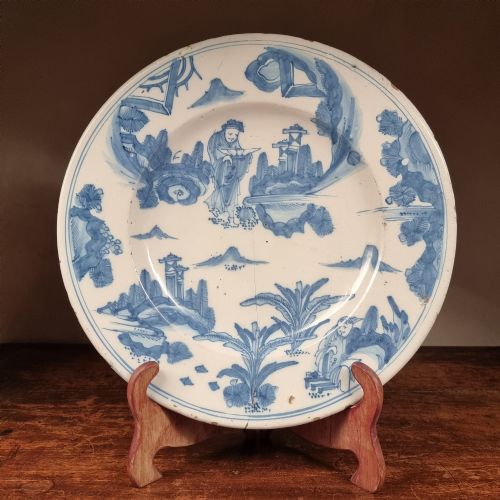
These dutch pottery dish examples span seventeenth and eighteenth century workshops, offering collectors tin-glazed earthenware chargers and plates painted in blue and white or polychrome pigments.
Dutch Pottery Dish
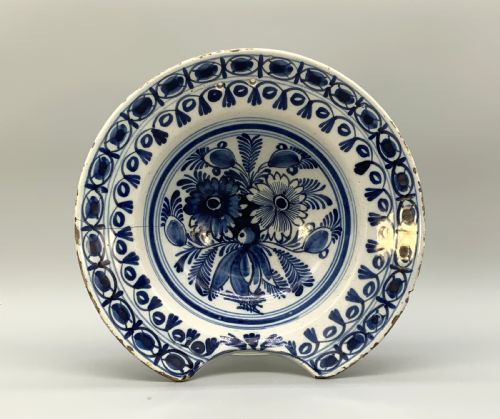
A dutch pottery dish encompasses wide chargers, shallow bowls, barber's bowls and lobed plates produced across the seventeenth and eighteenth centuries. These vessels served both decorative display and domestic use in Dutch households.
The pieces appearing on this page lean heavily toward eighteenth-century production alongside notable seventeenth-century Dutch Golden Age examples. Forms range from large decorative chargers down to small domestic plates and sweetmeat dishes.
Makers drew on Chinese porcelain motifs for inspiration alongside traditional European floral patterns. Buyers encounter everything from simple blue and white plates to polychrome moulded dishes.
How they were made
Potters shaped earthenware bodies before coating them in an opaque white tin glaze that provided a smooth canvas for painting. Artisans then applied cobalt oxide and other pigments directly onto the unfired glaze.
Firing fused the metallic oxides into the tin glaze, creating the characteristic glossy surface and vibrant blue or polychrome designs. Moulded details such as lobed edges required skilled pressing into prepared clay forms before glazing.
Listings feature earthenware bodies decorated with cobalt pigment and tin glaze across the seventeenth and eighteenth centuries.
What varies in quality
Quality rests upon the crispness of the painted brushwork and the complexity of the design, whether drawing from Chinese export porcelain or local Dutch floral traditions. Finer examples display confident, fluid strokes that animate the surface without clutter.
The purity and evenness of the white tin glaze also separate standard domestic wares from exhibition-grade chargers. A well-fired glaze shows minimal surface disruption and allows the cobalt pigment to sit deep and rich.
The Dutch Pottery Dish Glossary
- Tin Glaze
- An opaque white glaze containing tin oxide applied to earthenware bodies. This coating provided the traditional bright surface for hand-painted decoration.
- Charger
- A large decorative plate intended for display on sideboards or walls rather than daily dining. These wide vessels often showcase the most ambitious painting.
- Polychrome
- Decoration utilising multiple colours rather than a single pigment like cobalt blue. These palettes frequently include greens, yellows and iron reds.
- Lobed
- A form featuring scalloped or indented edges dividing the perimeter into distinct segments. This technique added physical texture to plates and dishes.
- Kraak
- A style of Chinese porcelain decoration featuring panelled motifs that heavily influenced seventeenth-century Dutch potters. These designs typically arrange birds, flowers and symbols within bordered segments.
Dutch Pottery Dish: Frequently Asked Questions
How do I hang a large charger?
Traditional wire spring hangers distribute weight evenly around the rim without causing damage to the earthenware body.
Ensure the wall fixing is secure because these seventeenth and eighteenth-century chargers carry considerable weight.
Can I use these plates for food?
Historic tin-glazed earthenware is porous and the soft glaze is vulnerable to acidic foods and modern detergents.
Keep these pieces for display and dry decorative use rather than daily dining.
How do I clean tin glaze?
Dust gently with a dry, soft cloth to remove everyday surface particles without risking moisture absorption.
Avoid soaking or scrubbing because water can penetrate old earthenware through hairline crazing in the glaze.
How are seventeenth and eighteenth-century pieces told apart?
Seventeenth-century examples often display heavier potting, deeper tin glaze and bolder Kraak-inspired or early baroque painting styles.
Eighteenth-century production frequently shifts toward thinner bodies, brighter white glazes and lighter floral or Chinese-inspired motifs.