



Polychrome Ceramic Vase Pair
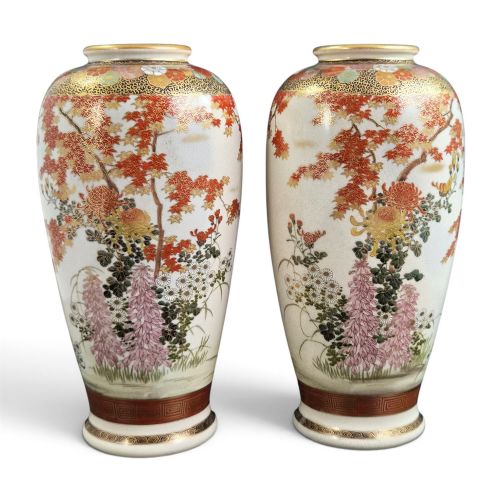
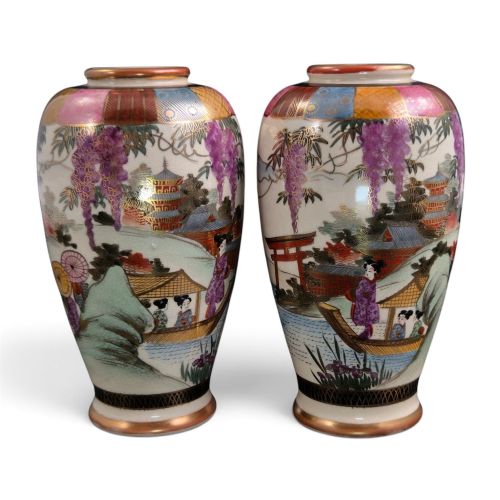
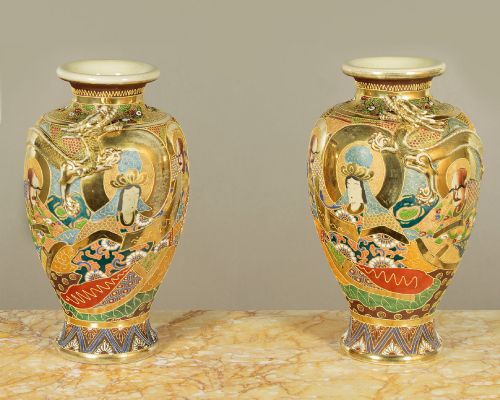
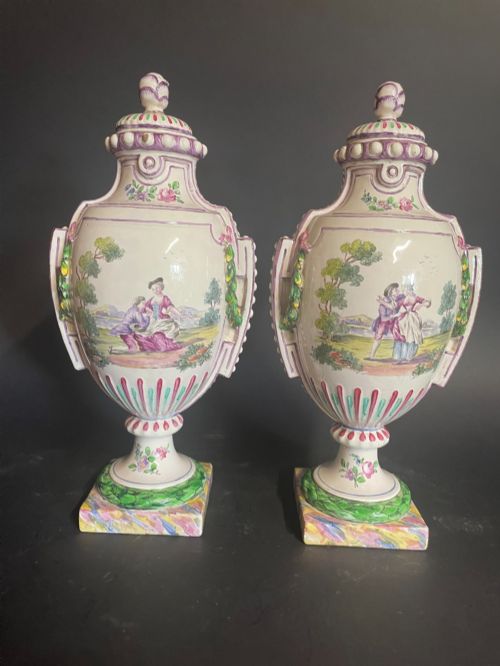
These polychrome ceramic vase pair pieces deliver balanced symmetry and rich palette work from nineteenth and early twentieth century workshops.
Polychrome Ceramic Vase Pair
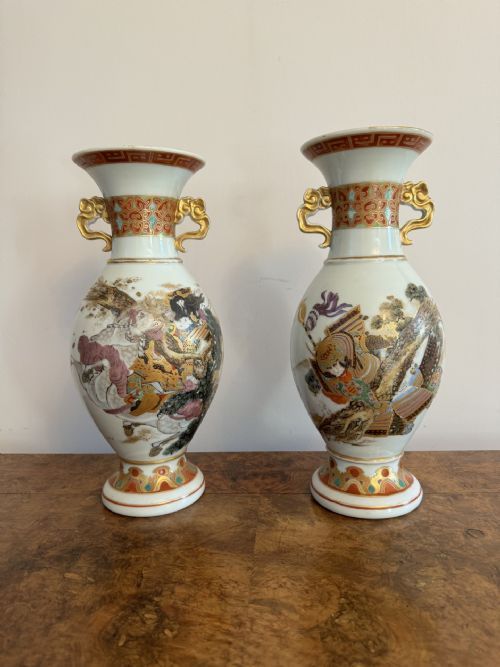
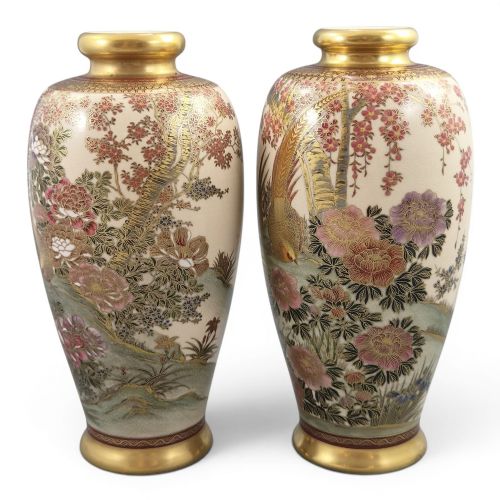
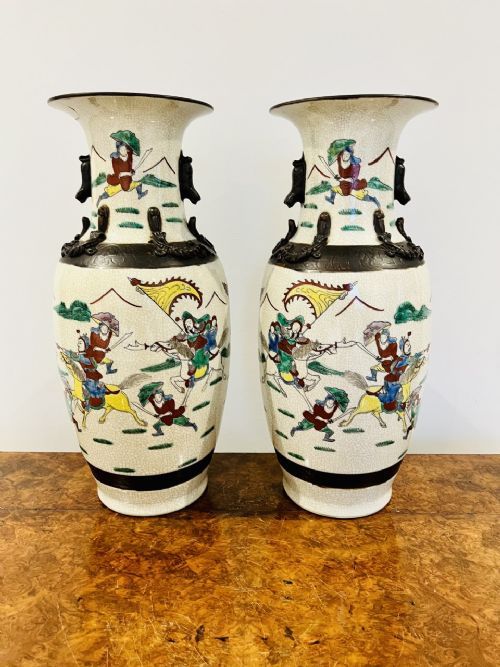
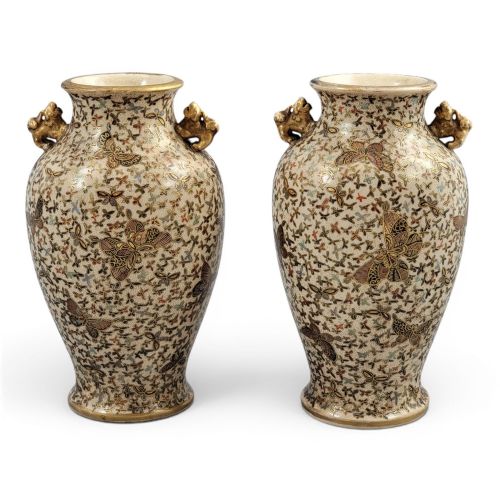
A polychrome ceramic vase pair brings balanced decoration and coloured glazes to mantels and side tables, with Japanese Satsuma earthenware and Chinese porcelain dominating the selection.
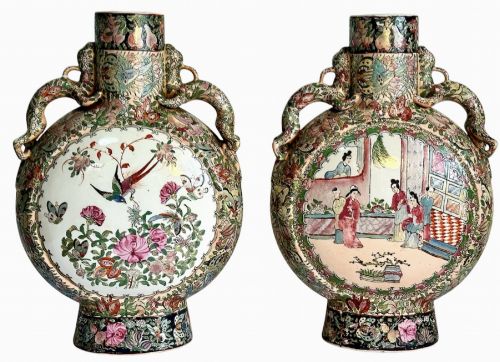
Makers across nineteenth century Europe and Asia produced these dual vessels for export and domestic display, utilising forms from baluster shapes to moon flasks and posy vases.
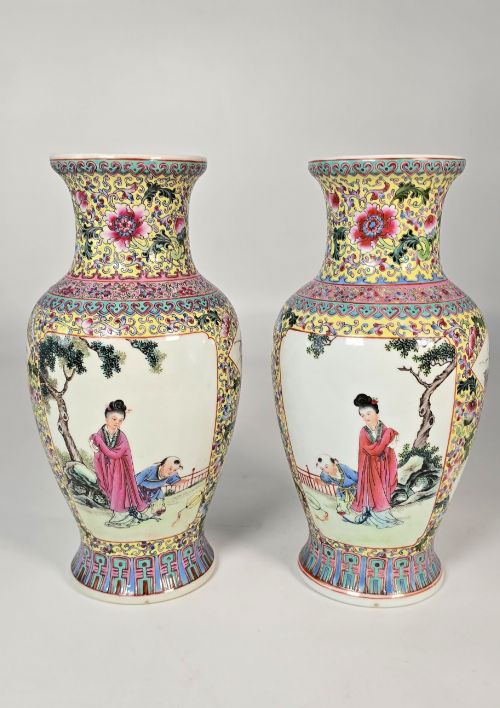
Buyers will encounter earthenware and porcelain bodies decorated with hand-painted enamel scenes, floral motifs, and figures from Victorian, Meiji, and Qing periods.
Materials and construction
Potters shaped clay bodies from earthenware, ironstone, and porcelain before applying base glazes and hand-painted enamel colours.
Gilt work, gold leaf, and raised enamel details were added to surfaces before secondary firing to fix the rich palette.
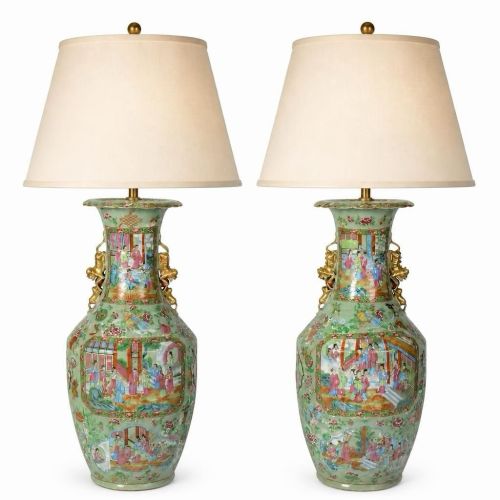
Some vessels incorporated cracked glazes, brass mounts, or fabric elements during later conversions into table lamps.
Several pairs spent decades hiding their identities as lamps before returning to life as decorative vessels.
Judging execution and detail
Quality rests upon the precision of the hand-painted brushwork, the depth of the enamel palette, and the crispness of the gilt decoration.
Exhibition pieces display finer detail in figures and landscapes, alongside signed artist markers or factory mon symbols that denote superior workshop output.
Maruni Kobe·Manpei·Kinzan·Hododa·Rozenburg
The Polychrome Ceramic Vase Pair Glossary
- Satsuma
- Earthenware pottery originating from Satsuma province in Japan, typically featuring a crackled cream glaze and dense polychrome enamel and gilt decoration.
- Famille Rose
- A major palette of Chinese ceramic glazes introduced in the Qing dynasty, distinguished by opaque pink or purple enamel derived from colloidal gold.
- Famille Verte
- A Chinese porcelain ceramic classification dominated by green enamel hues, often combined with iron red, blue, and yellow pigments.
- Moon Flask
- A flattened globular vessel with a circular body, narrow neck, and two small handles, designed for display on a stand.
- Spill Vase
- A small slender vessel placed near a fireplace to hold wooden spills used for lighting candles and pipes.
Polychrome Ceramic Vase Pair: Frequently Asked Questions
How do I display a vase pair?
Place the pair symmetrically on a mantelpiece, sideboard, or large table to maintain visual balance in a room.
Ensure adequate spacing between the two pieces so each vessel and its hand-painted details can be viewed independently.
Were these vases made as lamps?
Many examples began as traditional decorative vessels or ginger jars and were subsequently converted into table lamps during the twentieth century.
Original drilled bases or later brass fittings indicate how these ceramic pieces adapted to modern lighting needs.
How do I date a Satsuma vase pair?
Examine the crackle pattern of the glaze, the weight of the earthenware body, and any signatures or workshop mon symbols present on the base.
Meiji period pieces often display denser gilding and finer figural work compared to later twentieth-century reproductions.
How do I clean antique ceramics?
Dust the surfaces gently with a soft, dry brush to remove particles without disturbing delicate enamel or gold leaf details.
Avoid using water, chemical cleaners, or immersion on earthenware and gilt surfaces, particularly where lamps wiring or older repairs exist.