


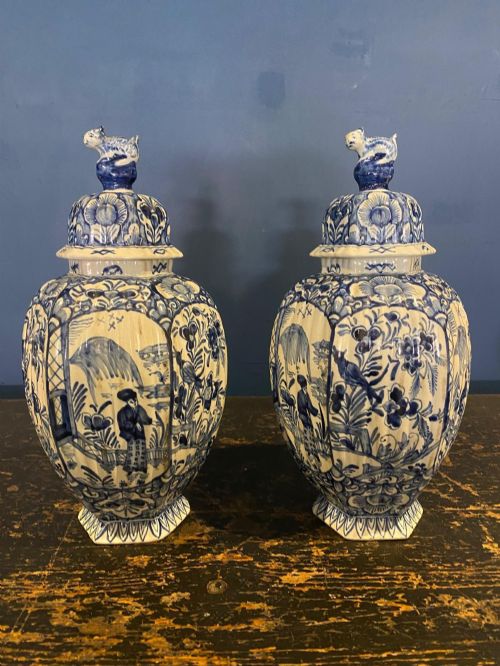
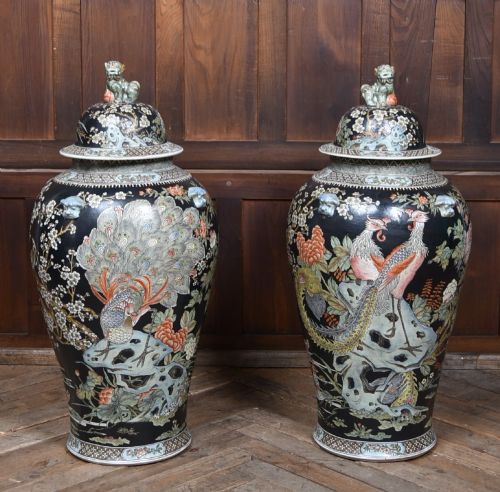

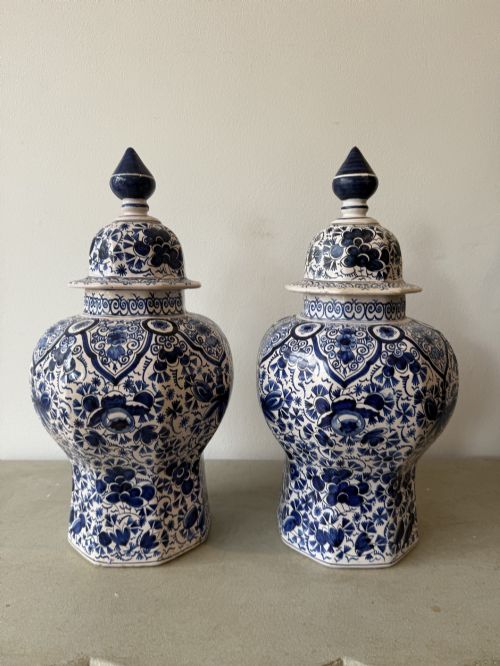


Covered Baluster Vase Pair
These covered baluster vase pair examples are striking ceramic vessels shaped to display intricate Chinoiserie and Imari patterns across multiple historical periods.
Covered Baluster Vase Pair
When you search for a covered baluster vase pair, you encounter symmetrical vessels defined by a wide rounded body tapering toward the base and topped with a fitted lid. The selections on this page span from the seventeenth century through the nineteenth century, encompassing forms such as floor jars, decorative vases, and lidded urns.
The aesthetic range draws heavily on Japanese Imari style, Chinese Qing style, and Dutch Delftware traditions. You will find pieces finished in classic blue and white alongside rich polychrome and enamel glaze decorations.
Originating from diverse workshops across Europe and Asia, these pairs include nineteenth-century interpretations of earlier styles alongside authentic seventeenth-century Arita porcelain. Mason's Ironstone and Samson reproductions also feature prominently among the available inventory.
How they were made
The construction relies primarily on porcelain and ironstone bodies shaped to create the characteristic curved silhouette before receiving hand-painted decoration in cobalt blue, enamel, and gold leaf. Gilding and enamel glaze provide the rich surface detailing seen across eighteenth-century and nineteenth-century examples.
Mounting techniques add structural and decorative dimension, notably through the integration of ormolu mounts on nineteenth-century powder blue pieces. Firing and glazing methods vary between the Delftware traditions, Arita kilns, and English ironstone production.
Covered Baluster Vase Pair Retail Price Guide 2026
Typical asking prices for covered baluster vase pair among the pieces listed under this phrase on Sellingantiques today, from the lower quarter to the upper quarter. They describe what is for sale here now, not the wider market.
Listings feature porcelain, ironstone, and ormolu across the nineteenth, eighteenth, and seventeenth centuries.
What varies in quality
The distinction between standard production and exceptional examples lies in the precision and depth of the hand-painted brushwork across the ceramic surface. Early seventeenth-century Arita porcelain and finely potted Regency ironstone demonstrate superior material density and glaze consistency compared to later derivative pieces.
The application of secondary elements such as gold leaf, enamel glaze, and ormolu mounts elevates certain pairs. Superior specimens maintain crisp relief, secure lid fittings, and well-preserved metallic detailing that withstands centuries of handling.
Mason·Samson
The Covered Baluster Vase Pair Glossary
- Baluster
- A vase form characterised by a swollen lower portion that tapers towards a narrow neck. This shape provides a stable and visually balanced canvas for complex surface decoration.
- Imari
- A style of Japanese porcelain decorated in underglaze blue and overglaze red, gold, and green. Originating in Arita, it became widely imitated across Europe during subsequent centuries.
- Ormolu
- Gilded bronze used for decorative mounts on furniture and ceramics. It adds weight and ornamental richness to nineteenth-century decorative items.
- Ironstone
- A type of durable earthenware patented in the nineteenth century by English potteries. It offers high resistance to chipping while imitating the appearance of true porcelain.
- Delftware
- Tin-glazed earthenware produced in the Netherlands, typically featuring blue and white designs inspired by imported Chinese porcelain.
Covered Baluster Vase Pair: Frequently Asked Questions
What is a covered baluster vase pair?
A covered baluster vase pair consists of two matching ceramic vessels featuring curved, swelling bodies and matching lids. They were designed primarily for display on mantelpieces, side tables, or as floor ornaments.
Historically, matching pairs provided symmetrical balance in interior decoration. The covers helped protect the interior of the vessel while completing the overall sculptural silhouette.
How do you date an antique lidded vase?
Dating relies on examining the ceramic body, glaze characteristics, painting style, and any maker's marks present on the base. Early pieces often exhibit specific potting flaws and hand-mixed pigments characteristic of their period of origin.
Comparison with documented examples from workshops like Arita or nineteenth-century English potteries helps narrow the production window. Mounts and hardware can also provide clues to the period of manufacture.
Were these vases used for flowers?
Most large covered baluster vases and floor jars served a purely decorative function rather than holding cut flowers. Their intricate painted surfaces and fitted lids indicate they were meant to be admired as sculptural art objects.
Smaller examples occasionally accommodated dried botanicals or aromatics, but the presence of delicate enamel and gold leaf generally discouraged daily practical use with water.