
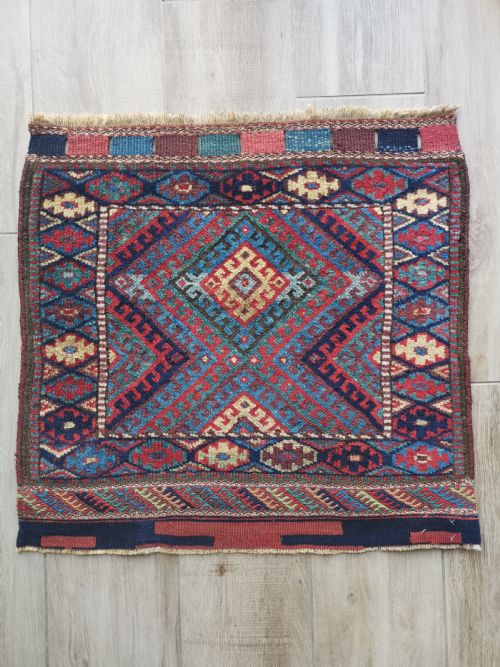


Persian Khorjin Cushion
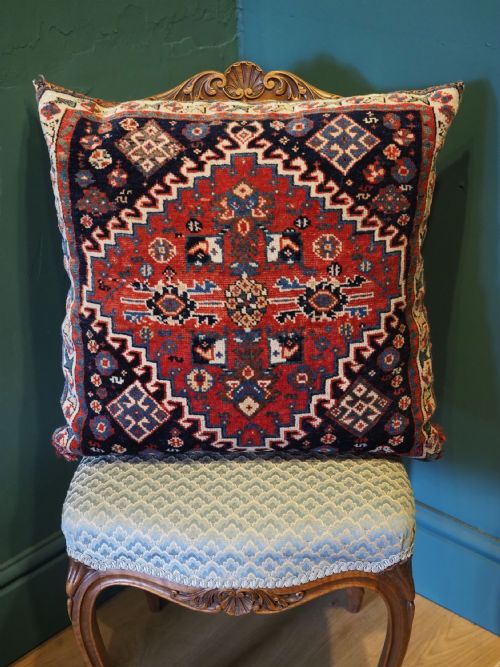
A persian khorjin cushion brings nomadic heritage into a room through repurposed tribal saddlebags and storage faces woven by tribal groups across nineteenth- and early twentieth-century Persia.
Persian Khorjin Cushion
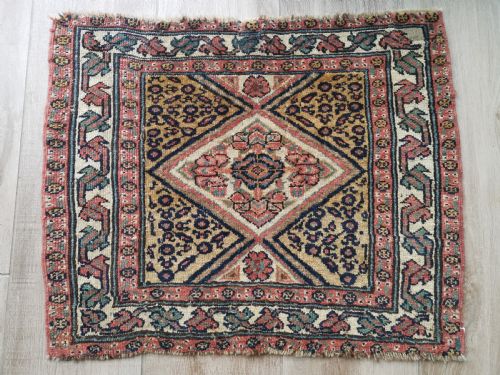
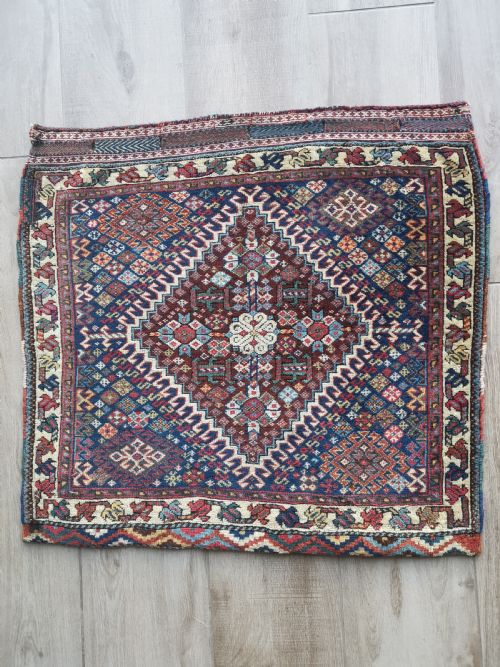
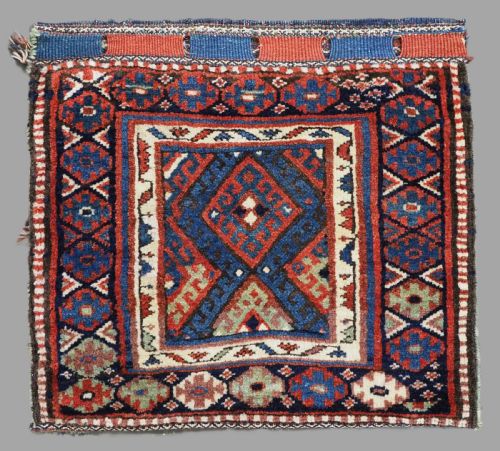
When you search for a persian khorjin cushion, you encounter utilitarian horse and camel bags that have been adapted into soft furnishings. The pieces on this page originate from tribal confederations and nomadic groups such as the Qashqai, Shahsavan, Afshar, Khamseh, and Kurdish weavers.
Most examples take the form of bag faces or complete saddlebags, known as khorjin, salvaged from transport containers and mounted onto supportive textile backs. These items reflect the domestic craft of regions spanning Fars, Azerbaijan, and western Persia, capturing centuries of pastoral tradition.
Makers utilised original storage pouches, cutting and finishing them into square floor cushions that display traditional tribal iconography. The surviving formats preserve the dense geometric patterning once carried across mountainous and desert trade routes.
Materials and Technique
The construction relies on hand-spun wool and cotton, occasionally incorporating goat hair for structural durability along selvages and backings. Natural dyes impart deep colour variations that mature over decades of exposure and handling.
Weavers employed pile knotting alongside flatweave techniques like Soumak and plain weave to build robust structures designed for heavy transit. These dual methods allowed nomadic makers to combine intricate geometric motifs with durable foundational fabrics.
Nomadic weavers frequently hid tiny protective amulets and weaver signatures within the dense wool pile of their daily baggage.
Judging Quality
Quality rests in the handle of the wool and the crispness of the tribal motifs, distinguishing finer village work from standard utility pieces. Lustrous, luminous wool fleece retains its lanolin and catches ambient light differently than dry or brittle fibre.
The integrity of the weave and the complexity of the design define the upper tier of these textiles. Pieces featuring specific tribal iconography, such as birds, dragons, or large boteh designs executed in balanced natural palettes, represent the finest output of nomadic workshops.
The Persian Khorjin Cushion Glossary
- Khorjin
- A traditional Persian double saddlebag used by nomadic tribes for transport and storage. These bags formed the basis for modern cushions when split or adapted.
- Bagface
- The decorative front side of a storage bag or khorjin. This section typically carries the primary tribal patterns while the utilitarian back remains plain.
- Soumak
- A supplementary weft-wrapping technique that creates a flatweave textile without pile. It produces a textured, braided surface often seen on Shahsavan pieces.
- Boteh
- An ancient Persian teardrop or almond-shaped motif representing a floral spray or cypress tree. It appears frequently across Afshar and tribal bag faces.
- Khamseh
- A confederation of five distinct tribes in south-west Persia known for distinctive dark wools and bold geometric rugs. Their weaving traditions blend Afshar, Arab, and Qashqai elements.
Persian Khorjin Cushion: Frequently Asked Questions
How do I care for my cushion?
Gentle maintenance preserves the integrity of antique wool and natural dyes over time. Regular light vacuuming removes dust without pulling at the pile or flatweave structure.
Professional textile cleaning is recommended for deeper maintenance. Avoid direct sunlight to prevent fading in the natural dyed wool.
How old are these cushions?
The pieces available date from the nineteenth and early twentieth centuries. Specific eras span from the eighteen-seventies through to the nineteen-twenties.
Nomadic families produced these textiles by hand before industrial dyes and mass production transformed regional crafts. Each item reflects the aesthetic of its specific decade and tribal origin.
What distinguishes tribal designs?
Tribal designs reflect the specific heritage, flora, and fauna of particular nomadic confederations. Motifs include geometric medallions, stylized birds, dragons, and repeating boteh patterns.
Weavers worked from memory rather than drawn templates, introducing subtle variations in symmetry. These regional signatures help identify whether a piece originated with the Qashqai, Shahsavan, or Afshar.