







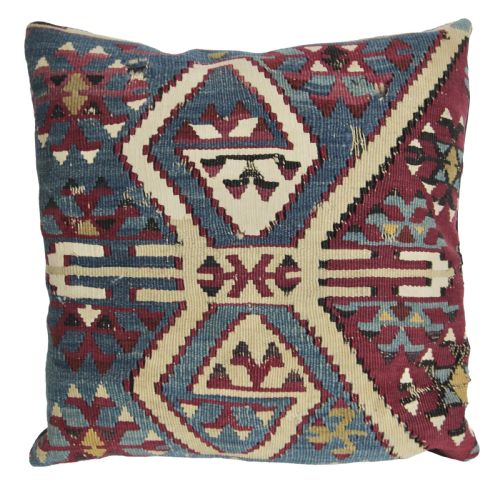


Vintage Anatolian Pillow
These vintage anatolian pillow selections bring warmth and texture into a room, offering genuine tribal character for everyday living.
Vintage Anatolian Pillow
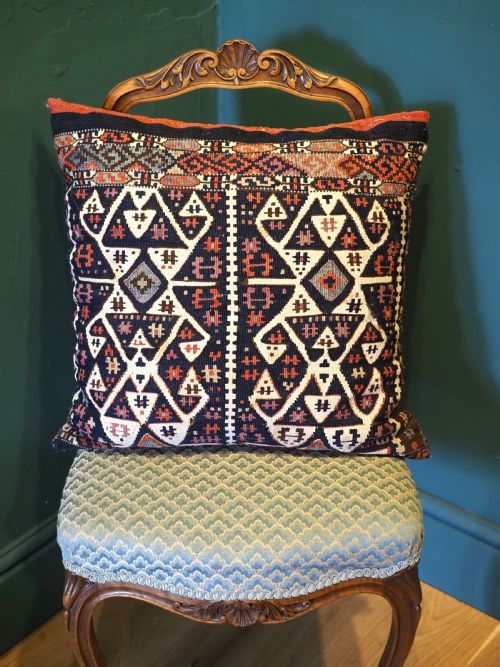
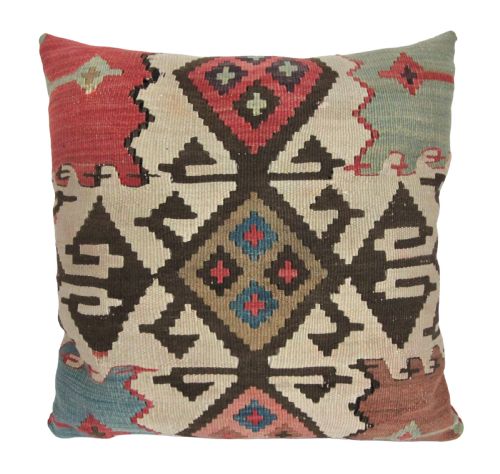
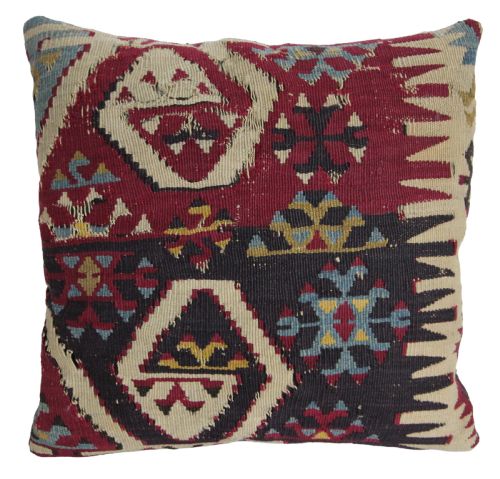
When you search for a vintage anatolian pillow, you are looking at domestic cushions fashioned from hand-woven carpets and repurposed saddle bags. The most common version you will meet here is the kilim cushion, originating from nineteenth-century Anatolian weaving traditions.
These items transform nomadic textiles into functional home accessories while preserving traditional motifs and patterns. Pieces span the mid-nineteenth century through to the early twentieth century, reflecting enduring regional craft methods.
How they were made
The materials recorded in these textiles are wool and cotton, providing a sturdy construction designed for durability. Artisans hand-wove the original flatweave surfaces before transforming them into cushions and throw pillows.
Surviving examples incorporate authentic bag faces and saddle bag fragments, preserving the dense pile-less weave characteristic of traditional nomadic production.
Vintage Anatolian Pillow Retail Price Guide 2026
Typical asking prices for vintage anatolian pillow among the pieces listed under this phrase on Sellingantiques today, from the lower quarter to the upper quarter. They describe what is for sale here now, not the wider market.
Many of these cushions began life as working camel bags before finding a second career guarding sofas.
What varies in quality
Quality rests upon the tightness of the weave and the integrity of the original wool and cotton fibres. Tighter, more precise flatweave structures distinguish the better examples from simpler everyday pieces.
The skill of the original weaver dictates the visual depth of the geometric patterns and the harmonious balance of natural dyes used across the surface.
The Vintage Anatolian Pillow Glossary
- Kilim
- A flat-woven carpet or rug produced in countries of the former Ottoman Empire, Persia and Central Asia. These textiles form the primary source material for the cushions found here.
- Saddle Bag
- A large woven pouch used by nomadic peoples for transport on animals, later cut down and repurposed into smaller decorative cushions. They display robust utilitarian construction.
- Bag Face
- The decorative front panel of a traditional nomadic storage bag. These panels feature concentrated tribal motifs that make them distinct focal points for cushions.
- Flatweave
- A textile produced by interweaving warp and weft threads without creating a raised pile. This technique results in a durable, thin fabric suitable for domestic furnishings.
Vintage Anatolian Pillow: Frequently Asked Questions
What is a vintage anatolian pillow made from?
These pieces are constructed using traditional wool and cotton textiles. The materials originate from older flat-woven carpets and repurposed nomadic bags.
Craftsmen adapted these durable fabrics into cushions while retaining their original hand-woven characteristics.
How do I care for a kilim cushion?
Protect your cushion from direct sunlight to preserve the natural dyed wool and cotton colours. Gentle dry cleaning or careful surface spot cleaning is recommended for maintenance.
Avoid heavy soaking, as the traditional materials benefit from minimal, careful handling.
How old are these cushions typically?
The pieces span various periods from the mid-nineteenth century through to the early twentieth century. Dates include specific decades such as eighteen-fifty and nineteen-twenty.
Each cushion reflects the weaving standards and tribal styles of its specific period of origin.
Where did these textiles come from?
The materials originate from Anatolia, which is the historical region forming the Asian part of Turkey. Nomadic and tribal groups created the original flat-woven carpets and utility bags.
These functional items were later converted into throw cushions and decorative soft furnishings.