


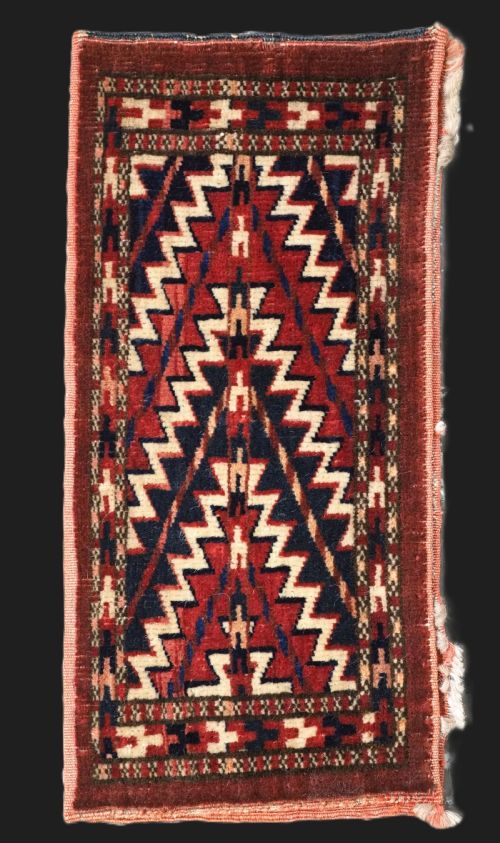


Handwoven Bag Face
When you examine a handwoven bag face, you are looking at the nomadic textile art of nineteenth-century tribal weavers.
Handwoven Bag Face
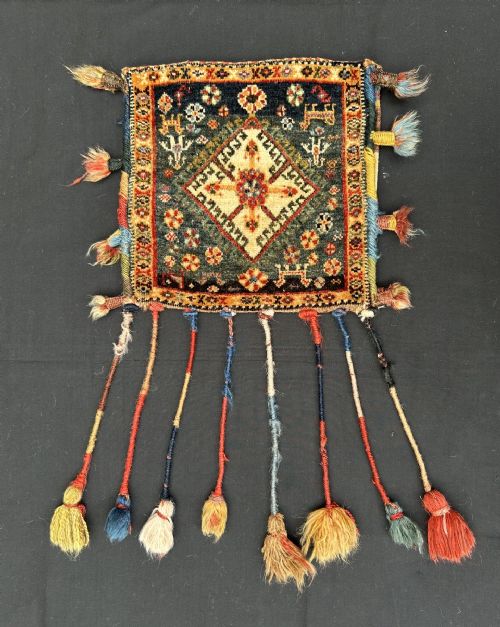
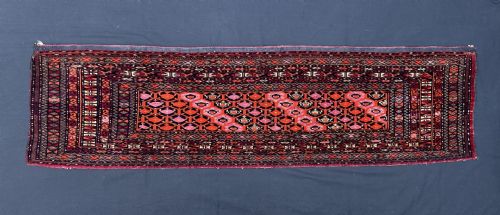
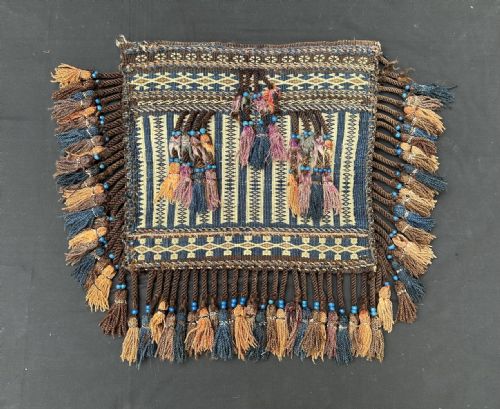
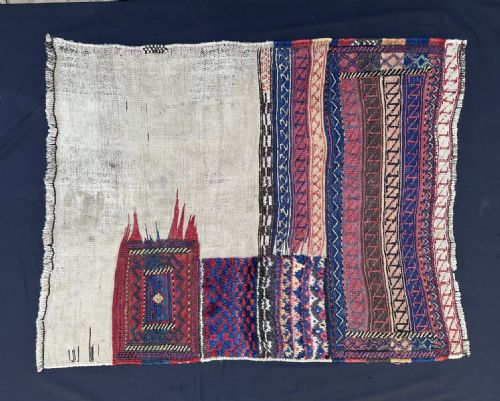
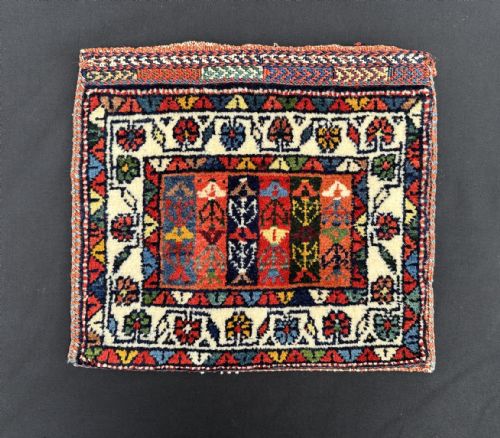
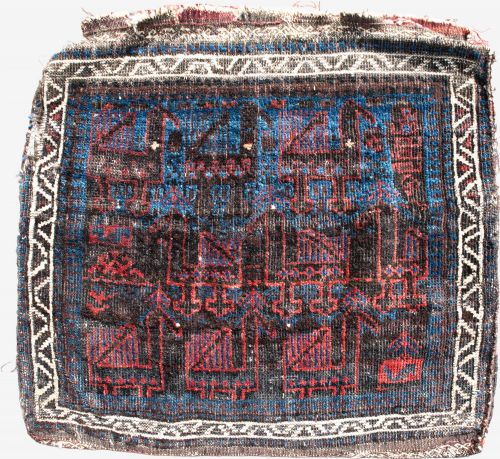
A handwoven bag face represents the front portion of a utilitarian tribal container, such as a saddlebag, storage sack, or personal carryall, which has been separated from its plain-weave back. These pieces originate from nineteenth-century nomadic and village groups across Persia, Central Asia, and Afghanistan, including Turkmen tribes, Qashqa'i confederacies, and Baluch weavers. Most examples seen here date from the 1860s through to the 1920s, reflecting the traditional weaving output of these regions before commercial synthetic materials became dominant.
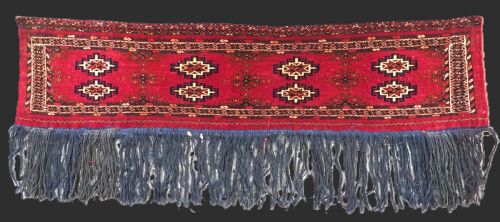
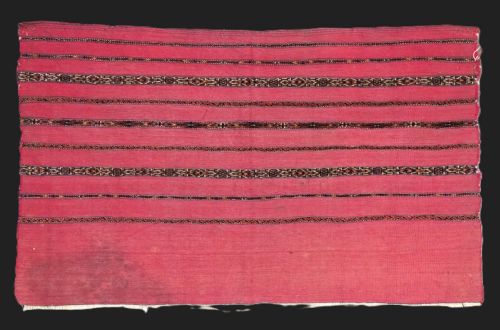
The primary forms include torbas, chuvals, and smaller personal items like chantehs or vanity bags, each originally designed for domestic storage or transport on animals. Weavers constructed them using durable flatweave or pile techniques to withstand daily nomadic use while displaying intricate tribal iconography. Today, these textile fragments function primarily as decorative wall hangings or small cushion covers while retaining their original ethnographic character.
How They Were Made
The construction relies heavily on hand-spun wool and cotton foundations, often dyed using natural colour sources to achieve deep reds, indigos, and earth tones. Silk and glass beads occasionally appear as supplementary materials for specific design highlights, particularly within Turkmen and Afshar workshops.
Weavers employed dense knotting or precise flatweave methods, sometimes incorporating white cotton highlights to create sharp contrast against the darker wool fields. The resulting textile structure provides both structural rigidity and a dense surface pile suited for utilitarian transport.
Listings feature nineteenth-century nomadic textiles from Persian, Afghan, and Turkmen regions, utilising hand-spun wool, natural dyes, and cotton.
What Varies in Quality
Another measure of quality involves the depth and saturation of the natural dyes, where older pieces demonstrate subtle abrash and complex colour variation rather than flat, uniform tones. The integrity of the remaining pile and the crispness of secondary details like curled leaf designs or white cotton accents further separate ordinary utility pieces from exceptional tribal works.
Sariq Tribe·Tekke Tribes·Yomut Turkmen·Ersari Tribes·Qashqa'i Tribes·Baluch Tribes
The Handwoven Bag Face Glossary
- Chuval
- A large tent-storage bag used by Turkmen nomads for bedding and household goods. These pieces typically feature multiple rows of primary medallions.
- Torba
- A smaller storage bag, usually wider than it is tall, traditionally hung inside a nomad tent. They often display intricate border work and primary guls.
- Gul
- A primary octagonal medallion or motif repeated across Turkmen and Central Asian tribal carpets and bags. Each design often identifies a specific tribe or sub-group.
- Abrash
- A natural variation in colour shading caused by changes in dye batches or hand-spun wool lots. This characteristic creates subtle tonal shifts across the textile field.
- Chanteh
- A small personal bag or vanity pouch woven by nomadic groups. These diminutive pieces were utilised for carrying personal items or documents.
Handwoven Bag Face: Frequently Asked Questions
What is a handwoven bag face?
A handwoven bag face is the decorative front panel of an antique tribal storage sack, saddlebag, or personal pouch that has been separated from its plain back. These panels preserve traditional nomadic weaving and tribal patterns.
They were originally produced in nineteenth-century communities across Persia, Central Asia, and Afghanistan for domestic use and animal transport.
How were these bags used?
Nomadic groups utilised these bags for storing household possessions, bedding, grain, and personal items inside tents or during seasonal migrations. Larger sacks hung against tent walls, while smaller pouches served as personal carryalls.
Over time, worn or surplus bags were cut down, leaving the decorative face intact as a prized textile fragment.
How do I care for a bag face?
Protect antique wool textiles from direct sunlight to prevent natural dye fading, and vacuum them gently on a low setting using a mesh screen for safety. Avoid chemical cleaners or excessive moisture.
If mounting the textile for display, distribute the weight evenly rather than hanging it by a single corner point.