







Red Handwoven Cushion
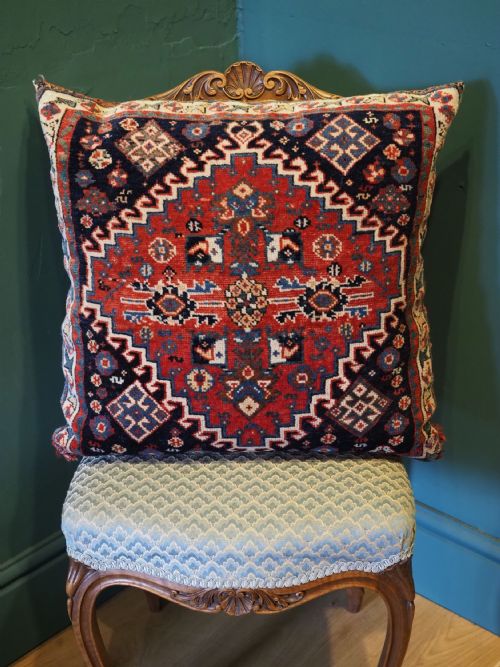
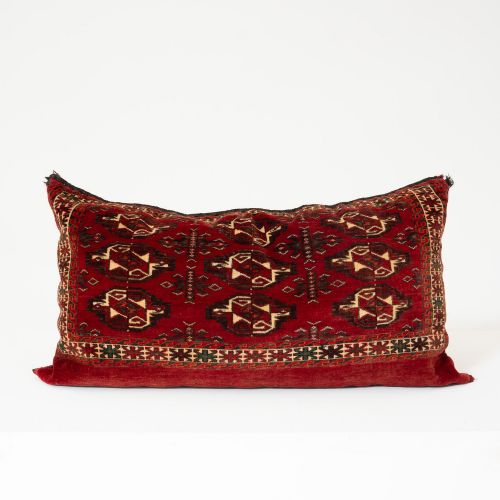
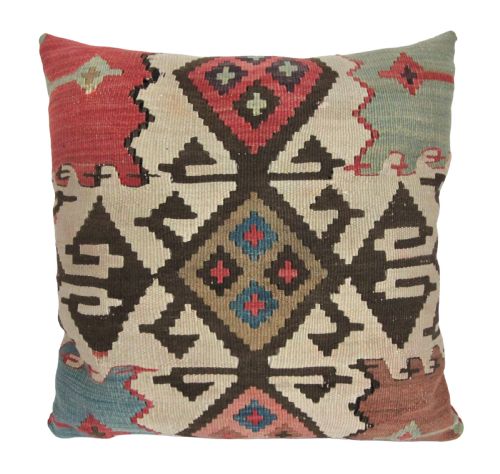
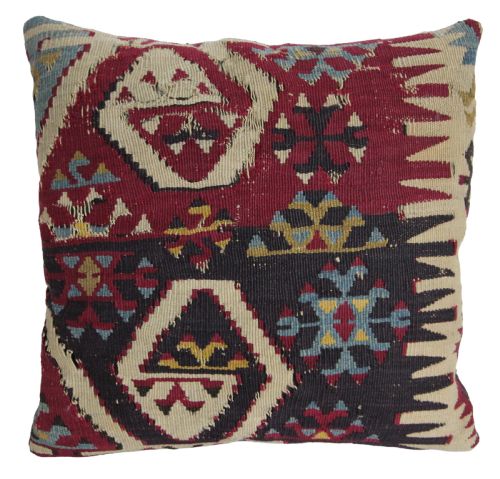
These red handwoven cushion examples are tactile tribal textiles repurposed from nineteenth and early twentieth century bags and rugs.
Red Handwoven Cushion
A red handwoven cushion typically originates from repurposed nomadic and tribal weavings such as saddlebags, bag faces, mafrash panels, and salt bags. These items span from the mid nineteenth century through to the early twentieth century, encompassing Persian tribal, Turkmen tribal, Anatolian tribal, and Baluch tribal origins.
The objects take the form of square or rectangular cushions and pillows constructed from antique textile art and rugs. Buyers encounter formats ranging from complete flatweave kilims to piled saddlebag faces backed with plain weave wool or cotton.
Materials and construction
The pieces are constructed using hand spun wool, natural dyes, cotton, and occasional goat hair. Artisans utilised traditional handweaving techniques, creating banded flatweave designs, pile carpets, and complex weft work structures.
Nomadic weavers sourced local animal fibres and applied natural dyestuffs to achieve deep crimson and red tones. The resulting textiles were originally utilised for practical storage and transport across tribal regions before later conversion into home furnishings.
Red Handwoven Cushion Retail Price Guide 2026
Typical asking prices for red handwoven cushion among the pieces listed under this phrase on Sellingantiques today, from the lower quarter to the upper quarter. They describe what is for sale here now, not the wider market.
Many of these cushions began as humble grain bags carried across the steppes by nomad families.
Assessing quality and character
Quality rests in the integrity of the original tribal weaving, the depth and lightfastness of the natural dyes, and the fineness of the wool preparation. Pieces with dense hand spinning and intact tribal motifs represent the higher tier of these textiles.
Condition varies according to the original utilitarian life of the textile, with surviving pile depth and secure selvedges determining the structural longevity of the finished cushion. The harmony of the red palette and clarity of the tribal geometry distinguish finer examples.
The Red Handwoven Cushion Glossary
- Bag face
- The decorative front panel of a nomadic storage bag, commonly repurposed into cushion covers. These panels display the primary geometric or tribal design.
- Flatweave
- A textile produced without pile by interlacing warp and weft threads directly. Examples include kilims and banded mafrash designs.
- Natural dyes
- Colourants derived from plants, insects, and minerals prior to the widespread introduction of synthetic dyes in the late nineteenth century. They provide the varied red hues seen across these tribal pieces.
- Mafrash
- A rectangular storage chest or bedding bag woven by nomadic tribes. Portions of these are frequently converted into cushions.
- Chuval
- A large Turkmen tent storage bag. Surviving fragments and faces are often adapted into decorative cushions.
Red Handwoven Cushion: Frequently Asked Questions
What is a red handwoven cushion made from?
These cushions are constructed from repurposed nineteenth and early twentieth century tribal textiles, including saddlebag faces, storage bags, and kilims.
They utilise hand spun wool, cotton, and goat hair coloured with natural dyes.
How old are these cushions typically?
The source materials date from the mid nineteenth century through to the early twentieth century, spanning periods such as eighteen eighty and nineteen twenty.
The original nomadic weavings were created for utilitarian storage before later conversion into cushions.
Where do these tribal designs originate?
The pieces originate from various tribal and nomadic groups across Persia, Central Asia, and Anatolia.
Specific regional traditions represented include Qashqai, Turkmen, Baluch, Heriz, and Luri cultures.
How should I care for a textile cushion?
Protect antique wool and natural dyes by keeping the cushion out of direct, harsh sunlight to prevent fading.
Gentle surface cleaning or professional textile care preserves the integrity of the hand spun fibres and flatweave structure.