
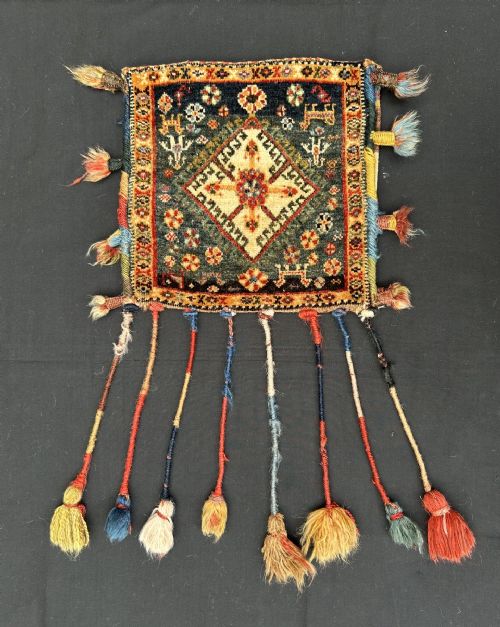
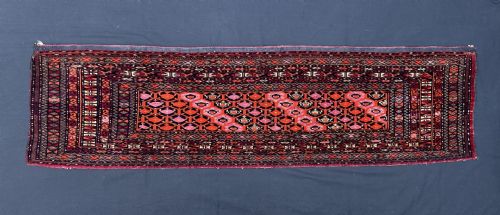
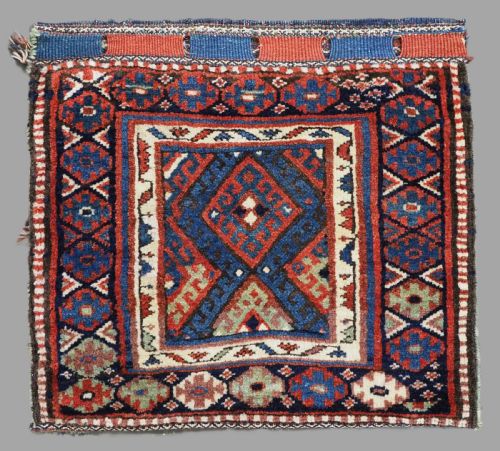

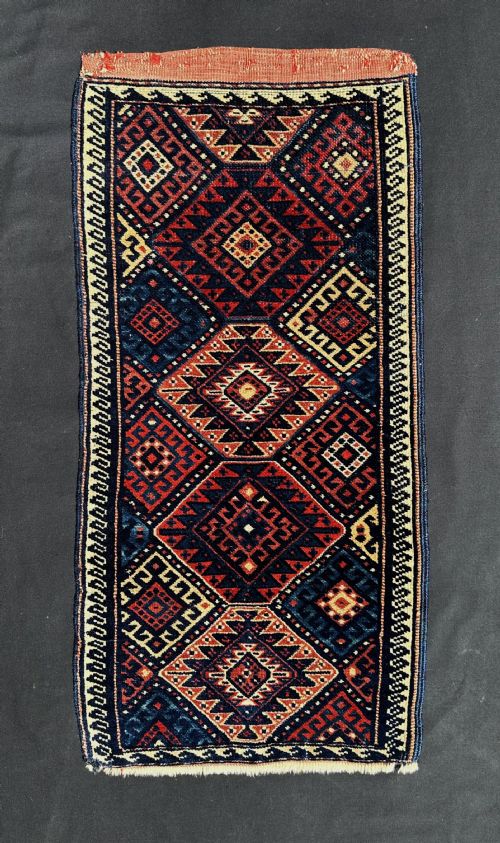

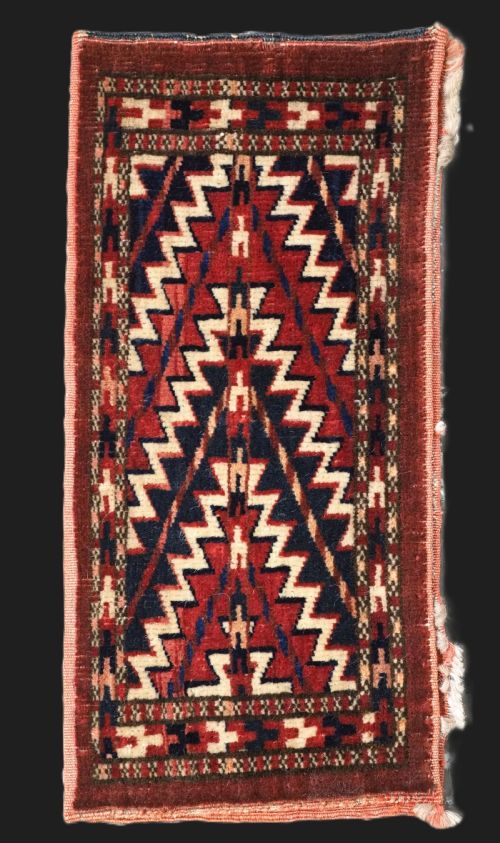


Geometric Wool Bag Face
These geometric wool bag face pieces are woven tribal front panels and utilitarian textiles carrying the distinct designs of nomadic makers.
Geometric Wool Bag Face
A geometric wool bag face represents the front panel of a traditional storage sack, saddle-bag, or pillow bag produced by nomadic and tribal weavers. When collectors search for this phrase, they encounter fragments and complete faces originating from Persian, Caucasian, and Turkmen groups active during the nineteenth and early twentieth centuries.
The items listed here span structural types such as the torba, chuval, jollar, and khorjin face. Many survive as isolated panels because the original backings wore away through heavy daily use during transport or domestic storage.
The forms vary from square cushion covers to rectangular storage bag fronts. Weavers created these functional objects for personal utility within tribal camps, utilising geometric motifs that identified specific confederations and regional lineages.
How they were made
The construction relies heavily on hand-spun wool and natural dyes, providing the durable foundation and saturated palette characteristic of tribal textiles. Weavers employed techniques including pile knotting, sumac brocading, and flatweave structures to build intricate geometric patterns across the surface.
Makers sourced animal fibres locally, spinning the wool by hand before treating it with plant and insect-derived colourants. This combination of resilient wool and stable natural dyes accounts for the structural integrity and lasting depth seen in the surviving pieces.
Nomadic weavers frequently tucked small protective amulets directly into the geometric pile of working saddle-bags.
What varies in quality
The distinction between standard utility work and superior examples lies in the precision of the knotting, the handling of the palette, and the complexity of the tribal drawing. Finer pieces demonstrate tighter structural foundations and carefully controlled natural dye variations that enhance the geometry of the design.
The sophistication of the tribal motifs and the crispness of the secondary ornament also divide the output. Weavers who maintained strict adherence to traditional tribal proportions produced panels with greater visual rhythm and clarity.
Sariq Tribe·Jaf Kurd·Baluch Salar Khani·Tekke Turkmen·Ersari Turkmen·Shahsavan Nomads·Yomut Turkmen
The Geometric Wool Bag Face Glossary
- Torba
- A small storage bag produced by Turkmen and other Central Asian tribes, usually wider than it is tall and hung inside a tent. These pieces often feature rows of primary guls.
- Chuval
- A large tent-storage bag designed for bedding and household goods. They display multiple large guls arranged in a grid across the face.
- Khorjin
- A traditional double saddle-bag used for transport on animals. Surviving bag faces represent the separated front panels of these functional travel items.
- Sumac
- A flatweave technique involving wrap-threads that produce a durable, ribbed surface texture. This method allows for crisp diagonal lines within geometric compositions.
- Gul
- A primary medallion or repeating octagonal motif used across Central Asian and tribal weaving traditions. These patterns often indicate the specific tribe or clan of the maker.
Geometric Wool Bag Face: Frequently Asked Questions
What is a bag face?
A bag face is the decorated front panel of a nomadic storage container or saddle-bag. These textile pieces were separated from their plain wool or cotton backs over decades of use.
Collectors frame them or use them as small decorative mats to display the tribal patterns clearly.
How were these bags used?
Nomadic tribes utilised these bags for storing household goods, bedding, and personal possessions inside tents. Saddle-bag pairs were also draped over pack animals during seasonal migrations.
Their robust construction protected grain and belongings from moisture and rough handling.
How do I identify tribal origins?
Tribal attribution relies on specific structural formats, colour palettes, and repeating geometric motifs unique to each region. Turkmen groups favoured deep reds and octagonal guls, while Persian confederations utilised varied medallions.
Comparing the border arrangements and secondary filler ornaments helps narrow down the specific weaving group.
Are natural dyes used on these pieces?
The nineteenth-century examples on this page were produced using natural dye sources derived from plants and insects. These colourants yield rich tones that mellow gracefully over time.
Examination under natural light reveals subtle tonal shifts within individual wool strands, characteristic of traditional dyeing methods.