
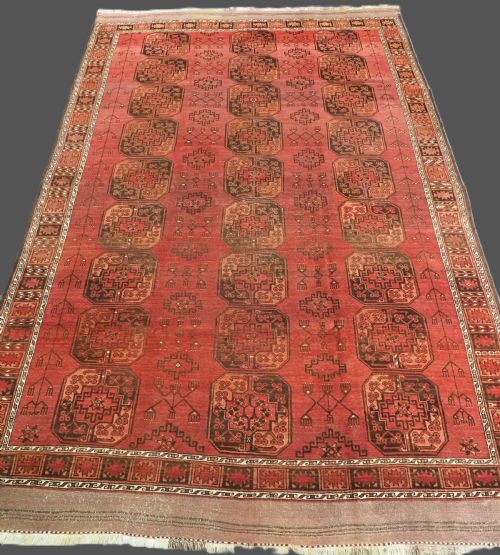
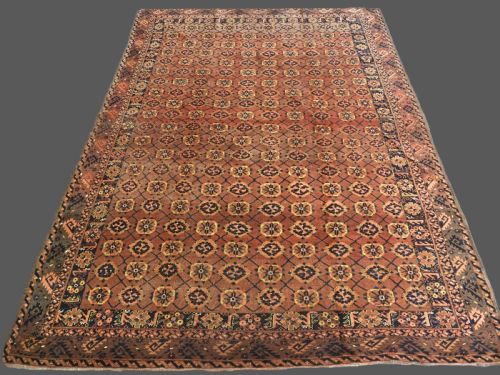
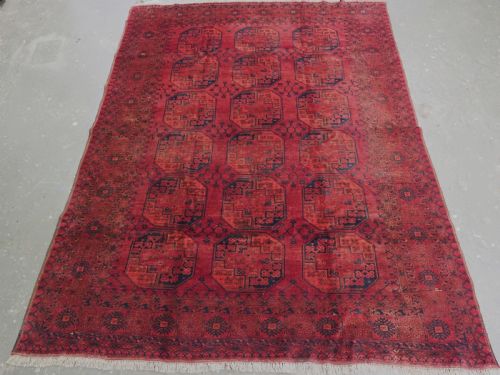
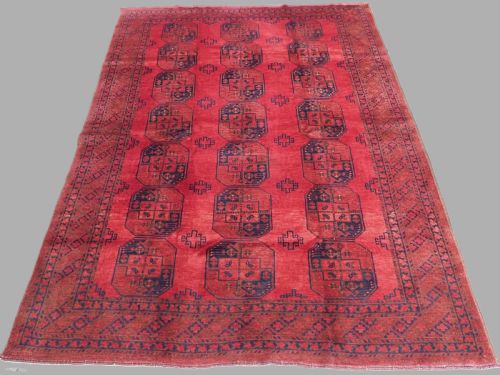
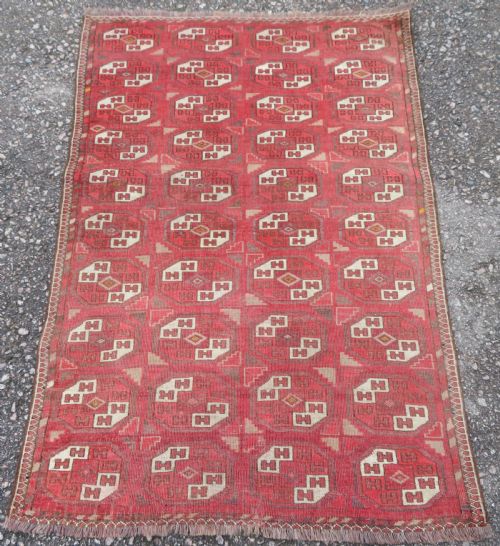
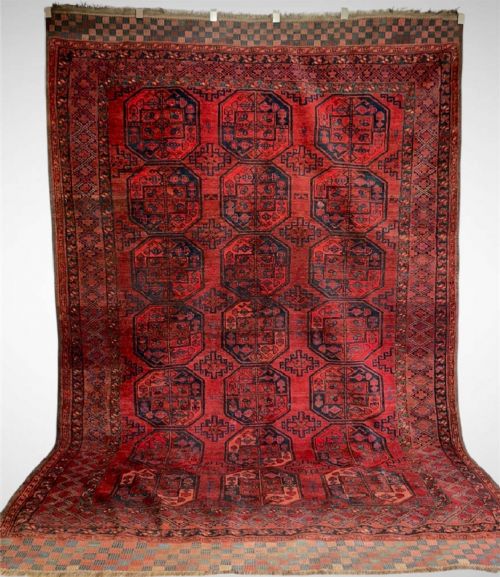


Ersari Tribal Rug
When searching for an ersari tribal rug, you encounter Central Asian hand-knotted weaving designed for nomadic and village life.
Ersari Tribal Rug
An ersari tribal rug originates from the traditions of Turkmen and Afghan weavers, encompassing large floor coverings, long rugs, and various smaller formats. Pieces range from grand main carpets down to utilitarian storage items created for daily use.
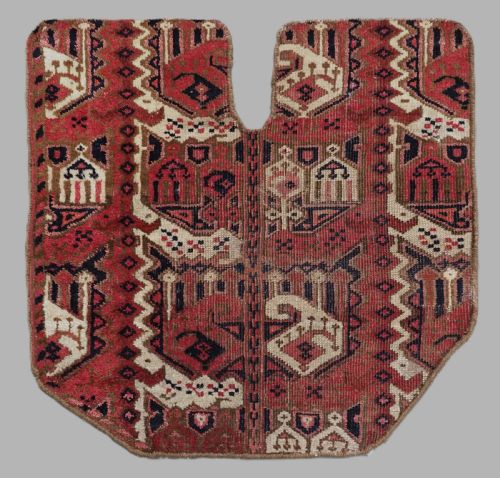
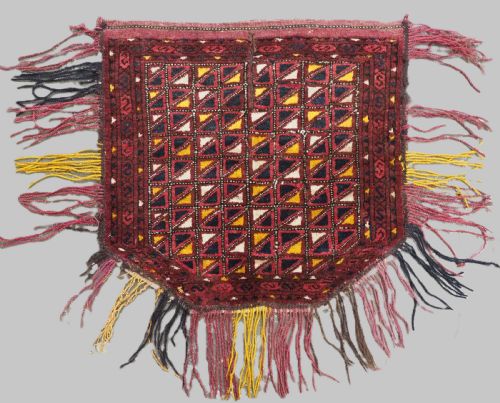
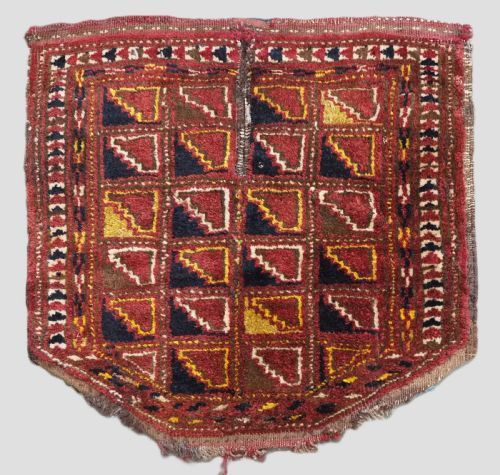
The selections encountered here span from the mid-nineteenth century into the early twentieth century, reflecting standard village and tribal output. Common formats include rectangular area rugs, square tent door hangings, and smaller saddle covers.
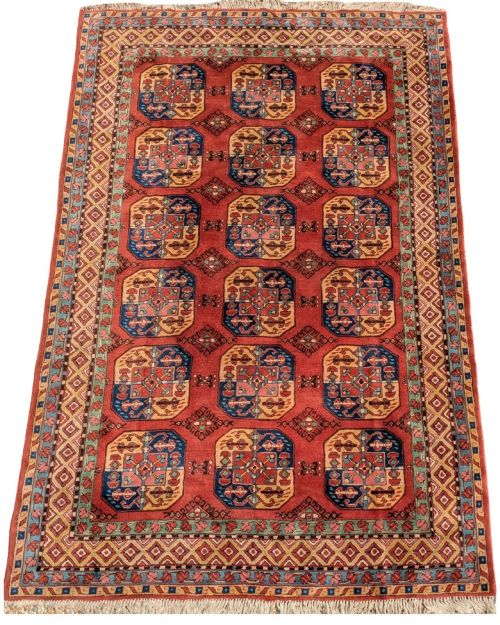
Makers utilised traditional formats like the gul motif alongside Beshir designs and ikat patterns. The heritage of these Central Asian textiles shows in the distinct layouts seen across main carpets and smaller bags.
How they were made
Weavers constructed these textiles using hand-spun wool for the pile, often combined with cotton foundations and occasional goat hair or silk highlights. Natural dyes provided the palette, yielding warm red tones and deep ground colours.
Nomadic workshops employed traditional knotting techniques alongside flatweave methods for utility items like storage bags and tent bands. Detail work occasionally integrated glass beads or embroidered faces onto specific tribal pieces.
Ersari Tribal Rug Retail Price Guide 2026
Typical asking prices for ersari tribal rug among the pieces listed under this phrase on Sellingantiques today, from the lower quarter to the upper quarter. They describe what is for sale here now, not the wider market.
Listings feature items dated from the mid-nineteenth century through the 1930s, constructed primarily from wool, natural dyes, and cotton.
What varies in quality
The standard of an ersari tribal rug rests on the fineness of the knotting and the depth of the natural dyes used in the wool. Early examples show greater saturation in the warm red shades and distinct execution of the secondary motifs.
Structural integrity also defines the tier of a piece, with well-preserved wool piles and original tassels commanding attention. The precision of the tribal patterns, whether turreted guls or curled leaf designs, marks the distinction between standard village output and superior weaving.
The Ersari Tribal Rug Glossary
- Gul
- A medallion motif repeated across Turkmen carpets. This octagonal design forms the structural backbone of many traditional tribal layouts.
- Torba
- A small hanging storage bag used within nomadic tents. These pieces frequently display detailed embroidery and specialist face designs.
- Kapunuk
- A tent door rug or portiere hanging placed around yurt entrances. They serve architectural and decorative functions within the nomadic dwelling.
- Chuval
- A large tent bag utilised for household storage. Collectors prize these for their structured multi-gul arrangements.
- Beshir
- A sub-style associated with Ersari weavers known for floral influences and ikat patterns. These differ from standard geometric Turkmen layouts.
Ersari Tribal Rug: Frequently Asked Questions
How were ersari tribal rugs used?
These textiles served practical functions inside nomadic and village dwellings, acting as floor coverings, bedding storage, and animal trappings. Larger formats covered the main living space, while smaller bags held household possessions.
Specialist items like tent door hangings and saddle covers were woven for specific domestic and transit duties. Their construction reflected the portable lifestyle of Central Asian tribes.
What colours dominate these rugs?
Warm red shades dominate the palette, often accompanied by rich brown, ivory, and deep blue secondary tones. Natural dyes produced these stable, earthy hues that mellow gracefully with age.
Highlights in silk or contrasting wool add vibrancy to specific motifs within the main field.
How do I date an antique rug?
Dating relies on assessing the wool quality, the chemical nature of the natural dyes, and the structural wear patterns. Mid to late nineteenth-century pieces typically display greater nuance in colour variation and softer handle.
Twentieth-century examples often shift toward standardised village production methods and distinct synthetic influences.
What is a gul design?
A gul is a repeating octagonal medallion pattern native to Central Asian weaving traditions. Different tribes utilised specific gul variations to signal lineage and regional identity.
These motifs anchor the visual symmetry of main carpets and smaller storage bags alike.