

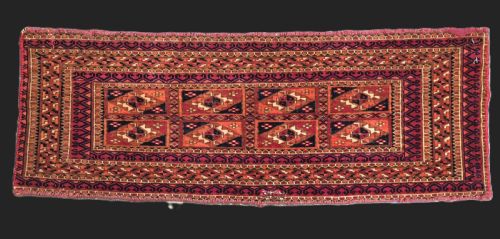
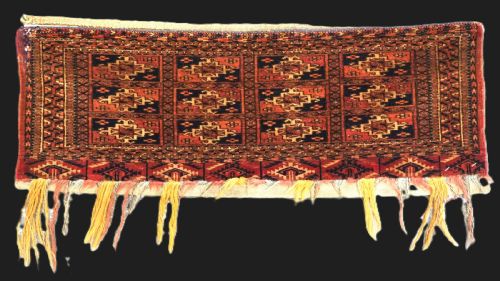


Hand Knotted Torba
These hand knotted torba examples are Central Asian tribal storage bags carrying centuries of nomadic design.
Hand Knotted Torba
A hand knotted torba is a traditional tribal bag or bag face originating from Central Asian nomadic groups such as the Tekke, Yomut, Ersari, and Saryk tribes. These utilitarian pieces served practical storage functions within nomadic tents and dwellings across the Trans-Caspian steppes and Turkmenistan.
Buyers browsing this selection encounter nineteenth-century pieces spanning the decades from eighteen-fifty to nineteen-twenty. The inventory encompasses complete bags with backs, individual bag faces, small storage fragments, and examples displaying specific tribal motifs like guls and asmalyk style designs.
How they were made
Weavers constructed each hand knotted torba using wool and hand-spun wool foundations, incorporating cotton details in specific regional traditions. Natural dyes provided the rich palette characteristic of nineteenth-century Central Asian textiles.
The density of the weaving varies, with certain pieces showing extremely fine knots that define intricate geometric patterns. Artisans tied these dense structures by hand to ensure durability for daily nomadic life.
Some Yomut bag faces likely originated as spindle bags, holding the tools women used to spin yarn while travelling across the steppes.
What varies in quality
The finesse of the knotting largely determines the tier of a piece, with exceptionally tight weaves requiring greater skill and time from the weaver. The clarity and precision of tribal guls, such as 'aina gul', 'kepse', or 'salor' designs, also separate standard production from superior work.
Condition plays a significant role in distinguishing the grade of a textile, distinguishing intact examples complete with backs from worn fragments. The vibrancy and retention of natural dye colours further elevate certain items above others.
The Hand Knotted Torba Glossary
- Gul
- A primary medallion or repeating floral-octagon motif used in Turkmen rug and textile design. Each tribe utilised specific gul variations to signal identity and lineage.
- Mafresh
- A larger rectangular storage sack or bedding bag used by nomadic tribes. Pieces often share decorative vocabulary with smaller torbas.
- Asmalyk
- A pentagonal trapping traditionally hung on the flanks of a camel during wedding processions. Designs incorporate elaborate symbols of prosperity and protection.
- Beshir
- A sub-group of Ersari Turkmen textiles known for distinctive patterns including ikat influences and large-scale botanical motifs. These pieces often display more fluid designs than standard tribal geometry.
Hand Knotted Torba: Frequently Asked Questions
What was a torba used for?
Nomadic families utilised these bags to store small household belongings, personal items, or foodstuffs inside traditional tents. They hung against the lattice walls of the dwelling for easy access.
Their robust construction protected contents from dust and moisture on the Central Asian steppes. Over time, these utilitarian objects became prized expressions of tribal artistry and identity.
How do I identify a Tekke torba?
Tekke pieces typically display orderly arrangements of primary guls, such as the 'aina gul' or four-chuval gul designs, set against a rich madder-red ground. The weaving is frequently precise and fine.
These bags originate from the Akhal oasis region associated with the Tekke tribe. Examining the specific border motifs and secondary ornaments helps confirm the tribal attribution.
Are these pieces complete bags?
The selection includes both complete examples featuring original backs and individual bag faces that were separated from their rear panels over time. Many surviving pieces exist solely as decorative faces.
Collectors value complete specimens for their structural integrity, while faces often serve as wall-hanging textiles. Both forms showcase the same traditional knotting and dying techniques.
How should I care for an antique textile?
Protect the wool from direct sunlight to prevent natural dye fading, and vacuum gently using low suction with a mesh screen for safety. Avoid exposing the fibres to excessive moisture.
Professional textile conservation specialists should handle any deep cleaning or structural repairs. Proper mounting distributes weight evenly if you choose to display the piece on a wall.