


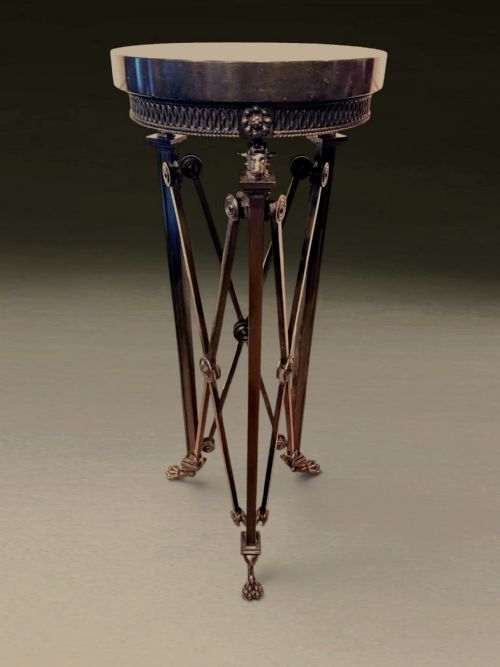

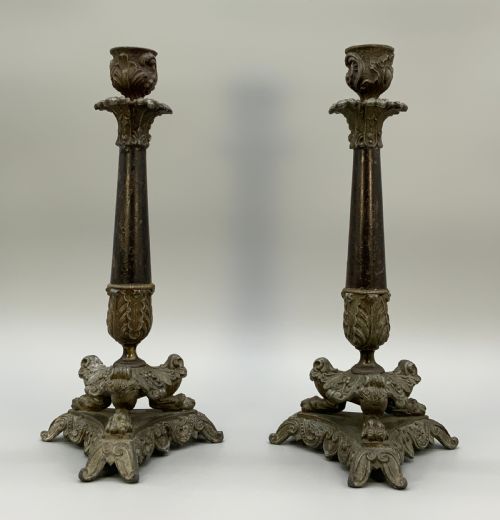

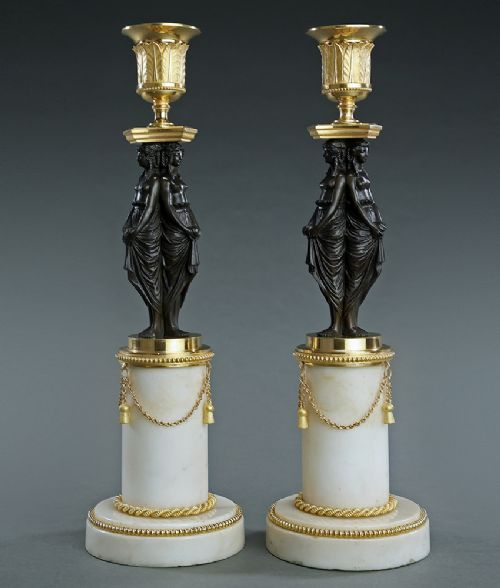
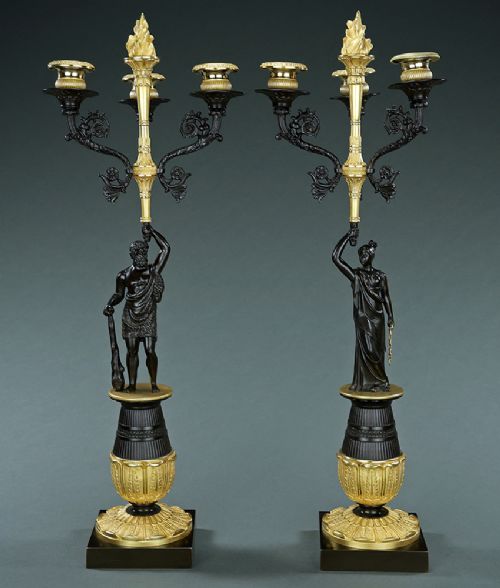
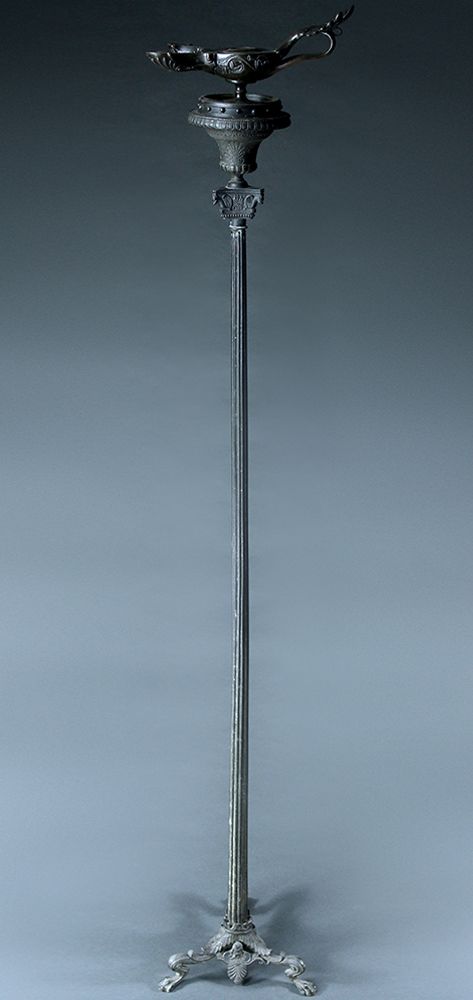

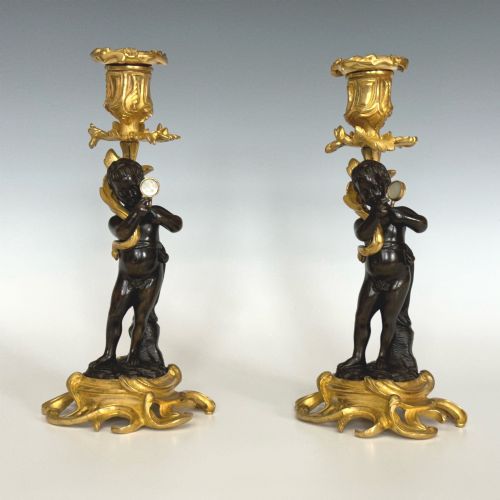
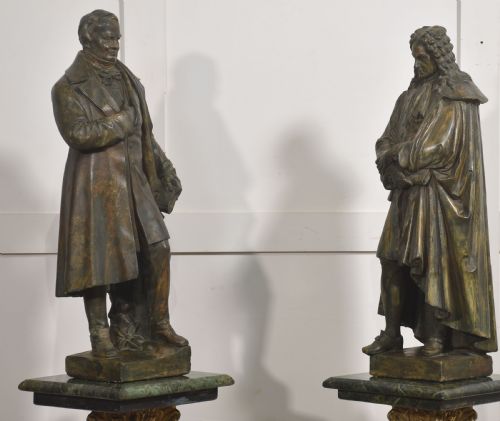
Patinated Bronze Stand
A patinated bronze stand brings dark, weighty warmth and classical gravity to a room, offering a durable surface or sculptural anchor.
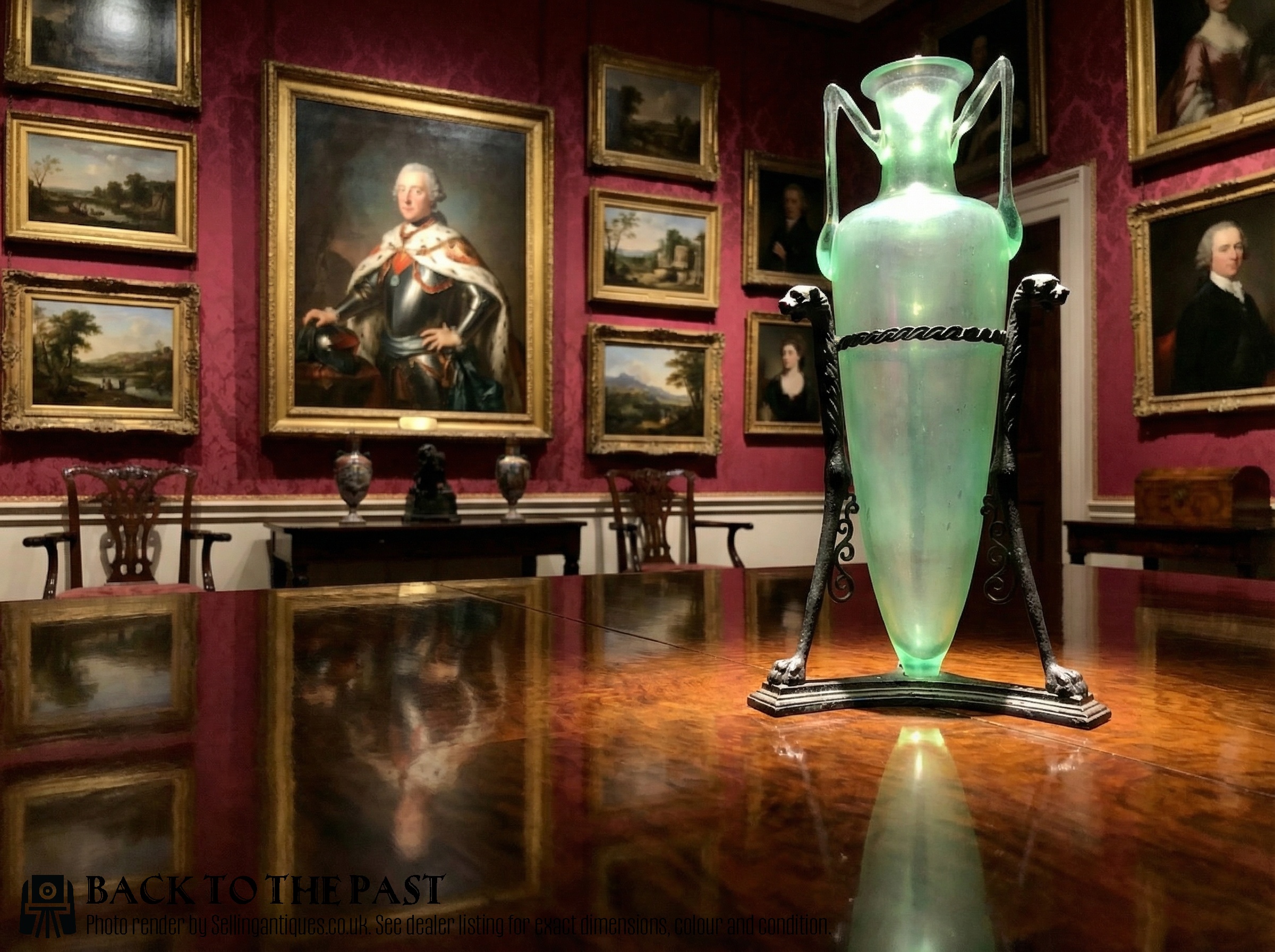
Patinated Bronze Stand
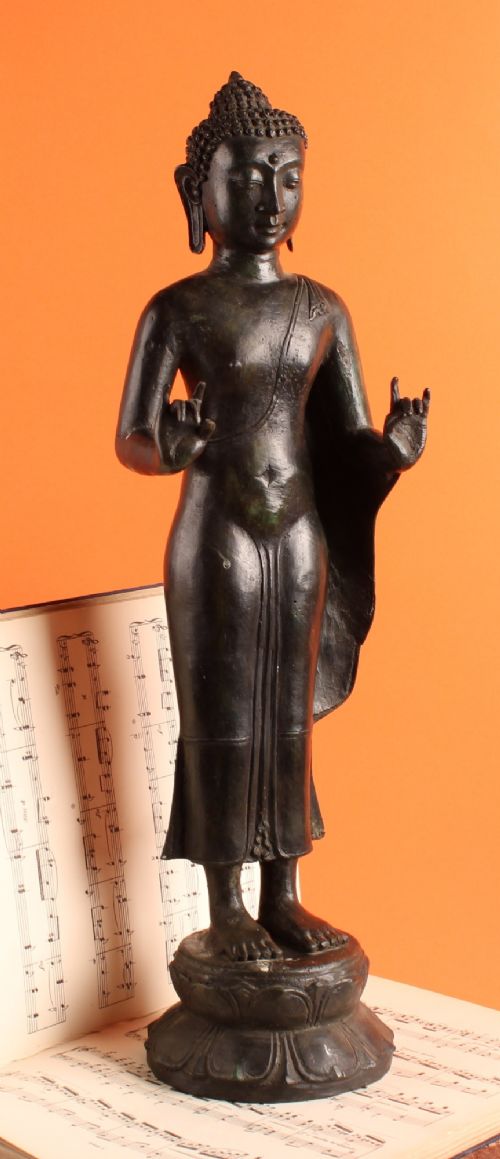
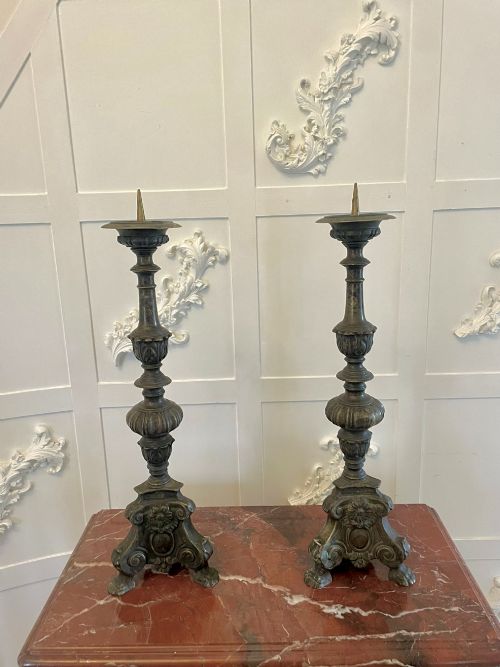
A patinated bronze stand comprises heavy metal display pieces, candlesticks, and sculptural supports originating largely from the nineteenth century, alongside Regency, Meiji period, and early twentieth-century examples.
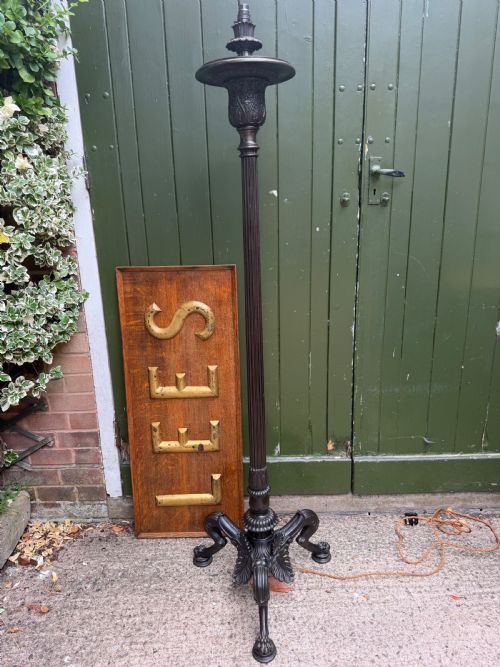
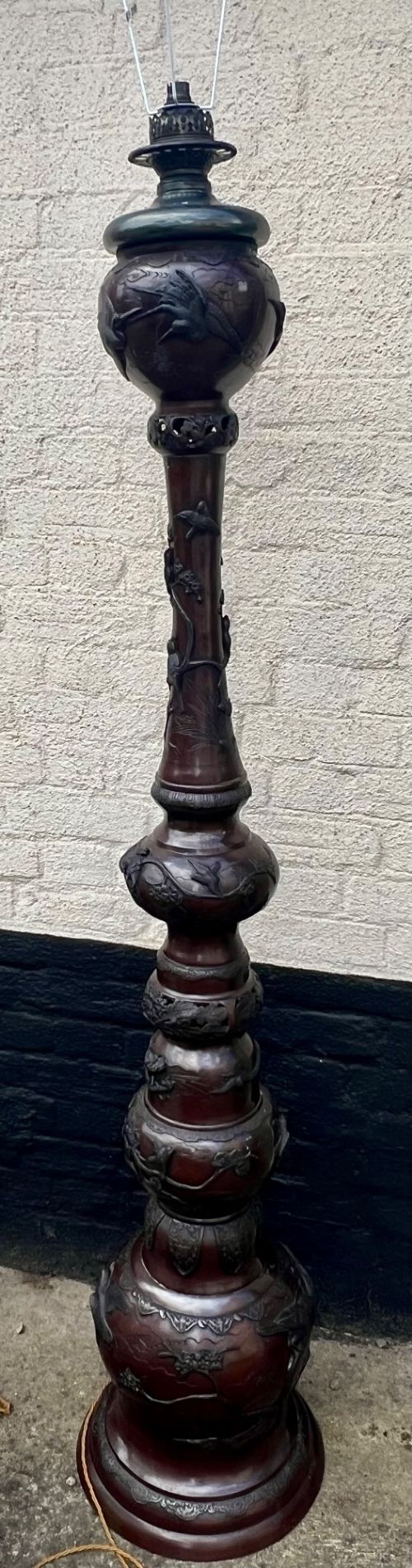
Buyers seeking a patinated bronze stand will frequently encounter sculptural floor lamps, classical torchères, and weighted inkwells or urns finished in dark, oxidised metallic tones.
The selection spans French Empire candelabra, Grand Tour Neo-Pompeian designs, and Japanese bronze floor lamps, often incorporating marble bases or gilt-bronze mounts.
How They Were Made
Pieces in this category rely primarily on cast bronze, patinated metal, or spelter, frequently paired with contrasting elements of white or coloured marble, ormolu, and gilt bronze.
Foundries utilised traditional casting methods to achieve intricate detail in figurative and architectural motifs, followed by manual surface treatment to produce the characteristic dark patina.
Listings feature items spanning the seventeenth to the twentieth century, with nineteenth-century French and Japanese Meiji examples appearing most frequently.
What Varies in Quality
The standard of chasing and surface finishing separates exceptional sculptural forms from simpler production pieces, particularly in the definition of musculature, drapery, and cast ornamentation.
Quality rests upon the integrity of the metal mix and the depth of the chemical or natural patination, alongside the structural stability of integrated marble plinths and weighted bases.
P Granet·Kunio Itô·Jean Jules Salmson·Anders Zorn·Antonin Mercié
The Patinated Bronze Stand Glossary
- Patinated bronze
- Bronze treated with chemical solutions or heat to create a darkened, aged surface colour. This protective skin ranges from deep brown to near black.
- Ormolu
- Gilding technique using finely ground gold mercury amalgam applied to bronze. It provides a bright, contrasting metallic flash against dark patinated surfaces.
- Grand Tour
- Eighteenth and nineteenth-century travel practice where wealthy collectors acquired classical antiquities and bronze reductions in Italy. These souvenirs often formed the basis of later decorative stands.
- Spelter
- Zinc alloy cast to imitate bronze, commonly utilised in nineteenth-century decorative figures and candlesticks. It is lighter in weight and softer than true bronze.
- Caryatid
- Architectural support sculpted in the form of a draped female figure. These serve as columns or structural stems in candlesticks and lamps.
Patinated Bronze Stand: Frequently Asked Questions
What is a patinated bronze stand used for?
These pieces function as sturdy supports for lighting, display objects, and decorative items. They elevate objects of utility into sculptural focal points within a room.
Historically, they served as heavy bases for candles, oil lamps, or display urns where stability and dignified presentation were paramount.
How do I care for patinated bronze?
Maintenance requires only gentle dusting with a soft, dry cloth to prevent the accumulation of grit. Avoid harsh cleaning agents that can strip away the aged surface.
Applying a very light coat of microcrystalline wax can help protect the finish from moisture and handling over time.
Are these stands solid bronze?
Materials vary across the selection, with many pieces cast in genuine bronze while others utilise patinated metal, brass, or zinc-alloy spelter. Some examples incorporate heavy marble plinths for added gravity.
Checking the weight, magnetism, and surface junctions helps reveal the specific alloy used in each individual object.
How can I tell the period of a bronze stand?
Dating relies upon stylistic markers such as French Empire neo-classical motifs, Japanese Meiji iconography, or Art Nouveau naturalism. Casting seams and tool marks also offer clues to the era of manufacture.
Signatures, foundry stamps, and the specific composition of the patina provide further evidence for chronological placement.